Back





2026 Supreme(Raj) 551
HIGH COURT OF JUDICATURE FOR RAJASTHAN, BENCH AT JAIPUR
PRAMIL KUMAR MATHUR, J.
Prithvilal Meena, S/o. Shri Badri Prasad Meena, (Presently Lodged In Central Jail At Kota) – Appellant
Versus
State of Rajasthan, through PP – Respondent
S.B. Criminal Appeal (Sb) No. 1372 of 2019
Decided On : 09-03-2026
For the Appellant : Mr. Suresh Kumar Sahni, Mr. Ram Mohan Sharma
For the Respondent: Mr. Manvendra Singh Shekhawat, PP
Conviction for corruption is sustainable via electronic evidence (certified under Section 65-B Evidence Act) and circumstantial evidence even if complainants turn hostile. Acceptance of bribe via a middleman constitutes constructive acceptance by the public servant and establishes criminal conspiracy under Section 120-B IPC.
Headnote:(A) Prevention of Corruption Act, 1988 - Sections 7, 8 and 13(1)(d) read with 13(2) - Indian Penal Code - Section 120-B - Indian Evidence Act, 1872 - Section 65-B - Demand and acceptance of illegal gratification - Conviction based on circumstantial and electronic evidence despite complainants turning hostile - Demand can be proved by circumstantial or electronic evidence and not necessarily by direct testimony of the complainant - Electronic evidence, when accompanied by a valid certificate under Section 65-B(4) of the Evidence Act and corroborated by trap proceedings, is sufficient to establish demand - Acceptance of bribe through a middleman is deemed to be acceptance by the public servant himself. (Paras 19, 28, 31, 40)
(B) Criminal Conspiracy - Section 120-B IPC - Agreement to commit an illegal act can be inferred from circumstantial evidence and conduct of the accused - It is not necessary that an agreement among conspirators be express; it may be proved by necessary implication from circumstances and conduct - A private person acting as a conduit for a public servant is liable under Section 8 of the Act of 1988 and Section 120-B IPC. (Paras 42-45)
(C) Presumption under Section 20 of Act of 1988 - Once foundational facts of demand and acceptance are established, the burden shifts to the accused to rebut the statutory presumption - Refusal of accused to provide voice samples for testing may lead to an adverse inference under Section 114(g) of the Indian Evidence Act. (Paras 36-37)
Facts of the case:
A public servant allegedly demanded illegal gratification to settle a penalty imposed on electricity meters. A trap was organized by the anti-corruption bureau, and tainted money was recovered from a private person acting as a middleman in the presence of the public servant. Voice recordings of the demand were captured and produced as evidence. Although the complainants turned hostile during the trial, the trial court convicted the public servant and the middleman.
Findings of Court:
The court found that the demand and acceptance were proved through admissible electronic evidence and circumstantial evidence. The recovery of tainted money from the middleman, coupled with the voice recordings and the joint presence of both accused, established a complete chain of incriminating evidence. The sanction for prosecution was held to be valid as the sanctioning authority had applied its mind to the investigation records.
Issues: Whether the conviction can be sustained when the complainants turn hostile and whether the recovery of money from a middleman suffices to prove the guilt of the public servant under the Act of 1988.
Ratio Decidendi: Demand of illegal gratification can be established via electronic evidence even if complainants turn hostile, provided the evidence is certified under Section 65-B of the Evidence Act. Recovery of bribe by a middleman on behalf of a public servant constitutes constructive acceptance by the public servant, and such concerted action establishes a criminal conspiracy under Section 120-B of the IPC.
Result: Appeal dismissed.
JUDGMENT :
PRAMIL KUMAR MATHUR, J.
Table of Contents FACTUAL BACKGROUND |
1. The present appeal has been filed jointly by both the appellants challenging the common judgment dated 06.07.2019 passed by the learned Special Judge, Prevention of Corruption Act, 1988, Kota, in Sessions Case No. 10/2016, whereby the appellant No. 1, Prithvilal Meena was convicted under Section 120-B of IPC and Sections 7, 13(1)(d) read with Section 13(2) of the Prevention of Corruption Act, 1988 (hereinafter referred to as “the Act of 1988”), and appellant No. 2, Hemraj @ Foru was convicted under Section 120-B of IPC and under Section 8 of “the Act of 1988” and both were sentenced as under:
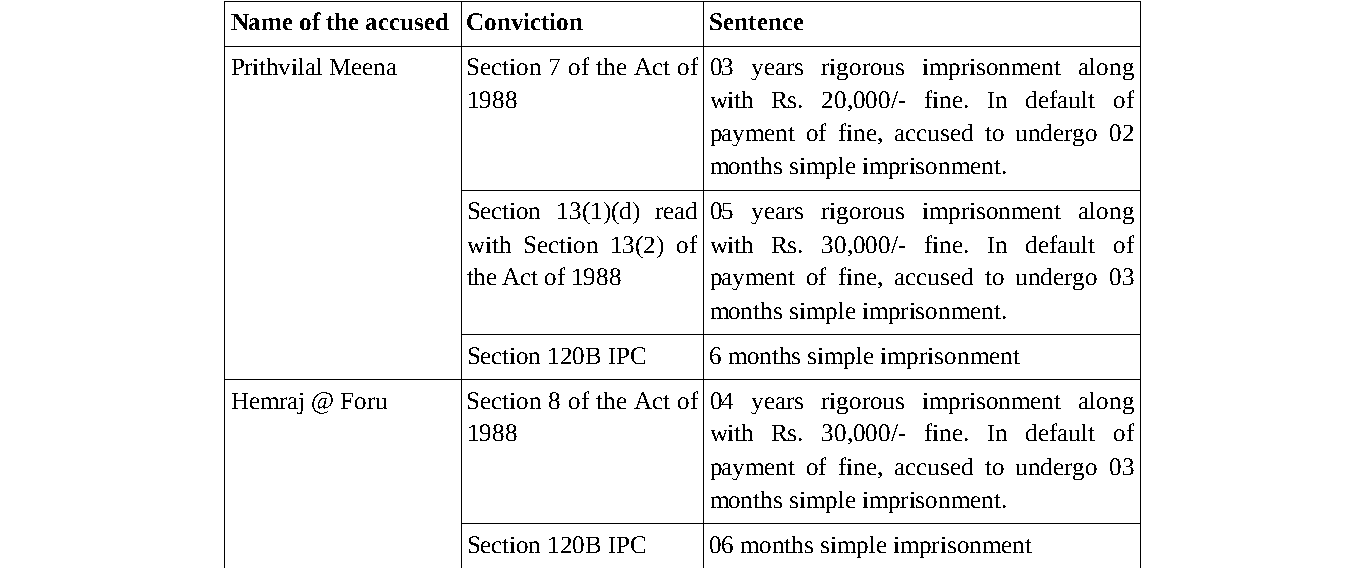
All the sentences to run concurrently.
FACTUAL BACKGROUND
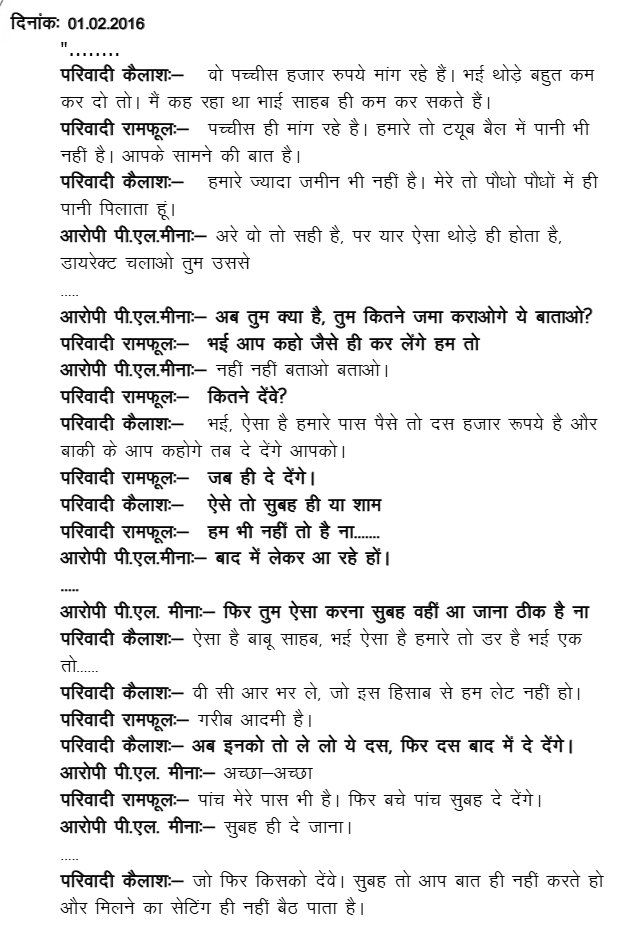
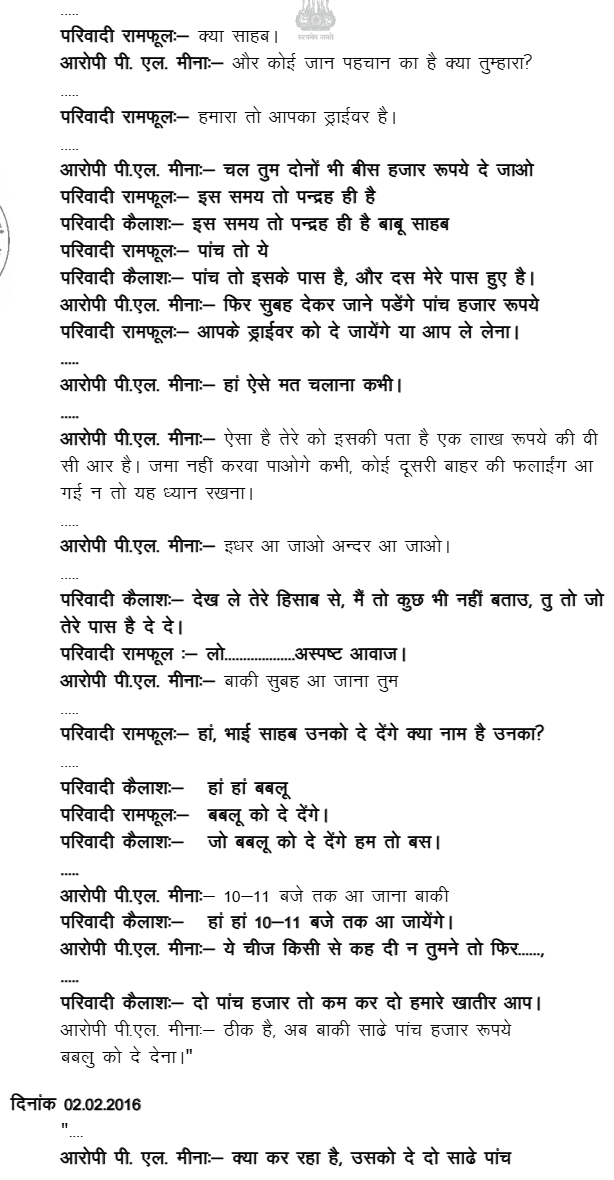
2. The case of the prosecution as culled out from records is that on 01.02.2016, the complainant Kailash Meena and Ramphool Meena submitted a written complaint before the Anti-Corruption Bureau, Bundi, alleging demand of illegal gratification by the appellant No. 1, Prithvilal Meena, who was working as Assistant Engineer, Rajasthan State Electricity Board. It was alleged that on 29.01.2016, the appellant No. 1, Prithvilal Meena along with his staff inspected the electricity meters installed at the complainant’s premises and thereafter verbally imposed a VCR penalty of Rs. 80,000/-. Subsequently, the appellant No. 1 Prithvilal Meena allegedly demanded illegal gratification for settlement of the matter.
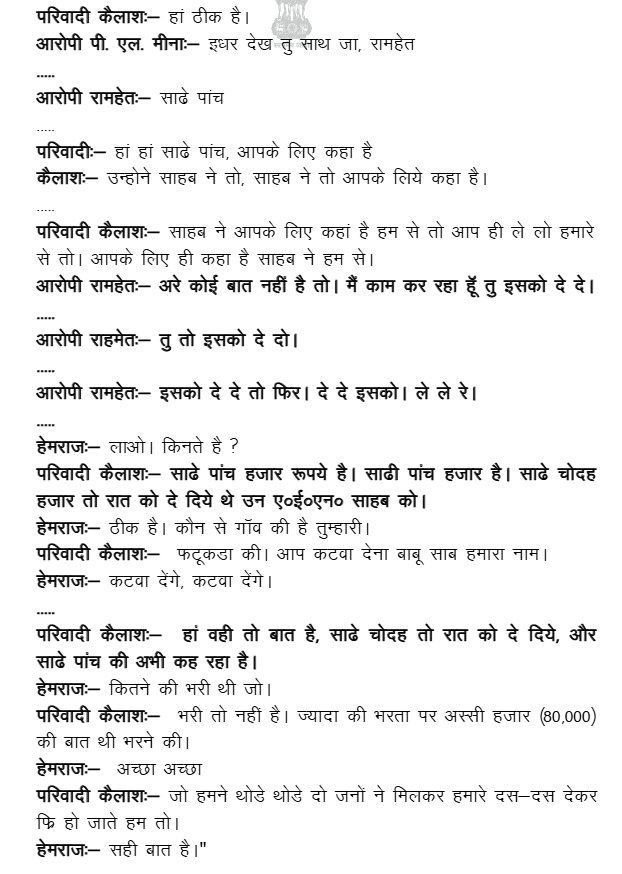
3. According to the prosecution, on 01.02.2016, the appellant No. 1 Prithvilal Meena directed the complainants to contact his driver and associates, who demanded Rs. 20,000/-, out of which Rs. 14,500/- was paid and remaining Rs. 5500/- was agreed to be paid. The demand was verified by the ACB and thereafter, on 02.02.2016, a trap was organized. Two independent witnesses were associated with the trap proceedings. The bribe amount of Rs. 5,500/- was treated with phenolphthalein powder and handed over to the complainant- Kailash with necessary instructions. At about 11:40 AM, both the complainants met the appellant No. 1 Prithvilal Meena in his office. As per the prosecution, upon communication and approval of the appellant No. 1 Prithvilal Meena, the bribe amount was passed through Ramhet and ultimately accepted by appellant No. 2 Hemraj @ Foru, who kept the tainted money in the pocket of his trouser. Upon receiving the pre-arranged signal, the trap party immediately entered the office and conducted a search. The phenolphthalein test of appellant No. 2 Hemraj was found positive and a sum of Rs. 5,500/- was recovered from his possession. Both the appellants Prithvilal Meena and Hemraj @ Foru were present together in the same room when the search party arrived.
4. During search a red diary with some documents, belonging to the appellant No. 1 Prithvilal Meena was recovered and seized, containing entries relating to meter checking of complainant's premises along with VCR numbers and photograph references. The hand-written slip bearing names of the complainants were also seized.
5. The appellants during investigation refused to give their voice samples in writing.
6. After completion of the investigation and upon obtaining the requisite sanction for prosecution, a charge-sheet was filed against the appellants Prithvilal Meena, Hemraj @ Foru and co- accused Ramhet Meena for the offences punishable under Section 120-B IPC and Sections 7, 8 and 13(1)(d) read with Section 13(2) of “the Act of 1988”.
7. During trial to substantiate the charges framed against the appellants, the prosecution examined the following witnesses:
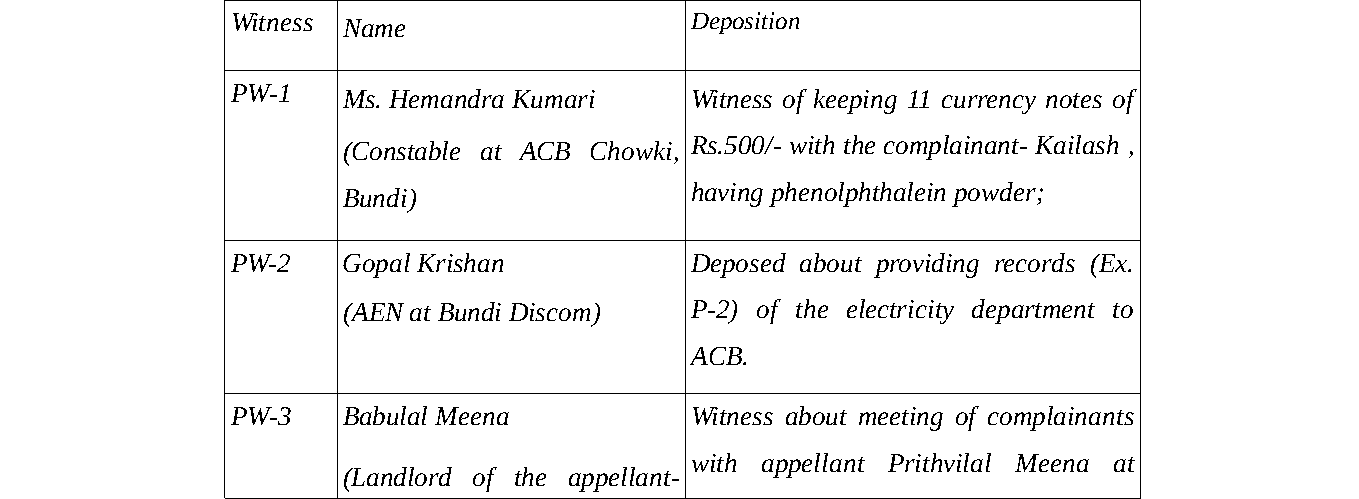
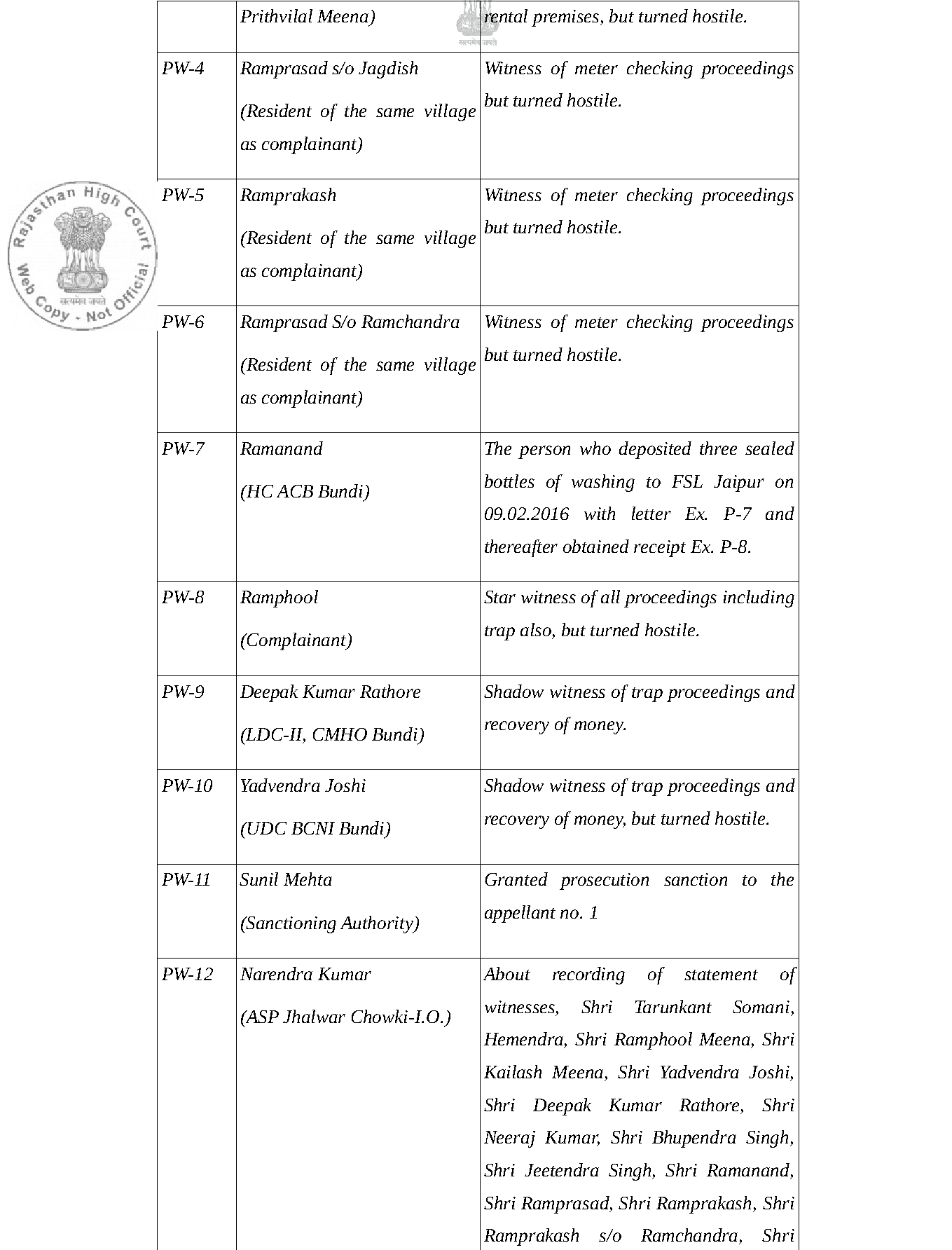
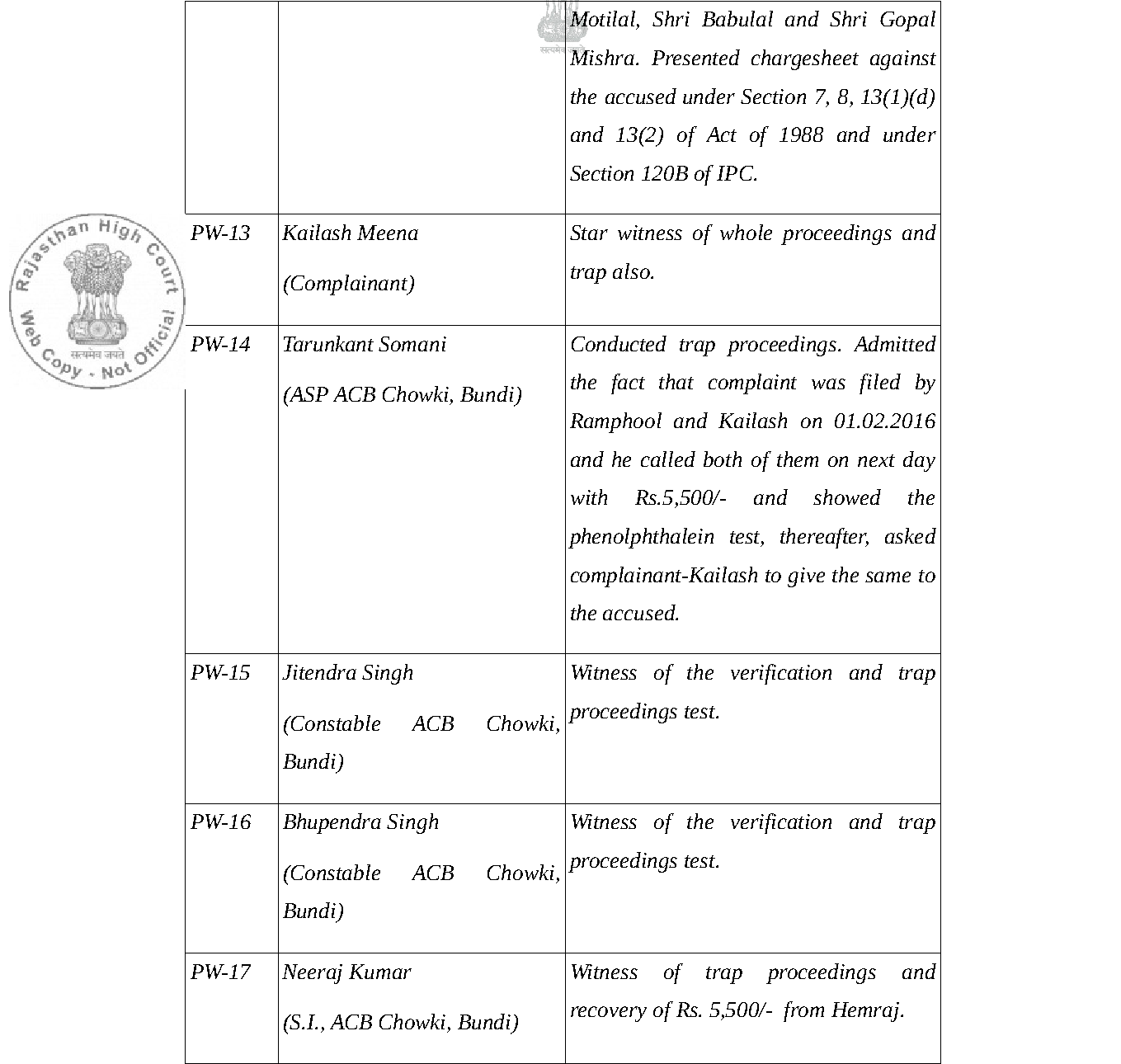
and produced documentary evidence as Ex. P/1 to Ex. P/43, besides Articles 1 to 29.
8. In defence, the appellants have examined the following witnesses:
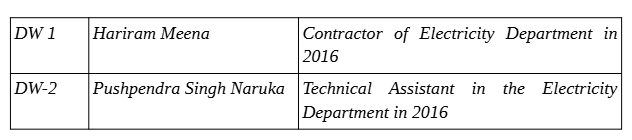

and produced Ex. D/1 to D/7 documents.
9. After considering the evidence produced by both sides, the learned trial Court held the appellants guilty of the offences