


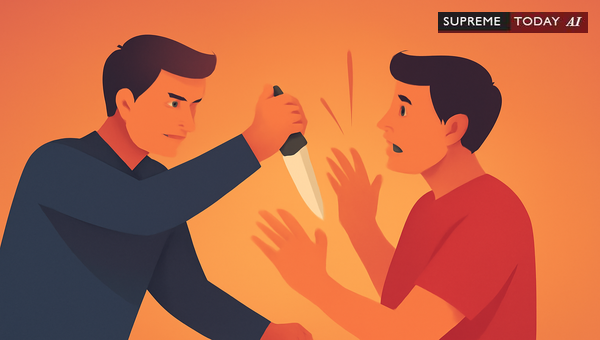
Does No Absolve Liability?
In the heat of a , emotions run high, and actions can lead to tragic outcomes. But does the absence of premeditated design to kill a particular individual absolve ? This question strikes at the heart of homicide laws under the . While a lack of prior planning might soften the charge from to , it does not erase responsibility entirely. This blog delves into the nuances, drawing from key judicial precedents and legal principles to clarify when courts reduce convictions and when liability persists.
Understanding this distinction is crucial for anyone navigating criminal law, whether as a legal professional, student, or concerned citizen. We'll examine IPC Sections 300, 302, and 304, focusing on , and integrate insights from related cases.
The Role of in Homicide Classification
—prior planning or deliberate intent to kill—is a cornerstone distinguishing ( IPC) from not amounting to ( Part II IPC). Generally, without , especially in sudden fights or , courts may downgrade the offense. 2006 3 Supreme 217
As explained in a pivotal judgment: The exception is founded upon the same principle, for in both there is absence of . But, while in the case of Exception 1 there is total deprivation of self-control, in case of , there is only that which clouds men’s sober reasons and urges them to deeds which they would not otherwise do.2006 3 Supreme 217
This highlights that impulsive acts, devoid of planning, trigger exceptions under IPC, potentially leading to lesser sentences.
Key Conditions for
To benefit from , the accused must prove:- No .- Act during a or .- No taken.- No cruel or unusual manner.- Death caused to the fight participant. 2006 3 Supreme 217
Failure on any point keeps the case under .
Landmark Cases on Lack of
Indian courts consistently apply these principles. In one case, No in the commission of crime and incident occurring due to entitles the accused to benefit of .2014 8 Supreme 435 Conviction shifted from to 304 Part II.
Similarly, In absence of any or intention to kill, the accused cannot be convicted under IPC.2018 1 Supreme 144
Another ruling affirmed: The act was committed without , in a sudden fight in upon a .2006 3 Supreme 217 The altered the conviction accordingly.
These precedents underscore that evidence of spontaneity can significantly impact outcomes.
When Absence of Does Not Absolve Liability
However, lack of against a specific individual does not always mitigate liability. IPC's Illustration (d) clarifies: A without any excuse fires a loaded cannon into a crowd of persons and kills one of them. A is guilty of , although he may not have had a premeditated design to kill any particular individual.2023 0 Supreme(SC) 482 2022 0 Supreme(Bom) 796 2021 0 Supreme(All) 1127 2020 0 Supreme(Bom) 1385 2019 0 Supreme(All) 1830
This principle extends beyond cannons. In U.S. jurisprudence, echoed in Indian contexts, can be inferred from exacting methods, but the prosecution bears the proof burden. 2011 Supreme(US)(ca9) 36
Even in scenarios, absence of criminal intent () is key, but impulsive acts protecting life may not constitute offenses like hunting under wildlife laws. 2025 0 Supreme(Raj) 1156 The court quashed an FIR, noting: The conduct of the villagers, driven by an immediate and overwhelming apprehension of danger rather than any premeditated intention to capture or kill the animal, does not fall within the ambit of the prohibited activities.
Mental disorders or stress rarely absolve liability outright. Moreover, every sort of mental disorder does not either absolve the sufferer from or justify a less severe punishment.1974 0 Supreme(SC) 198 In a poisoning case, despite stress, conviction under held, though premature release was granted after long incarceration. 2023 0 Supreme(SC) 482
Prior enmity or planned assaults also negate exceptions. It has not been established clearly that it was premeditated and the assault was pre-planned with the intention to kill the deceased. Any prior enmity between the appellants and the deceased has not been established.2025 Supreme(Online)(Raj) 15121
In a foul water dispute turning violent, no sudden fight existed, upholding charges despite weapons. 2022 0 Supreme(Bom) 796
vs. : A Clear Differentiation
| Aspect | (Sec 302) | (Sec 304 Pt II) ||---------------------|-----------------------------------|-----------------------------------|| Intent | Premeditated or with knowledge of certainty | Knowledge likely to cause death, but no || Circumstances | Planned, cruel | , || Punishment | Death or life imprisonment | Up to 10 years + fine |
Prosecution must prove beyond doubt; defense highlights spontaneity. Eyewitnesses, weapons, and site plans are pivotal, as lapses in investigation can sway appeals. 2021 0 Supreme(All) 1127 2020 0 Supreme(Bom) 1385
Limitations and Burden of Proof
Exceptions are not automatic—the accused bears the burden. Cruelty, , or non-sudden fights disqualify. 2006 3 Supreme 217 Courts scrutinize facts case-by-case.
Practical Recommendations
- For Defense: Gather evidence of sudden provocation, witness absence of planning, and impulsive nature.
- For Prosecution: Establish via conduct, weapons, or history.
- General Tip: In homicide probes, independent witnesses and site plans are vital; investigative lapses invite appeals. 2021 0 Supreme(All) 1127
Note: This is general information based on precedents and not specific legal advice. Consult a qualified lawyer for case-specific guidance.
Key Takeaways
- Absence of often reduces to under , but only if conditions like are met. 2014 8 Supreme 435 2006 3 Supreme 217
- Indiscriminate acts or those without targeting specifics can still be . 2023 0 Supreme(SC) 482
- remains essential; or no intent may absolve in niche cases. 2025 0 Supreme(Raj) 1156
- Courts prioritize circumstances over bare claims.
In summary, while no premeditated design softens liability in impulsive homicides, it does not absolve it. Judicial wisdom balances justice with mercy, ensuring premeditated killers face harsher penalties. Stay informed on evolving IPC interpretations for better legal awareness.
References:1. 2006 3 Supreme 2172. 2014 8 Supreme 4353. 2018 1 Supreme 1444. 2023 0 Supreme(SC) 4825. 2022 0 Supreme(Bom) 7966. 2025 0 Supreme(Raj) 11567. 2011 Supreme(US)(ca9) 368. 1974 0 Supreme(SC) 1989. 2025 Supreme(Online)(Raj) 15121
#IPC300, #MurderLawIndia, #CulpableHomicide















