Searching Case Laws & Precedent on Legal Query.....!
Analysing the retrieved Case Laws
Scanned Judgements…!



Searching Case Laws & Precedent on Legal Query.....!
Analysing the retrieved Case Laws
Scanned Judgements…!
Main Points and Insights:
The primary issue relates to a male individual allegedly sending offensive or abusive voice recordings (including gali, which means abusive language) to a female via WhatsApp, which constitutes an offense under Indian law. Specifically, the use of offensive language or threats through electronic communication such as voice messages on WhatsApp can be considered an offense under sections related to criminal intimidation, harassment, or insulting behavior ["2025 0 Supreme(Ker) 1969"] ["2020 0 Supreme(Del) 424"].
The evidence discussed indicates that such voice messages, if proven to contain abusive, threatening, or obscene content, can lead to criminal liability. For example, allegations of sending abusive voice messages and threatening behavior are treated seriously, and police investigations or court proceedings may be initiated based on such evidence ["2025 0 Supreme(Ker) 1969"].
The act of a male sending abusive or threatening voice recordings to a female via WhatsApp may fall under various criminal offenses such as:
The legal proceedings may involve recording the victim's statement, forensic examination of digital evidence, and police registration of FIRs if the communication is deemed offensive or threatening. In some cases, the courts have emphasized that sending offensive messages via WhatsApp constitutes a punishable offense, especially if it causes harassment or insult ["2025 0 Supreme(Ker) 1969"].
Analysis and Conclusion:
In the scenario where a male has recorded a voice message and sent abusive or threatening language to a female via WhatsApp, the act constitutes an offense under Indian criminal law, primarily related to harassment, insult, or criminal intimidation. The actual classification of the offense depends on the content of the message—if it contains threats, abusive language, or indecent remarks, it may lead to criminal charges.
The legal system recognizes electronic communication, including WhatsApp voice messages, as admissible evidence, and such acts are punishable if they cause harassment, fear, or insult. The courts and police are empowered to investigate such complaints, and appropriate legal action can be initiated against the offender.
References to related cases and legal provisions confirm that sending offensive or threatening messages via digital platforms is a punishable offense, and victims can seek legal remedy by filing complaints ["2025 0 Supreme(Ker) 1969"] ["2020 0 Supreme(Del) 424"].
References:
Allaudeen vs State - Delhi
"]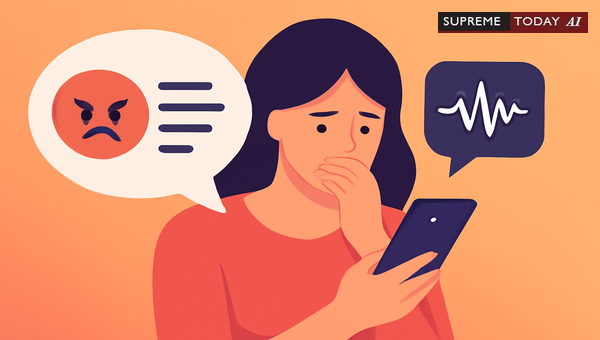
In today's digital age, WhatsApp has become a primary mode of communication. But what happens when a heated argument escalates to sending voice recordings filled with abusive language? A common query arises: Ek male dwara female ko WhatsApp per voice record karke gali di, kon sa apradh hua? (What offense is committed if a male sends a voice recording abusing a female on WhatsApp?).
This question touches on privacy, intent, and under Indian law, particularly . While it may seem straightforward, courts have clarified that such acts do not automatically constitute a crime. This blog explores the legal nuances, drawing from key judicial interpretations and principles. Note: This is general information, not specific legal advice. Consult a lawyer for personalized guidance.
punishes whoever intends to insult the modesty of any woman through words, gestures, or acts that are intended to be seen or heard by her. The punishment can include up to three years, a fine, or both.
However, the are:- Intention to insult or outrage the woman's modesty.- The act must be capable of shocking her sense of decency2020 1 Supreme 82.
Mere abusive language, especially in private, does not suffice. Courts emphasize that the conduct must go beyond offensiveness to something that truly outrages modesty 2020 1 Supreme 82.
WhatsApp's is a game-changer. Messages, including voice notes, are accessible only to the sender and recipient—no third parties, not even WhatsApp, can view them. This makes such communications strictly private, akin to a personal conversation, not a 2018 7 Supreme 750.
Key points on privacy:- Private chats do not qualify as public acts under 2018 7 Supreme 750.- Unlike public gestures or slaps in open spaces, a voice note in a one-on-one chat lacks the public element that amplifies insult 2018 7 Supreme 750.
Sending personal messages over WhatsApp is considered private and not a 2018 7 Supreme 750. Thus, a voice recording with galiyan (abuses) alone typically falls short of the offense.
Indian courts have consistently held that abusive or obscene words in private do not automatically trigger Section 509 unless intent and shocking impact are proven 2018 7 Supreme 750 2020 1 Supreme 82.
For instance:- The act must demonstrate to insult modesty, not just vent anger.- Context matters: tone, relationship between parties, and prior interactions.
Mere use of abusive language or obscene words in a private message does not automatically amount to an offense unless it demonstrates an intent to insult or outrage modesty 2018 7 Supreme 750.
In application to our scenario, a male sending a voice note with abuses to a female via WhatsApp would not constitute without evidence of modesty-insulting intent and decency-shocking content 2018 7 Supreme 750 2020 1 Supreme 82.
Courts have in cases where offensive language was alleged but didn't fit the charged offense. In one matter, petitioners accused of using offensive language against a complainant saw charges under , dismissed. The court noted: Even if the allegations mentioned above are accepted it appears that petitioner No. 2 used some offensive language against respondent No. 2 but held it did not constitute the offense 1976 0 Supreme(All) 236.
The use of offensive language did not constitute an offence under Sections 3 and 4 of the 1976 0 Supreme(All) 236. This reinforces that abusive words alone, without matching the specific legal elements, do not sustain criminal action—paralleling Section 509 requirements.
While not directly on WhatsApp, such precedents highlight judicial caution against over-criminalizing private verbal exchanges.
There are scenarios where liability may arise:- Explicit obscenity targeting modesty: If the voice note includes sexually suggestive abuses aimed at shaming her decency 2020 1 Supreme 82.- Repeated harassment: Escalating to stalking or threats could invoke (sexual harassment) or provisions.- Public sharing: Forwarding the note to others turns private into public, strengthening the case.
If the content of the voice message explicitly contains words or gestures that are obscene and intended to insult or outrage modesty, and the context suggests an intent to insult, then it could potentially constitute an offense 2020 1 Supreme 82.
Authorities must examine:- Message content and tone.- Sender's intent (e.g., via chat history).- Recipient's reaction (though subjective, supports decency shock).
While Section 509 may not apply, other laws could if escalated:- (struck down, but similar under for obscene content).- for .- if involving minors (unrelated here, but courts stress child testimony credibility in assaults 2020 0 Supreme(Del) 1283 2016 0 Supreme(Del) 2856).
In NDPS or murder cases, courts demand strict proof (e.g., recovery chains 2018 0 Supreme(Del) 24), mirroring the burden here
Rajesh Kumar @ Ramjan Khan VS State of Chhattisgarh
.For complainants:- Preserve evidence: Screenshots, voice notes, timestamps.- Demonstrate intent: Show pattern of behavior.- File judiciously; courts quash frivolous cases 1976 0 Supreme(All) 236.
For all:- Avoid impulsive messages—digital trails last.- Seek mediation for personal disputes.
To establish an offense, the victim or complainant must demonstrate that the message was intended to insult her modesty and that it was capable of shocking her sense of decency 2020 1 Supreme 82.
In conclusion, while emotionally distressing, sending a voice recording with galiyan on WhatsApp does not, by itself, amount to a crime under unless specific legal thresholds are met. Digital communication demands responsibility, but law protects private expression absent criminal elements. Stay informed, communicate respectfully, and consult professionals for advice.
References:1. 2020 1 Supreme 82 - Legal principles on outraging modesty, intent, and shocking decency.2. 2018 7 Supreme 750 - WhatsApp privacy, private vs. public communications.3. 1976 0 Supreme(All) 236 - Offensive language not constituting specified offenses.
#WhatsAppAbuseLaw #Section509IPC #WomenModestyIPC


Beta fir kya hua? Ans. Fir „A‟ ke papa ne phone karke police ko bula liya. ... Beta Allaudeen uncle kon hain? Ans. Wo meri gali mai rehte hain. Q. ... Ek din Alaudeen uncle meri deh per laut raha tha to maine unhe maar kar bhaga diya. ... Beta batao kya hua tha? Ans. Ek din main sham ko 6 baje gali mai khel rahi thi „P‟ ke sath to Allaudeen ne mera hath pakad liya aur mujhe apni jhuggi ma le gaya. ... Beta Allaudeen uncle kon hain? Ans. Wo mere ghar ....
Beta batao kya hua tha? Ans. Ek din main sham ko 6 baje gali mai khel rahi thi `P' ke sath to Allaudeen ne mera hath pakad liya aur mujhe apni jhuggi ma le gaya. Q. Beta Allaudeen uncle kon hain? Ans. ... Beta Allaudeen uncle kon hain? Ans. Wo mere ghar ke pass hi rehte hai. Q. Beta kya hua? Ans. Ek din main dopahar mai main apne ghar mai so rahi thi. ... Beta fir kya hua? Ans. Fir `A' ke papa ne phone karke police ko bula liya. `A' ke papa ne us uncle ke bahut....

Is tarah dono abhiukton ne 3/4 Chhua Chhut Act ka apradh kiya sahit hai dwara C. S. chalan adalat kiya jata hai." ... Even if the allegations mentioned above are accepted it appears that petitioner No. 2 used some offensive language against respondent No. 2. ... ... I have heard counsel for the parties and have also perused the documents on the record. ... The relevant portion of the charge sheet is quoted below :- ... "Sri Jai Prakash Mittal ke virodh janch ho rahi thi ki jismen Jai Prakash Mittal ko malum hua ki vadi....

Mujhe thoda thoda dard hua tha. ... Ek din Alaudeen uncle meri deh per laut raha tha to maine unhe maar kar bhaga diya. ... Trial Court Record be sent back. Copy of judgment be sent to the appellant-convict through the concerned Jail Superintendent. ... Wo meri gali mai rehte hain. ... Beta Allaudeen uncle kon hain?

Atah mujhe yah kahane ka nirdesh hua hai ki kripaya is chayan ko nirast karne ka kast karen tatha shasan dwara dinank 23-12-91 ko preshit adhiyachan ke anusar aarakshit varg abhyarthion ka chayan karke shasan ko bhejne ka kasht karen. ... Ukt paristhiti men apke uprokt patra dinank 16-1-1992 dwara sansutik abhyarthion ki niyukti kiya jana sambhav nahi hai. ... Vartaman me aarakshan quota pura na hone ke karan uplabdh 12 riktiyon hetu sanshodhit adhiyachan shasan ke patra sankhya 7417/Na-4-91- 110 E/91 dinank 23-12-91 #HL....
aa rahe the toh sadak per ye (Accused) khada hua tha. ... Wahan per ek chudiwala bhi aaya hua tha. Meri mausi ne hum se kaha ke jao chuddi dekh lo. Hum chudiwala ko bulane gaye to ye (Accused) aadmi humare samane khada ho gaya aur galat-galat ishare karne laga aur bola ke mere naam ki chudiyaan pehen lo. ... Usne ishare karke bhi yeh bola. Phir hum ghar aa gaye. Chudiwali ghar aa gayi thi aur who chala gaya tha.” ... The bangle seller came in the gali i....

kon". ... vifal kiya jata hai. mohanlal pangasa - banam - uttar pradesh rajya a.i.r. 1964 su. ko. 1145 ke nirnaya dwara bhi spast kar diya gaya hai ki jav kabhi koi police adhikari apradh ka anveshan d.pr.s. main varnit prakriya ke viruddh kar raha ho to anveshan main hastkshep karna is nyayalaya ka kartvvya hai ... The counsel appearing for the State stated ‘yes’ in one voice that the offences would have been registered not only against the wrong doer but against his companion as well. Here in the instant case prelimina....

KO. 1145 KE NIRNAYA DWARA BHI SPASTKAR DIYA GAYA HAl KI JAV KABHI KOl POLICE ADHIKARI APRADH KA ANVESHAN D. PR. S. ... FALSWAROOPIS NYAYALAYA DWARA ESI KOIANTARIM VYAVSTHA KIYA JANA AVASHYAK HAl JISASE US KHSETRA KE NAGARIKON KO TATKAL RAHAT MIL SAKE AUR PRATIPRARTHI KRAMANK 1 DWARA AVAIDH KARYON KI PUNRAVRATTI NA HO. ... HAl TO US PRADESH KI NYAYA VYAVSTHA USE DANDIT KARANE MAIN AKSHAM HAL ATAH IS PRADESH KI NYAYA VYAVSTHA KI VISHVSNEEYATA HETU BHI IN AAROPON KI JANCH AAVASHYAK HAL PAR IN AAROPON KIJANCH KAREGA #HL_STAR....

Phir kya hua? Ans. Ghar par Vicky nahi mila, uske ghar par tala laga hua tha. Q. Kya pane police ko Vicky ko aur uske uncle Manish ko pehchan karke bataya tha? Ans. ... Woh to mujhe pata nahi hai par hum pehle uss gali me rehte the. Q. Phir kya hua ? Ans. Uss ghar me kundi lagi huyi thi aur tala latka hua tha (the door of the house was bolted and an unbolted lock was hanging). ... Police mujhe hospital le gayi aur phir mujhe meri behein ke ghar le gayi jaha par mere se puchta....

... (4) Koy committee kendriyit Sewaon ke kisi adhikari ka sthanantaran committee ke do tihain sadasyaon ke bahu mat se is asay ka aek bishesh sankalp parit karke kar sakti hai aur yadi Zila Magistrate athaba ayukt aise kisi committee ke ichhanusar karya ko kare to rajya sarkar dwara ... is a power which operates in different fields The Town Area Committee has been invested with the authority for requesting either the District Magistrate or the Commissioner of the Division for transfer of a person from the concerned Town Area provided a resolution is passe....
Chatri lekar unhoney kaha ki Sai Baba Mandir chalna hai. Waha par unhoney ek uncle se phone maang kar, phone karke Sonu ko bulaya. Fir waha se wapas ghar aa rahey the to Sonu humey battakh bazar mein chod kar chala gaya tha. Phir Neeraj aur Sonu ne bola ki ghum ne chaltey hai, phir khet ki taraf gaye the.
Ans: Meine apni mummy ko phone karke daadi ke ghar bulaya aur unhe saari baat bata di. Phir meri daadi ne mujhe meri mummy ke saamne do thapad mare the aur mere chacha mujhse keh rahe the ki mein jooth bol rahi hu.
2. The case of the prosecution is that at around 6.38 pm in the evening of 31st December, 2009 information was received from Budh Prakash (PW-7) at the Police Control Room (PCR) stating that at house no. F-28, Ram Gali at the Madhu Vihar Gurudwara Wali Gali ek lady ki gardan kaat di hai.
9210034957 from L/ct. Pooja No. 8072/PCR hasb aamad itla PCR Call darz roznamcha ki jakar bajeriye telephone SI from Dutt Sahab ko bulaya gaya nakal rapat alag karke baad me di jayegi baklam HC/DO."


An indispensable Tool for Legal Professionals, Endorsed by Various High Court and Judicial Officers
Please visit our Training & Support
Center or Contact Us for assistance

Scan Me!
India’s Legal research and Law Firm App, Download now!


For Daily Legal Updates, Join us on :



 Back to top


