


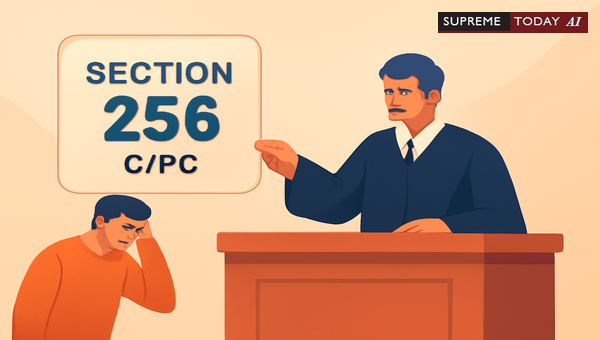
Misses : Automatic Conviction?
Imagine this: You've been summoned to court as an in a criminal case, but due to unforeseen circumstances—like illness, travel delays, or miscommunication—you miss the . Does this single absence spell doom, leading to an automatic conviction or case dismissal? This is a common concern in Indian criminal proceedings, often sparking anxiety among the and their families.
The question at the heart of this issue is: Failure of to Present in —what are the legal consequences? Fortunately, Indian law provides safeguards to prevent miscarriage of justice based on mere . This blog post delves into (Cr.P.C.), judicial interpretations, key case laws, and practical insights, drawing from authoritative sources. Note: This is general information and not specific legal advice. Consult a qualified lawyer for your situation.
Legal Framework: Section 256(1) Cr.P.C. Explained
Under Indian law, the failure of an to appear at the does not automatically result in conviction or immediate dismissal. Section 256(1) Cr.P.C. grants the Magistrate significant discretion. The provision states:
If the has been issued on , and on the day appointed for the appearance of the , or any day subsequent thereto to which the hearing may be adjourned, the does not appear, the Magistrate shall, notwithstanding anything hereinabove contained, acquit the , unless for some reason he thinks it proper to the hearing of the case to some other day.2024 0 Supreme(Del) 720
This language underscores that is not mandatory; the Magistrate must evaluate circumstances judiciously. Courts emphasize considering whether the non-appearance was deliberate or due to valid reasons, prioritizing over . Non-appearance at the alone does not mandate automatic or dismissal 2024 0 Supreme(Del) 720 2023 0 Supreme(AP) 1109.
Key Judicial Principles and Case Law
Indian courts, including the and High Courts, have repeatedly clarified that technical defaults should not override justice. Magistrates are urged to examine the 's conduct, reasons for absence, and overall case merits before acting.
- Judicial Discretion is Paramount: Courts hold that Section 256(1) aims to prevent miscarriage of justice, allowing flexibility based on facts. In , the stressed that a single default should not trigger automatic dismissal if not intentional
.
- Balanced Approach in Specific Cases: In complaints under , dismissing solely for non-appearance without probing reasons is unjustified 2023 0 Supreme(AP) 1109. Court discretion is necessary in acquitting due to complainant's absence; automatic undermines justice. 2025 Supreme(Online)(Ker) 56782
- Service of Matters: Non-appearance may stem from failed service. Courts must verify proper delivery, as in cases where witnesses couldn't appear due to non-service, leading to acquittals overturned on appeal. In every such case the serving Court shall satisfy itself that a valid service has been made or that there has been a failure of service... 2023 0 Supreme(Pat) 336
Further, in NI Act cases, acquittals on technical non-appearance of complainants (mirroring scenarios) are discouraged, especially with substantial amounts involved. The court remanded such matters for fresh evidence, affirming: Since the has been acquitted on a technicality for the failure of the complainant to appear... an opportunity ought to be granted... 2025 Supreme(Online)(Ker) 56782
Exceptions: When Courts May Take Stricter Action
While discretion favors leniency, exceptions exist for willful defiance:
- : Courts may dismiss the , acquit, or proceed if non-appearance is proven intentional 1993 0 Supreme(SC) 108.
- Repeated Defaults: Warrants may issue, or cases proceed if the repeatedly fails to appear 2022 0 Supreme(Cal) 1518 2024 0 Supreme(Ker) 275.
- Defense Disclosure Requirement: must typically disclose their defense on the date under , preventing delays. must disclose his defence on the first date of hearing... 2013 0 Supreme(Del) 1473
Mere non-appearance does not imply guilt or justify summary action, especially with reasonable cause shown
2022 0 Supreme(HP) 717. Courts advocate adjournment over penalties in genuine cases.
Approach of Courts: Upholding Justice Over
Judicial trends favor scrutiny over snap decisions:
- Examine reasons for absence (e.g., illness, communication failure).
- Consider party conduct and case stage.
- Avoid automatic outcomes to prevent injustice, as echoed in multiple rulings
2022 0 Supreme(HP) 717 2023 0 Supreme(AP) 1109.
For instance, even in serious appeals like murder convictions, courts overlooked counsel's failure to inform the of hearing dates, focusing on merits rather than absence 2018 0 Supreme(AP) 49 2018 0 Supreme(AP) 101. This reinforces that alone rarely derail substantive rights.
Practical Recommendations for and Courts
To navigate this effectively:
- For : Promptly inform the court of absence reasons via affidavit or counsel. Seek adjournment or video-conferencing if allowed.
- For Courts: Scrutinize non-appearance causes before discretion. Courts should exercise their discretion to uphold justice
2022 0 Supreme(HP) 717.
- Preventive Steps: Ensure proper service and defense outline at first opportunity 2013 0 Supreme(Del) 1473.
In complainant absence parallels, courts remand for evidence, highlighting: The appellant challenges the dismissal... due to their absence... should not be automatic... 2025 Supreme(Online)(Ker) 56782.
Conclusion: Justice Prevails with Discretion
In summary, an 's failure to appear at the typically does not lead to automatic conviction or dismissal under Cr.P.C. Section 256(1). Magistrates wield discretion to or proceed, guided by reason and justice, as affirmed across cases 2024 0 Supreme(Del) 720 2023 0 Supreme(AP) 1109
2022 0 Supreme(HP) 717.
Key Takeaways:- Non-appearance isn't fatal; reasons matter.- Courts prioritize merits over .- Always document valid excuses to aid discretion.
Stay informed, act promptly, and seek professional counsel. Understanding these nuances empowers better legal navigation in India's dynamic criminal justice system.
#CrPC256, #CriminalLawIndia, #AccusedRights















