Searching Case Laws & Precedent on Legal Query.....!
Analysing the retrieved Case Laws
Scanned Judgements…!



Searching Case Laws & Precedent on Legal Query.....!
Analysing the retrieved Case Laws
Scanned Judgements…!
Injury Details and Fatality - Several sources clarify that injuries caused in the incidents were not necessarily fatal or did not cause death in the ordinary course of nature. For example, 2024 0 Supreme(Cal) 946 emphasizes that only one injury (on the head) was fatal, while others were not of a very serious nature, and the accused can only be held liable for injuries caused in furtherance of common intention, not necessarily for the fatal injury. Similarly, 2024 0 Supreme(MP) 70 states that the medical evidence does not establish that the injury was fatal in the normal course, and witnesses' support regarding injuries was not always consistent.
Proving Fatal Injury and Intent - Multiple sources (2025 0 Supreme(All) 2178, 2021 0 Supreme(Ker) 1202) highlight that the prosecution failed to conclusively prove who caused the fatal blow or that the injuries were sufficient to cause death in the ordinary course. The focus is on whether the injury was caused intentionally or with knowledge to cause death; the mere presence of injuries does not automatically establish fatality or intent.
Discrepancies and Evidence Gaps - Several references (2024 0 Supreme(MP) 309, 2021 Supreme(Online)(KER) 18891, 2023 Supreme(Online)(KAR) 21427) mention discrepancies in witness testimonies, such as whether injuries to others were observed or whether weapons like MO1 were proved to be used. These inconsistencies weaken the prosecution's case regarding the cause of death and injury specifics.
Injury and Death Connection - Some sources (2025 4 Supreme 92, 2024 0 Supreme(Mad) 2351) note that although injuries like head blows and fractures were observed, expert opinions suggest that such injuries could result from falls or blunt force, not necessarily from intentional fatal attacks. The absence of clear evidence linking injuries directly to the accused's intent to cause death is emphasized.
Summary of Main Points and Insights:
The legal focus remains on whether injuries were caused intentionally or with knowledge to cause death, not merely on the occurrence of injury.
Analysis and Conclusion:
References:- 2024 0 Supreme(Cal) 946- 2024 0 Supreme(MP) 70- 2025 0 Supreme(All) 2178- 2021 0 Supreme(Ker) 1202- 2024 0 Supreme(MP) 309- 2021 Supreme(Online)(KER) 18891- 2023 Supreme(Online)(KAR) 21427- 2025 4 Supreme 92- 2024 0 Supreme(Mad) 2351
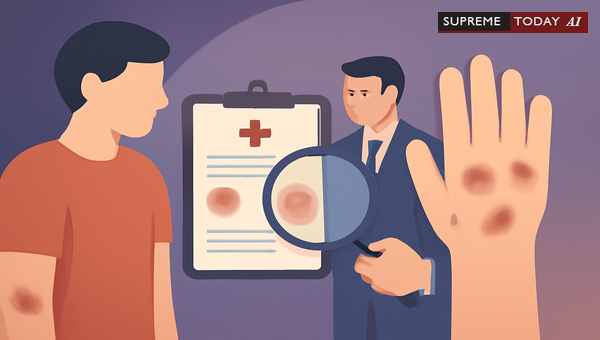
In high-stakes criminal trials, especially those involving assault or homicide, the presence of injuries on the accused often sparks intense debate. Prosecutors must prove their case , but what happens when the accused bears unexplained wounds? Does this automatically undermine the entire prosecution narrative? This question frequently arises: Injured is Not Speaking about Loss of Sight only Speaks about Injury Whether Fatal to the Prosecution.
This blog post delves into Indian criminal jurisprudence, examining whether minor or non-grievous injuries on the accused, left unexplained, demolish the prosecution's credibility. Drawing from landmark judgments, we'll explore the nuances, supported by medical evidence, eyewitness accounts, and judicial precedents. Note: This is general information based on case law and not specific legal advice. Consult a qualified lawyer for your situation.
The main legal finding is clear: the non-speaking injured's injuries—or more precisely, minor injuries on the accused—do not automatically negate the credibility of the prosecution case. The absence of an explanation for such injuries does not render the prosecution's case false, particularly when other evidence is clear, cogent, and creditworthy. The pivotal factor is the nature and severity of the injuries: are they grievous, and do they align with the case's circumstances? 2000 4 Supreme 435
Courts have consistently held that the prosecution is not obligated to explain every scratch or bruise on the accused if they are minor or non-grievous. As observed in (referred in 2000 4 Supreme 435):
Non-explanation of such injuries on accused cannot be a basis to discard the entire prosecution case. This is especially true when the evidence is otherwise clear, credible, and consistent.
This principle safeguards robust prosecutions from being derailed by peripheral issues.
In criminal trials under the (IPC), especially Sections 299, 300, 302, or 304, the focus remains on the victim's injuries. Courts assess if they were 'sufficient in the ordinary course of nature to cause death.' Medical opinions and eyewitnesses establish this threshold. Non-grievous injuries on the accused, even unexplained, fade in significance. 2025 1 Supreme 324
For instance, if medical evidence confirms the victim's wounds were lethal, minor accused injuries won't tip the scales unless they suggest a fabricated story. This aligns with broader evidence evaluation under the .
Medical reports are cornerstone evidence. They classify injuries as simple, grievous (under ), or fatal. In cases where victim injuries meet the 'sufficient to cause death' test, prosecution holds firm. 2025 1 Supreme 324
Eyewitnesses amplify this. Their accounts of the attack's ferocity, corroborated by medical findings, outweigh unexplained minor injuries on the accused. As one judgment notes, injuries not serious or grievous, if consistent with evidence, do not negate the case. 2025 1 Supreme 324
A related precedent highlights injured witnesses: PW.2-Mahipal, a key injured witness, suffered no fatal injury, yet his testimony stood because the absence of explanation didn't undermine the attack's severity.
While minor injuries rarely prove fatal, exceptions exist:
However, courts caution against over-reliance. In a murder case with (), non-fatal ligature marks on victims were corroborated, shifting conviction to without fixating on accused injuries. 2011 0 Supreme(Del) 982
Judicial trends reinforce selectivity. In a appeal (), the third limb of Section 300 focuses on intended injury sufficiency, not mere results. Heat-of-passion attacks with available weapons fell under , punishing under —unexplained minor injuries didn't alter this. 2021 0 Supreme(Mad) 2808
add layers. Under , an injured deceased's statement explaining injury cause gains admissibility if the maker dies. This strengthens prosecution despite accused injury gaps. 2022 0 Supreme(Mad) 2716
In another scenario, non-inspection of damaged evidence (like a bus) and unexplained accused injuries fueled reasonable doubt, leading to . Yet, this was alongside interested witnesses and missing independents—not standalone. 2021 0 Supreme(Mad) 2937
Corroboration remains king: 'Prosecution was able to establish that the accused acted further to a of causing bodily injury which was likely to cause death.' 2011 0 Supreme(Del) 982
For prosecutors:- Prioritize medical evidence proving victim injury lethality.- Secure reliable eyewitnesses detailing the assault.- Preemptively address minor accused injuries if possible.
For defense:- Highlight grievous unexplained injuries to sow doubt.- Challenge eyewitness credibility and medical classifications.
Accused parties should note: minor injuries alone rarely suffice for acquittal if prosecution evidence shines.
Unexplained minor injuries on the accused are typically not fatal to the prosecution, provided victim injuries are grievous, medically validated, and eyewitness-backed. Courts prioritize holistic evidence over isolated anomalies, ensuring justice isn't derailed by trivia. 2000 4 Supreme 435 2025 1 Supreme 324
Key Takeaways:- Minor/non-grievous injuries: Rarely undermine strong cases.- Grievous ones: Demand explanation to avoid suspicion.- Medical + eyewitness synergy: Builds unassailable credibility.- Always evaluate totality— no single factor dooms a case.
Stay informed on evolving jurisprudence. For tailored guidance, reach out to legal experts.
References:1. 2000 4 Supreme 435: Non-explanation of minor injuries not fatal if evidence cogent.2. 2025 1 Supreme 324: Medical evidence on non-grievous injuries supports prosecution.3. Other integrated sources as cited.
#CriminalLawIndia, #ProsecutionCase, #UnexplainedInjuries


not for the fatal injury. ... State of U.P., (1972) 2 SCC 537, the Hon’ble Supreme Court held the following: - “6. ….Apart from the one injury on the head, which proved fatal, the other injuries were not of a very serious nature…. ... (f) The broad substratum of the prosecution version must be taken into consideration and discrepancies which normally creep due to #HL_S....

The medical evidence also does not bring out that the injury which was caused, was fatal fatal injury in ordinary course of nature to cause death. ... At that time, the injured was fallen down and there was a head injury and blood was oozing out. Testimony of this witness has not been controverted in his cross-examination. ... Counsel for the appellant....

The prosecution has not been able to prove who caused the fatal blow. Moreover except injury no. 1 which is lacerated wound on the head and injury no. 7 which is contusion on the head, no other injuries are on the vital parts.The incident took place at the spur of the moment. ... Learned counsel further submitted that large number of persons have been roped in this case and prosecution h....
such as non-recovery of blood-stained clothes, certain other weapons etc. will not be fatal to the case of the prosecution. ... Whether or not there are discrepancies in the evidence; whether or not the evidence strikes the Court as genuine; whether or not the story disclosed by the evidence is probable, are all matters which must be ....

The injured lost his life due to the fatal injury caused by a weapon like a knife which was used on him by another stands well established. That the injured was murdered is quite evident from the medical evidence. ... Though MO1 has not been proved to be the weapon used to commit the crime, the description of the wound and the deposition of the Doctor who conducted the postmortem, indicates clearly that t....

The injured lost his life due to the fatal injury caused by a weapon like a knife which was used on him by another stands well established. That the injured was murdered is quite evident from the medical evidence. 7. ... The deposition of PW4 and PW5 also supports the case of the prosecution. The injury by its very description speaks of the same having been caused by a ....

The fatal injury caused on the deceased was by a blow to the head; a vital part of the body, with the reverse side of an axe. ... In cross examination, the Doctor deposed that the fatal injury can be inflicted by a hard and blunt object. ... and injuries to the three grandchildren; as per the story of the prosecution. ... This absolves the accused especially considering the testimony of the Doctor that t....

It was further contended that the Postmortem Doctor [PW14] did not speak as to whether these injuries sustained by the deceased are sufficient in the ordinary course of nature to cause death, and the Doctor also failed to specify the fatal injury among other injuries. ... She also speaks about the attack against PW2-Rajammal and PW3- Sivakumar. As already stated above, the injury sustain....

PW.2-Mahipal, who is stated to be the star injured witness who was allegedly injured in the incident has not suffered any injury with Mahipal then he would have caused fatal injury to Mahipal and would be having any difficulty in speaking.

But PW1 says that rider has sustained minor injuries, but PW3 says that he did not notice whether the rider had sustained injuries or not. ... And these are the discrepancies and only minor discrepancies and not goes to the very route of the case and all the witnesses PWs.1 to 3 speaks about the accident and PW3 also speaks about this petitioner ... He also admits that near the pl....

Since the maker of the statement is dead, the statement disclosing the cause for the injury gains relevancy and admissibility under Section 32 of Indian Evidence Act. The F.I.R came to be registered based on the statement given by the injured deceased, it speaks about the cause of injury.

The third limb of Section 300 IPC, does not speak about the resulted injury but it only speaks about the injury intended to be inflicted by the accused. The fine distinction between the second limb of Section 299 IPC and the third limb of Section 300 IPC is that the second limb of Section 299 IPC deals with injury likely to cause death, whereas the third limb of Section 300 IPC speaks that the intended injury to be inflicted is sufficient in the ordinary course of nature to c....
It is further submitted that the damaged bus was not subjected to inspection by the Motor Vehicle Inspector in order to ascertain the damage and to speak about the nature of damage. 6. The learned counsel for the appellant would further submit that the prosecution has not explained the injury sustained by the appellant. Further, during cross examination P.W.1 and P.W.2 have admitted that there are about 10 to 20 passengers were boarded in the bus, at the time of occurrence, however, none of th....

The last observation is that similarly, Tejpal fell down, and Prem Kumar held him, while Manoj and Kamal, tried to strangulate him. The strangulation attempt is corroborated by Ex. PW-5/A, which speaks about a ligature mark, Injury No. 6 (though it was not fatal).

The complainant as well as Panch witness have said that they were explained the characteristics of anthracene powder and ultra-violet lamp by the ACB Inspector and therefore, the experiment is also acceptable. Speaking about the so called contradictions in the evidence, one cannot lose sight of the fact that incident is of the year 1990 and a few immaterial contradictions here or there cannot be fatal to the case of the prosecution.


An indispensable Tool for Legal Professionals, Endorsed by Various High Court and Judicial Officers
Please visit our Training & Support
Center or Contact Us for assistance

Scan Me!
India’s Legal research and Law Firm App, Download now!


For Daily Legal Updates, Join us on :



 Back to top


