


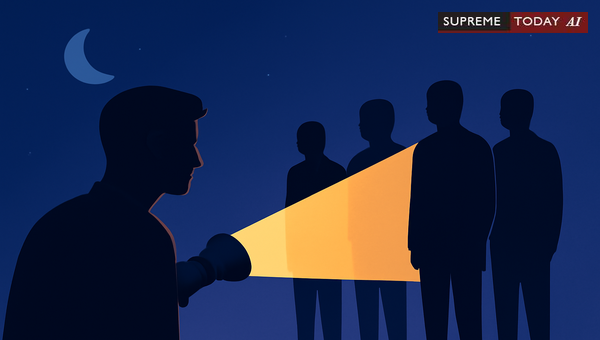
Is Nighttime Identification Reliable Without Evidence of Light Sources?
In criminal cases, often forms the backbone of prosecution. But what happens when identification occurs at night without any proof of lighting? Is such testimony reliable? Courts in India have repeatedly addressed this: identification during night without any evidence as to source of light is inherently unreliable and raises significant doubts, absent corroboration or safeguards like . This post dives into key legal findings, precedents, and practical insights to help you understand this critical issue.
The Core Legal Principle: Light is Essential for Credible Identification
Indian courts consistently hold that darkness undermines eyewitness accuracy. Without evidence of illumination—be it moonlight, streetlights, torches, or lanterns—identification becomes 'weak and unreliable.' As one judgment notes, there is no whisper in Ex. P-1 that there was some source of light at the scene. The omission cannot be ignored as insignificant. 1991 0 Supreme(SC) 284
The rationale is straightforward: human vision falters in poor light, leading to mistakes in recognizing faces, features, or even silhouettes. Courts demand proof of lighting conditions to assess credibility. For instance, There is conspicuous absence of any statement by any of the witnesses to suggest the presence of any luminous object at the scene of the occurrence or in the vicinity that would be a source of identifying the accused at night. 2023 0 Supreme(Pat) 126
This principle echoes in U.S. cases too, where sole witness accounts in flawed conditions are scrutinized heavily: But when, as here, a witness is the sole source of information, we 'cast a brighter light' on his account to ensure that it is reliable enough. 2024 Supreme(US)(ca3) 171
Landmark Court Precedents on Nighttime Identification
and rulings reinforce this stance:
- : At , it was 'quite dark,' making identification difficult without house lights. 2023 0 Supreme(Pat) 126
- : Even minimal light matters; assailants needed enough to target victims accurately. 2022 0 Supreme(All) 1664
- : Delayed or absent TIPs weaken in dark conditions. 2008 3 Supreme 629
- : Identification in total darkness, sans moonlight or artificial light, is doubtful. 2004 0 Supreme(Pat) 132
- : No light evidence at the scene renders ID 'doubtful.' 1993 0 Supreme(SC) 1176
These cases emphasize that mere court (dock) identification years later holds little weight without prior TIPs or lighting proof. The evidence of mere identification of the accused person at the trial for the first time is from its very nature inherently of a weak character. 1991 0 Supreme(SC) 284
The Role of and
Uncorroborated nighttime IDs rarely suffice for conviction. Courts require:- : Conducted promptly by magistrates to test memory under controlled conditions. Failure to hold one doesn't bar court ID but slashes its weight. 2008 3 Supreme 629- Strong Corroboration: Recovery of weapons, motive, prior enmity, or forensic links.
In one case under and , the informant claimed torch-light ID but omitted physical features or name sources: Omission of denoting physical features... clearly indicates that there was no light. Dock ID failed without IO examination or TIP, leading to acquittal. 2025 0 Supreme(Pat) 1294
Another ruling stresses: has no meaning at all where the Investigating Officer has not been examined and TIP is not available on record. 2025 0 Supreme(Pat) 1294
Lapses like non-production of torches further erode trust: No doubt, the torch light which was the only source of identification... has not been produced to the I.O. 2011 0 Supreme(Pat) 1397
Insights from Additional Judgments: Common Pitfalls
Other decisions highlight recurring issues:- No Street Light Proof: An electric post 17.52m away proved insufficient without functionality evidence. 2020 0 Supreme(Ker) 1020- Delayed or Absent IO Examination: In night incidents, unexamined probes doom IDs. 2025 0 Supreme(Pat) 1294- Dark Nights Sans Artificial Light: It was for the prosecution to divulge how the identification could be made on a dark night without any artificial source of light. Conviction set aside after 15 years. 2021 0 Supreme(Pat) 163- Inconsistent Features: No physical descriptions in FIRs signal poor visibility. 2023 0 Supreme(Bom) 3
Even in murder trials, weak night IDs lead to acquittals if uncorroborated: Material relied upon... is nothing but identification of accused in dock by nine witnesses. 2021 0 Supreme(Pat) 163
U.S. parallels warn against 'blinders': Officers can't ignore flawed methods. 2024 Supreme(US)(ca3) 171
Exceptions: When Night IDs May Hold Weight
Courts aren't absolute; exceptions exist:- Voice or Silhouette Recognition: If witnesses knew the accused well (family, neighbors). 1991 0 Supreme(SC) 284 2023 0 Supreme(Pat) 126- Prior Acquaintance: Recognition based on gait, voice, or build. 2025 Supreme(SRI)(SC) 9766- Prolonged Observation: Close, extended encounters in dim light, if credible overall.- Minimal Light Sources: Proven torches, lamps, or moonlight, though still needing corroboration. 2025 Supreme(SRI)(SC) 9766
However, even then, courts 'analyze the evidence... to bring home a conviction.' 2025 Supreme(SRI)(SC) 9766
Practical Recommendations for Investigations and Trials
To strengthen cases:- Document Lighting: Photograph scenes, seize torches/lanterns, note moonlight.- Conduct Timely TIPs: Before court, ideally within days.- Record Features Promptly: FIRs should detail height, build, clothing.- Examine IO Thoroughly: Probe lighting, witness positions.
Prosecutors must prove ; doubts benefit the accused. 2025 0 Supreme(Pat) 1294 2020 0 Supreme(Ker) 1020
Conclusion: Proceed with Caution in Darkness
Generally, nighttime identification without light source evidence is unreliable, demanding corroboration for conviction. Courts prioritize safeguards to prevent miscarriages. While exceptions apply for familiar accused, prosecutions falter on shaky IDs.
Key Takeaways:- Prove illumination or corroborate heavily.- Prioritize TIPs and fair probes.- Scrutinize dock IDs critically.
This post provides general insights based on precedents and is not legal advice. Consult a qualified lawyer for case-specific guidance. References drawn from cited judgments.
References:1. 1991 0 Supreme(SC) 284 - Light omission fatal.2. 2023 0 Supreme(Pat) 126 - No luminous objects.3. 2004 0 Supreme(Pat) 132 - Doubtful sans light.4. 2008 3 Supreme 629 - TIP delays weaken.5. 1993 0 Supreme(SC) 1176 - Scene light proof essential.6. Additional: 2024 Supreme(US)(ca3) 171, 2025 0 Supreme(Pat) 1294, 2025 Supreme(SRI)(SC) 9766, 2023 0 Supreme(Bom) 3, 2021 0 Supreme(Pat) 163, 2020 0 Supreme(Ker) 1020, 2011 0 Supreme(Pat) 1397.
#NightIdentification















