Searching Case Laws & Precedent on Legal Query.....!
Analysing the retrieved Case Laws
Scanned Judgements…!



Searching Case Laws & Precedent on Legal Query.....!
Analysing the retrieved Case Laws
Scanned Judgements…!
Bias Allegations Must Be Proved by the Parties - The law requires that any claim of bias be substantiated with evidence demonstrating reasonable, genuine, and justifiable apprehensions. Merely alleging bias is insufficient; the party alleging bias bears the burden of proof to establish its validity. For example, in legal proceedings, courts have emphasized that bias must be proved with factual evidence, and bald or self-serving allegations are inadequate to halt proceedings or overturn decisions ["2023 0 Supreme(Ker) 56"], ["2024 Supreme(Online)(MAD) 633"], ["2023 Supreme(US)(ca5) 173"], ["
Sapan Kumar Ram vs Indira Gandhi National Open University - Delhi
"].Types of Bias and Legal Standards - Bias can take various forms, including pecuniary, personal, or related to the subject matter. The test for bias involves assessing whether a reasonable, informed person would perceive a serious apprehension of bias under the circumstances. Courts have consistently held that the mere existence of allegations without supporting evidence does not establish bias ["2023 0 Supreme(Ker) 56"], ["2023 Supreme(US)(ca5) 173"].
Implications of Unsubstantiated Bias Claims - Courts have clarified that allegations of bias, when unsupported by concrete evidence, do not justify stopping proceedings, ordering stay, or invalidating decisions. In some cases, courts have dismissed bias claims as self-serving or based on mere assertions, emphasizing that proof is necessary for such allegations to influence the outcome ["
Sapan Kumar Ram vs Indira Gandhi National Open University - Delhi
"], ["2023 0 Supreme(Del) 3249"], ["Sapan Kumar Ram vs Indira Gandhi National Open University - Delhi
"].Judicial and Administrative Approach - When bias is alleged, courts and authorities typically require a hearing where the concerned individual is examined, and evidence is evaluated. Without such proof, proceedings are generally allowed to continue. The principle is that accusations of bias must be substantiated; otherwise, they are considered insufficient to affect the integrity of the process ["2023 0 Supreme(Ker) 56"], ["2023 Supreme(US)(ca5) 173"].
Specific Cases and Evidence - Several sources highlight that allegations of bias, especially based on anonymous complaints or vague assertions, are often rejected unless accompanied by clear, specific evidence demonstrating actual bias or prejudice. For instance, in cases involving departmental inquiries or disciplinary proceedings, unsupported bias claims have been dismissed when no concrete incidents or evidence have been presented ["2024 Supreme(Online)(MAD) 633"], ["2023 0 Supreme(Del) 3249"].
Analysis and Conclusion:The overarching principle across the sources is that bias must be proved by the parties alleging it. Merely making allegations without substantive evidence is insufficient to influence proceedings or decisions. Courts and authorities require a reasonable, justifiable basis for claims of bias, often through specific incidents or credible evidence. This approach safeguards the fairness and integrity of judicial and administrative processes, preventing baseless accusations from disrupting proceedings.
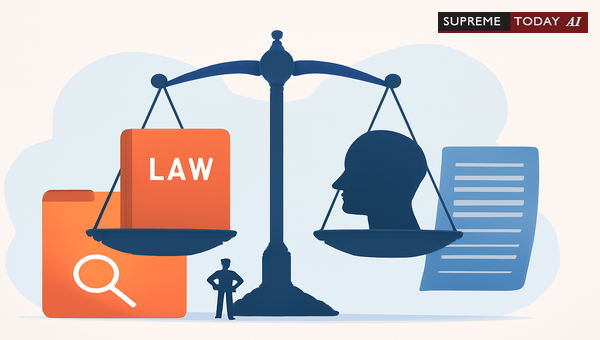
In legal proceedings, parties often rely on evidence to support their claims. But what happens when a party who could lead the best evidence chooses not to produce it? A common question arises: Whether evidence which a party can lead best doesn't produce in evidence to support their case, can an be drawn?
This principle, rooted in , allows courts to presume that withheld evidence would be unfavorable to the withholding party. However, its application is nuanced, especially in sensitive allegations like bias. Courts typically require concrete proof rather than presumptions alone, emphasizing fairness and . This post examines the legal framework, judicial precedents, and practical implications, drawing from key cases. Note: This is general information, not specific legal advice. Consult a qualified lawyer for your situation.
The mandates that parties present the most reliable and direct evidence available. Failure to do so may invite an under Section 114(g), which states courts may presume that evidence not produced would, if produced, be unfavorable.
However, this presumption is discretionary—not automatic. Courts assess:- Whether the evidence was peculiarly within the party's control.- If was exercised to procure it.- The context of the claim, such as allegations of bias, where mere non-production doesn't always trigger presumption without foundation.
In bias claims, for instance, the alleging party bears the heavy burden to prove it, and non-production of best evidence strengthens the case against the allegation rather than presuming bias itself. 1986 0 Supreme(Ker) 61 2012 0 Supreme(Ori) 20
A core principle is that bias must be proved by the party alleging it. Courts do not presume bias; the claimant must provide credible evidence showing a or suspicion. Bias, as a or , is hard to prove directly, so the test is objective: Would a reasonable person apprehend bias? 2023 0 Supreme(Gau) 1433 2005 0 Supreme(Kar) 475 2015 0 Supreme(Mad) 2659
Mere allegations or conjecture fail. As held, allegations of bias require factual basis—mere allegations or conjecture are insufficient.2002 0 Supreme(Del) 47 2005 0 Supreme(Kar) 475
If the alleging party withholds best evidence (e.g., documents or witnesses proving bias), courts may draw against the allegation, dismissing it as unsubstantiated. Conversely, the decision-maker isn't presumed biased for non-production by the accuser.
02000090833
(The '' test imposes a high threshold... mere dissatisfaction with a judge's prior rulings does not suffice.)
Indian courts have clarified this in various contexts, often linking non-production to failed claims.
11111111111
(Allegations of bias based on prior judgments deemed unfounded.)
In forgery cases, Bias needs to be proved, which the Petitioner has failed to do and making bald allegations is not sufficient.2024 Supreme(Online)(DEL) 8316
Even with personal interest, bias isn't automatically inferred if necessity demands (e.g., statutory roles). No reasonable apprehension? Proceedings stand. 2019 0 Supreme(Chh) 513 2023 0 Supreme(Gau) 1433
Non-production by the alleging party here reinforces dismissal, as courts prioritize judicial integrity over unproven fears.
| Scenario | Likely? | Rationale ||----------|-----------------------------|-----------|| Bias alleged, no evidence produced | Yes, against allegation | Burden unmet 1986 0 Supreme(Ker) 61 || Statutory necessity, interest shown | No | No real apprehension 2019 0 Supreme(Chh) 513 || Prior rulings cited only | No | High threshold
|| Concrete incidents withheld | Yes | applies |
While Section 114(g) empowers adverse presumptions for withheld best evidence, courts apply it judiciously, especially in bias contexts. The onus remains firmly on the alleging party to substantiate with facts, not assumptions. Bias cannot be presumed without proof, ensuring impartiality and efficiency. Litigants should prioritize robust evidence to avoid pitfalls.
Sources: 1986 0 Supreme(Ker) 61 2012 0 Supreme(Ori) 20 2023 0 Supreme(Gau) 1433 2005 0 Supreme(Kar) 475 2002 0 Supreme(Del) 47 02000090833 11111111111 2021 0 Supreme(Del) 1614 2022 3 Supreme 17 2024 Supreme(Online)(DEL) 8316 2022 0 Supreme(Mad) 3501
Stay informed on evidence law—share your thoughts below!
#AdversePresumption #ProvingBias #EvidenceLaw


Since the inquiry proceedings stand vitiated on ground of bias of the IO, this Court need not really delve into the other issues strenuously contested between the parties. ... Charge Memorandum was issued to the Petitioner on 22.02.2010 alleging that Petitioner had indulged in inappropriate and immoral acts with girl students by holding their hands. ... bias. ... of bias. ... Munuswamy Mudaliar, [1988 Sup....

The exposition of law casts the onus of proof on the shoulders of the person alleging bias to substantiate that his apprehensions are reasonable, genuine and justifiable. 18. ... Bias has many forms. It may be pecuniary bias, personal bias, bias as to subject-matter in dispute, or policy bias etc”. 13. Again, in Govt. of T.N. v. ... By the very nature of his work he has....

As the court in Bey pointed out, “[t]o receive a federal evidentiary hearing, a habeas corpus petitioner must allege facts that, if proved, would entitle him to relief.” 9 Applying this principle, the court in Bey affirmed the district court’s denial of habeas relief on a juror bias claim ... The juror now accused of bias, Juror 27, did not respond to the question. ... concerning “private communication, contact, or tampering ....
An allegation of bias, in our opinion, is not just a mere act of discourtesy but a contempt of the Court. " 7.1 Gopal Sri Ram JCA of the Court of Appeal pointed out, not at the instigation of the parties, in Court must determine the relevancy of documents at trial and not that of the parties, though they may raise objections. ... on evidence adduced in Court, they need not necessarily amount to bias or the appearance of #H....

I have considered D-6 dated 07.03.2018 and am of the view that by simply alleging bias and malice the inquiry cannot be stopped. CO nowhere has alleged any incidence of bias against the IA. ... In DOS-11, IA has categorically referred to the gist of all DOS and brought on record that there is not even a single instance of bias alleged by the CO. By simply alleging bias, the inquiry canno....

I have considered D-6 dated 07.03.2018 and am of the view that by simply alleging bias and malice the inquiry cannot be stopped. CO nowhere has alleged any incidence of bias against the IA. ... In DOS-11, IA has categorically referred to the gist of all DOS and brought on record that there is not even a single instance of bias alleged by the CO. By simply alleging bias, the inquiry canno....

While being so, one signed anonymous complaint was lodged as against the petitioner alleging that the petitioner had acted in communal bias and he had also shown gender bias. ... Though, the respondents received anonymous complaint alleging that the petitioner acted in communal bias and gender bias manner among the staffs, on perusal of the charge, it does not contain any specific allega....

I have considered D-6 dated 07.03.2018 and am of the view that by simply alleging bias and malice the inquiry cannot be stopped. CO nowhere has alleged any incidence of bias against the IA. ... In DOS-II, IA has categorically referred to the gist of all DOS and brought on record that there is not even a single instance of bias alleged by the CO. By simply alleging bias, the inquiry canno....

We have heard the learned counsel for the respective parties at length. ... There are allegations of bias against the Chairman right from the very beginning. ... Be that it may, there were specific allegations of bias against the Chairman and the Bank right from the initiation of the departmental proceedings made by the appellant. ... While he was serving at Pratap Pur Branch during the period 27.06.2008 to 21.11.2008, a complaint was made ....
Being guilty of forgery, Petitioner cannot claim equity and escape the rigors of law by levelling false allegations of bias. Bias needs to be proved, which the Petitioner has failed to do and making bald allegations is not sufficient. ... In the present case, Article-I of the charge was found to be ‘proved’ by the IO but Article-II was ‘partially proved’. ... "With the consent of the parties#HL....

But that cannot be a reason for alleging bias against them, unless it is proved through conclusive evidence. The petitioner's allegation of bias and malafides against some of the members are also not supported by any undisputed evidence to show that they will act in a biased manner, excepting for stating that they are associated with the fourth respondent as some of the members of the Internal Complaints Committee are the members of the very same department to which the petit....
In one of the most celebrate cases, R. vs. Bow Street Metropolitan Stipendiary Magistrate and Others, (1999) 2 WLR 272 [“the Pinochet case”] discussed those tests. The party alleging bias is not under an onus to prove bias; rather it is the danger or likelihood of bias of the public official concerned, in the circumstances of a given case. As in all cases where bias is alleged, the issue which the court has to address itself is as to whether there was likelihood of bias. Ther....

Submission is that this statement of deceased should be treated as dying declaration as deceased died within few hours after this statement. The learned A.G.A. has submitted that there is no evidence on record to demonstrate that P.W.6 Ugra Singh Yadav, the first I.O. was in any manner related to complainant side except the bald written statement filed on behalf of appellant Shiv Kesh. The learned A.G.A. has also drawn the attention towards the statement of P.W.6 Ugra Singh Yadav wherein it wa....

But we cannot overlook the fact that if Ramakotaiah's allegations are held proved, that would inevitably create a serious infirmity in the impugned order, because then the impugned order would naturally become invalid inasmuch as it was passed by a person who by his bias had been disqualified from trying the cause.” It is also important to note that the said petitioner had apprehension of bias even during pendency of proceeding before the Minister. Ultimately, the facts to support pl....

"Real likelihood" depends on the impression which the Court gets from the circumstances in which the judges were sitting. The term "real likelihood of bias" is used to show that it is not necessary that actual bias should be proved. This addresses the issue whether, given the circumstances, there is a real chance that the claimed conflict of interest might have had some effect on the decision-making process that in fact took place. It is unnecessary and, indeed, might be most....


An indispensable Tool for Legal Professionals, Endorsed by Various High Court and Judicial Officers
Please visit our Training & Support
Center or Contact Us for assistance

Scan Me!
India’s Legal research and Law Firm App, Download now!


For Daily Legal Updates, Join us on :



 Back to top


