


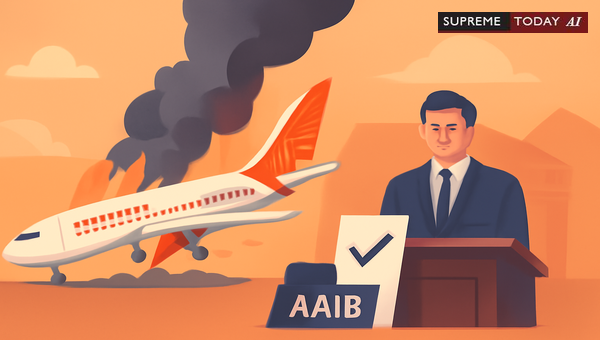
Plane Crash: AAIB Enquiry Not for Assigning Blame, Says – Union Clarifies No Blame on Pilot
Introduction
The tragic plane crash has sparked intense debate over accountability in aviation disasters. A key question arises: Plane Crash AAIB Enquiry Not for Assigning Blame Says Union Clarifies no Blame Attributed to Pilot. This blog post delves into the 's nuanced comments, the findings, and the legal implications for negligence, liability, and safety protocols. Drawing from judicial rulings and related cases, we analyze how courts balance investigative reports with tort law principles, offering insights for aviation stakeholders. Note: This is general information, not legal advice—consult professionals for specific cases.
Background of the Crash
The incident involved an aircraft descending in poor visibility near Mangaluru airport on , leading to fatalities and injuries. The AAIB enquiry scrutinized pilot actions, airport authority compliance, and . The later examined these findings, focusing on and liability under aviation statutes. In a related directive, the was urged to act on the report for the Mangaluru crash involving Express
.
This case highlights tensions between accident investigations and blame attribution, with the clarifying that AAIB enquiries primarily aim to enhance safety, not apportion fault.
Legal Framework Governing Aviation Incidents
India's primary statute for air carriage liabilities, the Act imposes duties on carriers and airports:- and 75 mandate safety measures and , holding parties liable for knowing probable 2009 0 Supreme(Guj) 574.
Tort Law Principles of Negligence
Negligence requires proving duty, , , and . Pilots and airport authorities owe a high standard of care in aviation, where breaches can lead to severe consequences.
allow admissibility of official reports like the under the . The upheld the report's genuineness, proper proof, and custody, making it pivotal evidence 2009 0 Supreme(Guj) 574.
Key Findings from the AAIB Enquiry
Causes and Pilot Actions
The enquiry pinpointed:- Pilots descending below 500 feet minimum altitude without runway sighting, violating SOPs.- Failure to execute a in deteriorating visibility.- Pilot-in-command prioritizing visual runway location over instruments; co-pilot's inadequate input exacerbated risks 2009 0 Supreme(Guj) 574.
These actions were deemed reckless, with knowledge of accident probability.
Airport Authority's Role
The authority breached duty by not providing data to pilots. However, pilot negligence was the 2009 0 Supreme(Guj) 574. This mirrors U.S. cases where air traffic controllers' instructions contributed but did not absolve pilots: We do not think that... the District Court could conclude as a matter of law that Midwest’s conduct did not proximately cause the fatal crash 2021 Supreme(US)(ca2) 152.
Comparative Insights from Other Crashes
In another probe, initially attributed fault to pilot error in climbing amid rising terrain, later revised—echoing how enquiries evolve beyond initial blame 2022 Supreme(US)(ca9) 473. Similarly, Traffic Information Service (TIS) failures in U.S. mid-air collisions underscore shared duties, as neither plane requested Flight Following 2023 Supreme(US)(ca11) 213. These parallels reinforce that enquiries focus on systemic improvements, not just individual fault.
Rulings and Comments
Admissibility and Evidence Affirmation
The Court affirmed the report's evidentiary value, rejecting challenges to its authenticity 2009 0 Supreme(Guj) 574.
Standards of Care and Liability
Key observations:- Strict SOP adherence is mandatory for pilots and authorities.- Reckless conduct in poor visibility invites liability under tort and statutory law.- Airport breaches contribute but do not negate pilot responsibility 2009 0 Supreme(Guj) 574.
The Union clarified no direct blame on the pilot, aligning with the Court's view that AAIB enquiries are not fault-finding exercises but safety tools.
Broader Impact on Aviation Safety
The ruling stresses timely RVR dissemination, instrument reliance, and training. It echoes maritime analogies where masters must warn pilots of peculiarities, though inconsistent warnings complicate liability
.
For compensation, a multiplier of 9 was applied for a 56-year-old deceased, balancing contributions from all parties 2009 0 Supreme(Guj) 574.
Lessons from Related Cases
The Mangaluru crash's parallels other incidents, prompting government action
. In consumer forums, victim profiles—like senior advocates in unrelated trips—highlight compensation needs, but aviation cases prioritize procedural rigor 2024 Supreme(Online)(NCDRC) 860. U.S. precedents on further illustrate multi-party fault dynamics 2021 Supreme(US)(ca2) 152.
Key Takeaways and Recommendations
- Primary Liability: Rested on pilots' reckless descent, despite airport lapses 2009 0 Supreme(Guj) 574.
- Enquiry Purpose: AAIB probes enhance safety, not assign blame, as per .
- Legal Precedents: Reinforce high care standards, evidence rules, and shared duties.
Recommendations:- Bolster SOP training for pilots and staff.- Mandate real-time RVR and visibility data sharing.- Conduct regular safety audits and simulations.- Foster judicial oversight for regulatory compliance.
Conclusion
The crash ruling underscores aviation's unforgiving nature, where negligence—pilot or authority—demands accountability while prioritizing prevention. The 's stance clarifies AAIB's role, ensuring enquiries drive reforms without premature blame. For stakeholders, this serves as a call to elevate safety protocols. Always seek tailored legal counsel for aviation matters.
Disclaimer: This post provides general insights based on public records and is not legal advice. References include 2009 0 Supreme(Guj) 574,
, 2021 Supreme(US)(ca2) 152, 2022 Supreme(US)(ca9) 473, 2023 Supreme(US)(ca11) 213,
, 2024 Supreme(Online)(NCDRC) 860. #AirIndiaCrash, #AviationLaw, #SupremeCourtRuling


















