




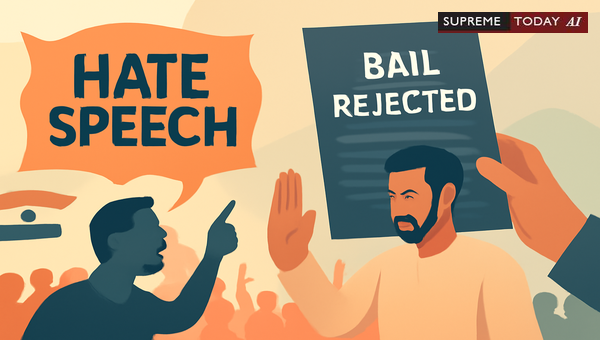
Causing Violence: Rejection Explained
In an era of polarized discourse, social media, and public speeches, the line between free expression and dangerous often blurs. A pressing legal question arises: hatred speech resulting large scale violence rejected—can courts deny when triggers widespread unrest? Under Indian law, yes, is typically rejected in such cases to safeguard and prevent further harm. This post delves into the legal principles, judicial precedents, and key considerations, drawing from authoritative sources. Note: This is general information, not legal advice; consult a qualified lawyer for specific cases.
Understanding Under Indian Law
is broadly defined as expressions that vilify, humiliate, or incite hatred against a group based on race, religion, caste, or community, with the potential to cause societal harm including violence 2023 0 Supreme(SC) 5 2022 0 Supreme(Del) 463. Courts apply an objective test: whether a reasonable person, aware of the context, would view the speech as exposing the group to hatred or inciting violence 2022 0 Supreme(Del) 463 2022 0 Supreme(Raj) 1429.
Key elements include:- Offensive content: Use of words, symbols, or gestures likely to cause anger, alarm, or resentment 2023 0 Supreme(SC) 5.- : Speech must provoke 'hatred' and violence towards the targeted group, distinguished from mere discussion or advocacy 2021 0 Supreme(Bom) 1067. Likelihood of violence, , or hatred triggers penal action 2023 0 Supreme(SC) 5.- Societal impact: Beyond individual distress, it can lead to discrimination, ostracism, or even genocide 2022 0 Supreme(Del) 463.
In cases like riots following inflammatory speeches, such as the Mumbai riots () with large-scale arson, deaths, and property damage 2022 0 Supreme(SC) 1129, courts emphasize the real-world consequences.
Constitutional Balance: Free Speech vs.
protects freedom of speech, but apply under for , decency, or morality 2022 0 Supreme(Raj) 1429. Speech causing or likely to cause or violence falls outside protection 2023 0 Supreme(SC) 5.
The in Amish Devgan v. UOI () SCC Online SC 994 held that hate propaganda undermines democracy, dignity, and social cohesion 2022 0 Supreme(Del) 463. Restrictions, including denial, are justified when:- Speaker's influence: 'Who' speaks matters—the reach of influential figures amplifies risk 2023 0 Supreme(SC) 5 2022 0 Supreme(Raj) 1429.- Content and intent: Even disguised intent requires scrutiny; speech inciting non-physical or physical harm, like violence, is penalized
PRESENT The Hon`ble Mr Justice R. PONGIAPPAN CRIMINAL ORIGINAL PETITION No.2424
.under also imports 'tendency to by actual violence or ' 2015 0 Supreme(Bom) 2640. Criticism without , like political cartoons, remains protected 2015 0 Supreme(Bom) 2640.
Judicial Approach to in Violence Cases
rejection is common when demonstrably results in large-scale violence. Courts prioritize:- Impact assessment: Profound danger from influential speakers in sensitive contexts 2023 0 Supreme(SC) 5 2022 0 Supreme(Raj) 1429.- Prevention of harm: Denying upholds public safety 2022 0 Supreme(Del) 463.
In riot cases, like Shiv Vihar violence () with destruction and deaths 2021 0 Supreme(Del) 226, may be denied if evidence links the accused. However, lack of substantial evidence or unreliable witnesses can lead to grants 2021 0 Supreme(Del) 226.
Conversely, in a tweet criticizing misinformation without promoting enmity or disorder, courts under , noting no intent or likelihood of harm 2021 0 Supreme(Bom) 1067. Speeches opposing government policies without threatening peace also avoid 2020 0 Supreme(All) 883.
Key Factors for Denial
- Proven causation: Speech linked to violence, e.g., riots causing 'large scale loss of lives and damage' 2022 0 Supreme(SC) 1129.
- Objective likelihood: 'Likelihood or similar statutory mandate to violence, or 'hatred' when satisfied would result in penal action' 2021 0 Supreme(Bom) 1067.
- Contextual scrutiny: Influence, timing, and audience 2022 0 Supreme(Raj) 1429.
Exceptions and When May Be Granted
Not all provocative speech warrants rejection. Courts distinguish:- Mere offense or criticism without 2022 0 Supreme(Raj) 1429.- No direct link to disorder, as in for reposted videos lacking enmity promotion 2021 0 Supreme(Bom) 1067.- Unreliable evidence, e.g., CCTV, witnesses, or CDR not placing accused at scene 2021 0 Supreme(Del) 226.
In Dr. Kafeel Khan's case, under was invalidated for lack of material showing instigation, emphasizing no proximate threat 2020 0 Supreme(All) 883. Political speeches calling for unity, not hatred, pose no risk 2020 0 Supreme(All) 883.
Recommendations include:- Clear criteria: content, intent, impact, speaker influence.- Lean towards denial in violence-linked cases.- Balanced scrutiny in sensitive contexts 2023 0 Supreme(SC) 5 2022 0 Supreme(Del) 463 2022 0 Supreme(Raj) 1429.
Broader Implications and Reforms
erodes social fabric, as seen in commissions like Sri Krishna, obligating governments to act on riot recommendations, provide aid, and reform police 2022 0 Supreme(SC) 1129. Journalists facing threats post-debates highlight enforcement challenges 2020 0 Supreme(SC) 697.
Courts urge reconciliatory efforts, recognizing past dignity denials, but firmly penalize true 2020 0 Supreme(SC) 697.
Conclusion and Key Takeaways
When incites or causes large-scale violence, Indian courts generally reject to avert further harm, aligning with constitutional limits and precedents 2022 0 Supreme(Del) 463. Free speech thrives, but not at public safety's expense.
Key Takeaways:- Assess objectively: content, context, impact 2022 0 Supreme(Del) 463.- Influential speakers face higher scrutiny 2023 0 Supreme(SC) 5.- No ? likely viable 2021 0 Supreme(Bom) 1067.- Always prioritize evidence and proportionality.
Stay informed, speak responsibly. For personalized guidance, seek legal counsel.
References:1. 2023 0 Supreme(SC) 5: definition, restrictions.2. 2022 0 Supreme(Del) 463: Societal impact, views.3. 2022 0 Supreme(Raj) 1429: Context, influence in .4. Others integrated as cited.
#HateSpeech #BailRejection #IndianLaw












