


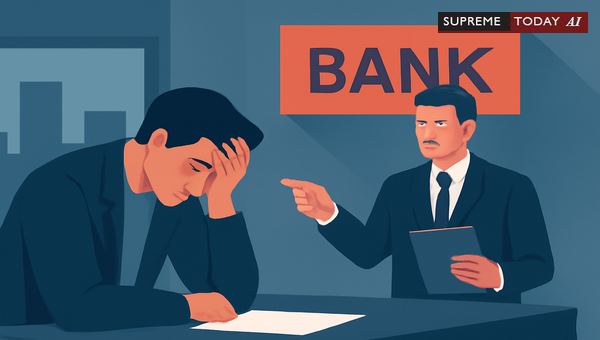
Bank Officer Not Liable for Loanee's Suicide: Legal Insights
In the high-pressure world of banking and lending, tragic events like a borrower's suicide can lead to serious legal scrutiny. Families may allege that harsh loan recovery tactics or refusals pushed the individual over the edge. But is a bank officer truly liable? The question Bank Officer is Not Liable if Loanee Get Suicide captures a common concern in Indian courts, centered on abetment under . This post breaks down the legal framework, key cases, and practical takeaways, drawing from established precedents. Note: This is general information, not legal advice. Consult a qualified lawyer for specific cases.
Overview of Liability in Loanee Suicide Cases
The core issue revolves around proving under . Courts consistently emphasize that liability requires more than just a loan denial or recovery notice—it demands clear evidence of to instigate the suicide. Mere administrative actions in a bank officer's duty do not suffice. As one ruling notes, the prosecution must demonstrate a clear between the accused's actions and the deceased's decision to take their life 2020 0 Supreme(Bom) 822 2013 6 Supreme 366.
Without , bank officers are generally protected. This principle shields professionals performing routine duties, preventing from derailing careers.
Defining Abetment: The Threshold
What Constitutes Abetment?
Under , abetment means intentionally aiding, instigating, or abetting the suicide. Courts have ruled that:- Refusal to grant a loan or issuing notices alone does not qualify. Mere refusal to grant a loan or issuing a notice does not constitute abetment unless there is evidence of to drive the individual to suicide. The absence of such absolves the bank officer from liability 2020 0 Supreme(Bom) 822 2013 0 Supreme(SC) 1078.- Direct evidence, like a suicide note explicitly blaming instigation, is crucial. If absent, proceedings may be quashed 2010 6 Supreme 376 2019 0 Supreme(Bom) 312.
Landmark Case Law
- Dilip s/o Ramrao Shirasao and ors vs. State of Maharashtra: The court quashed an FIR against a bank manager, holding that loan refusal did not amount to abetment without evidence 2020 0 Supreme(Bom) 822.
- Madan Mohan Singh v. State of Gujarat: The stressed, there must be allegations indicating that the accused had instigated or aided the deceased in committing suicide 2018 5 Supreme 345.
These cases illustrate that emotional distress from financial decisions isn't enough— (guilty mind) must be proven.
Bank Officers' Duties and Limits of Liability
Bank officers handle loans, insurance schemes, and recoveries daily. Related disputes often involve crop loans or insurance under schemes like . While these highlight bank responsibilities, they reinforce that standard procedures don't imply criminal .
In crop insurance cases, banks act as nodal points for loanee farmers. For instance, the responsibility to insure the loanee farmer and get the premium amount deducted from... Hence, the is not liable to pay any compensation to the complainant
. Non-loanee farmers may face data errors, but banks aren't criminally liable for clerical mistakes: The is responsible for accurate data submission in crop insurance claims, and errors leading to compensation discrepancies must be rectified by the bank 2025 0 Supreme(Mad) 2173.
Loan defaults and settlements further show routine actions. In cheating allegations, courts quash cases post-: Dispute between parties has been settled through ... No useful purpose would be served in allowing to continue prosecution against petitioner... From reading of F.I.R. no offence, as alleged, is made out against petitioner being 2025 0 Supreme(Pat) 464.
Even in for vehicle loans, responsibility lies with loanees: the first responsibility is of loanee to insure the vehicle and if the bank gets insurance then premium liability is of loanee
. Courts dismiss consumer complaints if arbitration remedies exist: The complainant should have pursued remedies under the before approaching the
H. D. F. C. Bank Limited VS Chandra Shekhar
.
These examples underscore that banks and officers follow protocols. Misconduct like leads to dismissal, but that's departmental, not : a Bank Officer having regard to the nature of duty involved, should act with utmost integrity... the punishment imposed by the disciplinary authority unless shocking to the conscience of the Court is not subject to judicial review 2015 0 Supreme(Gau) 81 2015 0 Supreme(Gau) 1069.
When Could Liability Arise?
Typically, no—but extreme harassment might cross the line. Courts look for:- Repeated threats beyond legal recovery.- Personal animosity, not professional duty.- Corroborated evidence in FIR or notes.
In loan contexts, settlements or closures negate ongoing disputes, as in
S.F. Farhad Hossain Vs the State and another - Supreme(BD)(SC) 8448
, where officers disbursing loans as public servants faced no liability.Practical Recommendations for Bank Officers
To minimize risks:- Document Everything: Record all borrower interactions, loan refusals, and notices meticulously. This proves adherence to standards and lack of .- Follow Protocols: Stick to RBI guidelines on recovery; avoid verbal threats.- Training: Emphasize empathy in communications, especially with vulnerable loanees.- Legal Support: If FIR'd, seek quashing under , focusing on absent .
For legal counsel: Challenge FIRs early, highlighting no direct .
Conclusion: Protection Through Precedent
Generally, a bank officer is not liable if a loanee commits suicide, absent proof of intentional abetment under . Routine actions like loan refusals or notices, even in insurance or default scenarios, do not meet the threshold. Precedents like Dilip and Madan Mohan provide strong defenses, while related cases on loans and insurance affirm banks' limited criminal exposure.
Bankers, stay diligent—documentation is your shield. This evolving area underscores balancing business with humanity. Always seek professional advice tailored to your situation.
Key Takeaways
- is key; no , no abetment.
- Quash baseless FIRs with case law.
- Document to demonstrate good faith.
References: 2020 0 Supreme(Bom) 822 2013 6 Supreme 366 2013 0 Supreme(SC) 1078 2018 5 Supreme 345 2010 6 Supreme 376 2019 0 Supreme(Bom) 312
2025 0 Supreme(Pat) 464
2025 0 Supreme(Mad) 2173
H. D. F. C. Bank Limited VS Chandra Shekhar
2015 0 Supreme(Gau) 81 2015 0 Supreme(Gau) 1069S.F. Farhad Hossain Vs the State and another - Supreme(BD)(SC) 8448
#BankLiability #AbetmentSuicide #IPC306















