


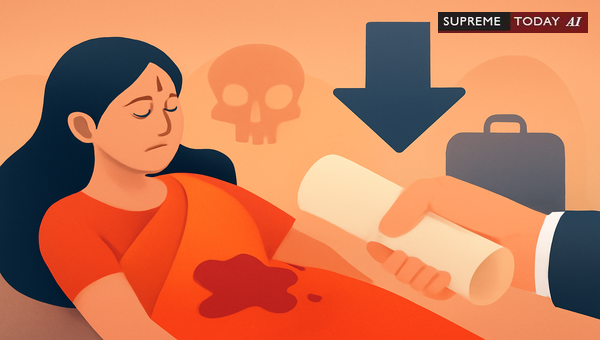
Is Necessary for Cases?
remains one of the most tragic and pressing issues in Indian society, often shrouded in questions about evidence and proof. A common query arises: whether injury on the body of deceased women is necessary in the case of ? This question strikes at the heart of legal proceedings under , where families seek justice amid allegations of and harassment.
In this post, we'll break down the legal criteria, the role of bodily injuries, judicial interpretations, and insights from key cases. While bodily injuries can strengthen a case, they are not always mandatory—provided other essentials like and proximate dowry-related harassment are proven. Let's dive into the details.
Understanding Under Indian Law
is governed primarily by , which addresses the death of a woman caused by burns, , or under unnatural circumstances within seven years of marriage, linked to dowry demands. creates a if these ingredients are met, shifting the burden to the accused.
2001 0 Supreme(AP) 102
The law aims to protect married women from harassment, but courts scrutinize evidence rigorously. Typically, the prosecution must establish:
- Death within seven years of marriage: A strict timeline.
2001 0 Supreme(AP) 102 2023 0 Supreme(UK) 179 2017 0 Supreme(Del) 3760
- : Not normal circumstances, including burns, drowning, hanging, or suicides linked to .
2001 0 Supreme(AP) 102 2017 0 Supreme(Del) 3760
- or harassment soon before death: Directly tied to dowry demands, with a 'live link' in time—not remote incidents. 2017 0 Supreme(Del) 3760
2021 0 Supreme(All) 588
Is a Mandatory Requirement?
No, on the deceased is not strictly necessary for a conviction, but it plays a pivotal role in many cases. Section 304B specifies death caused by 'burns or or otherwise than under normal circumstances'. The 'or otherwise' clause broadens the scope to include suicides, poisonings, or hangings without visible external injuries, as long as is proven.
2001 0 Supreme(AP) 102
When Bodily Injuries Strengthen the Case
- Presence of injuries like burns, fractures, abrasions, or ligature marks indicates physical , supporting claims. Postmortem reports distinguishing (pre-death) from injuries are crucial.
2001 0 Supreme(AP) 102 2025 0 Supreme(Jhk) 1440
- In one case, 'injury marks have otherwise been found on the body of the deceased', linking strangulation to dowry demands, leading to conviction under Section 304B. 2022 0 Supreme(All) 1253
Absence of Injuries: Does It Weaken the Prosecution?
Courts have acquitted in cases lacking injury evidence or proximate :- 'No injury was found on the body of the deceased', and without ingredients, no case was made out.
- Another ruling noted, 'there was no injury found on body of the deceased Raju, absence of injury on person of deceased Raju itself creates doubt whether death of deceased Raju was '. 2019 0 Supreme(Del) 2499- In a suicide case, despite burns, acquittal followed as 'nothing is shown in evidence to arrive at a conclusion that the victim was subjected to in connection with demand for dowry'. No presumption under Section 113B applied. 2019 0 Supreme(Ker) 840
However, via hanging or asphyxia can suffice if harassment is proximate, even without marks: 'on the person of the deceased either on the external part of the body or the internal parameters, no....' (no signs of throttling). 2018 0 Supreme(MP) 489
Key Criteria for Proving
To invoke the presumption:1. : Burns, injuries, drowning, or suicides. Natural deaths are excluded. 2017 0 Supreme(Del) 3760 2025 0 Supreme(Jhk) 14402. Proximate : 'Soon before' is relative—courts assess facts for a live connection. Testimonies, , or circumstantial evidence work. 2017 0 Supreme(Del) 3760
3. Dowry Link: Specific demands, not vague allegations. 2021 0 Supreme(All) 588
| Criteria | Description | Key Sources ||----------|-------------|-------------|| Within 7 years | (burns, injuries, etc.) |
2001 0 Supreme(AP) 102 || Soon before | Harassment tied to dowry | 2017 0 Supreme(Del) 3760
|| evidence | Supports violence, but not mandatory | 2025 0 Supreme(Jhk) 1440 2015 0 Supreme(Ori) 210 || Presumption | Section 113B shifts burden |
2001 0 Supreme(AP) 102 |
Judicial Interpretations and Case Insights
Courts emphasize balance:- Proximity is key: Remote harassment doesn't trigger presumption. 2017 0 Supreme(Del) 3760- In abetment cases, 'the prosecution to establish the deceased's suicide and the inflicted upon her beyond reasonable doubt' is vital; lack thereof leads to acquittal. 2002 0 Supreme(Del) 1172- Postmortem and seizure evidence matter: 'Dau Ram (PW - 4) is a witness to the seizure of dead body of the deceased. According to him, at the time when the body was taken into possession, the clothes were removed but there was....'2016 Supreme(Online)(Chh) 190
Even with injuries sufficient to cause death, 'Injury on the body of deceased in ordinary course of nature found sufficient to cause death', context like dowry must align. 2018 0 Supreme(Pat) 287
Role of Evidence Beyond Injuries
- Testimonies and FIRs: Family statements on demands are foundational.
- Medical Reports: rules out accidents or natural causes.
- : or motive, though more common in murders. 2019 0 Supreme(Del) 2499
Failure in viscera or injury analysis can weaken cases, especially suicides. 2015 0 Supreme(Ori) 210
Conclusion and Key Takeaways
is valuable but not essential for — plus proximate dowry suffices for presumption under Section 113B. Each case turns on facts: injuries bolster proof of violence, while their absence demands stronger harassment evidence.
Key Takeaways:- Focus on timeline, unnatural cause, and dowry link.- Courts demand specific, proximate evidence.- Consult legal experts for case-specific advice.
This post provides general insights based on judicial precedents and is not legal advice. Laws evolve, and outcomes vary by facts. Seek professional counsel for personal matters.
#DowryDeath, #IPC304B, #WomensRights












