


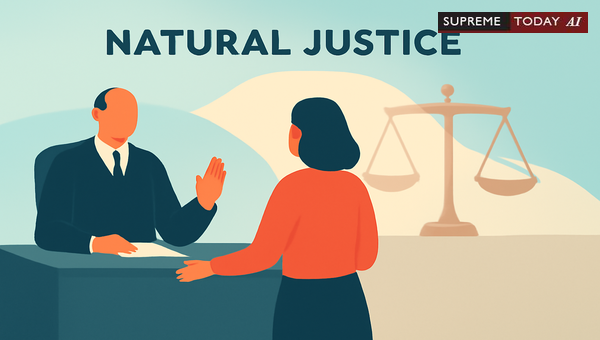
Does Violating Void Administrative Decisions?
In the realm of , fairness is paramount. Imagine facing a government decision that impacts your livelihood, rights, or property—without ever getting a chance to defend yourself. This raises a critical question: Does violation of vitiate administrative justice?
The short answer is yes, generally speaking. Violation of the principles of typically renders administrative decisions invalid, unless exceptions like absence of prejudice apply. This post delves into the jurisprudential foundations, consequences, exceptions, and judicial nuances, drawing from key legal precedents. Note: This is general information, not specific legal advice—consult a qualified lawyer for your situation.
The Foundations of in
Principles of , including (hear the other side) and (no one should be a judge in their own cause), are cornerstones of administrative fairness. Rooted in the , these principles trace back to Aristotle and Justinian, ensuring occurs. 2015 0 Supreme(SC) 437
In modern , courts have mandated their application even to decisions affecting rights, property, or liberty. The emphasizes that these are grounded in constitutional values of fairness. 2015 0 Supreme(SC) 437 2003 2 Supreme 72
As one ruling states: Fairness being a necessary concomitant of the principles of , any action that is unfair would be in violation of the principles of . 2025 Supreme(Online)(Gau) 7588
Core Legal Position: Violation Generally Vitiates Decisions
Non-observance of , particularly denying a , leads to invalidation of administrative actions. Courts consistently hold that no adverse order should pass without an opportunity to be heard. Violations often result in quashing or setting aside decisions. 2015 0 Supreme(SC) 437 2003 2 Supreme 72
For instance: Such incurable flaw in decision making by the Respondents which is in violation of the principles of vitiates the which have to be set aside on that sole ground.
A similar observation appears in another case: Such incurable flaw... vitiates the impugned order. 2021 Supreme(Online)(MAD) 17565
This aligns with the view that administrative enquiries must adhere to to prevent miscarriage of justice: If the purpose of the rules of is to prevent miscarriage of justice one fails to see why those rules should be made inapplicable to administrative enquiries. 2025 Supreme(Online)(MP) 9422
When Does Violation Occur?
Common violations include:- Denying a hearing before adverse action.- Bias in decision-making.- Failure to provide reasons or disclose materials.
These flaws make actions inconsistent with requirements: It is trite law that any administrative action which involves must be made consistently...
Exceptions: When Violations Don't Invalidate
While the rule is strict, courts apply flexibility. is not rigid but adapts to facts and circumstances. 2015 0 Supreme(SC) 437 2001 0 Supreme(AP) 1283
Key exceptions include:- No Prejudice Shown: If the affected party suffers no real prejudice, the decision may stand. 2001 0 Supreme(AP) 1283- Undisputed Facts or Inevitable Conclusion: Where only one outcome is possible, procedural lapses may be overlooked. 2001 0 Supreme(AP) 1283 2010 7 Supreme 602- Directory vs. Mandatory Rules: Technical violations of directory procedures are excused if no injustice results. 2010 7 Supreme 602- Urgency or Public Interest: Deviations may be justified in emergencies, but courts scrutinize closely. 2015 0 Supreme(SC) 437 2003 2 Supreme 72
The test often hinges on prejudice: This Court is of the considered opinion that the disciplinary proceedings initiated against the petitioner stand vitiated on account of gross violation of the principles of . 2025 Supreme(Online)(MP) 9422
Judicial Approach: Balancing Fairness and Practicality
Indian courts view as a flexible doctrine tailored to ensure reasonableness and justice. The goal? Prevent injustice without paralyzing administration. 2015 0 Supreme(SC) 437
In practice:- Authorities must provide hearings unless exceptions apply.- Post-decision reviews assess if lapses caused harm.- Flexibility prevents rigid application from frustrating public interest.
Practical Recommendations for Compliance
To safeguard decisions:- Always offer a before adverse actions.- Document reasons and disclose materials.- Assess potential prejudice in procedural shortcuts.- Train officials on nuances.
For affected parties:- Challenge violations promptly via .- Demonstrate prejudice to strengthen claims.
Administrative bodies should prioritize these to avoid costly reversals. Courts, meanwhile, balance strict adherence with contextual flexibility.
Key Takeaways
- Generally Vitiates: Yes, breaching —especially —invalidates admin decisions. 2015 0 Supreme(SC) 437 2003 2 Supreme 72
- Exceptions Matter: No prejudice, technical lapses, or urgency may save them. 2001 0 Supreme(AP) 1283 2010 7 Supreme 602
- Fairness First: Rooted in , these principles ensure just outcomes.
In conclusion, while violation of typically vitiates administrative decisions, judicial exceptions provide nuance. Staying compliant upholds legitimacy and avoids litigation. For tailored advice, seek professional legal counsel.
References
- 2015 0 Supreme(SC) 437: Jurisprudential basis and .
- 2003 2 Supreme 72: as fundamental.
- 2001 0 Supreme(AP) 1283: Prejudice and exceptions.
- 2010 7 Supreme 602: Directory rules and prejudice assessment.
- 2025 Supreme(Online)(Gau) 7588: Fairness as core to .
: Vitiation due to incurable flaws.
- 2021 Supreme(Online)(MAD) 17565: Similar on .
- 2025 Supreme(Online)(MP) 9422: Applicability to enquiries.















