


When Blackening Occurs at Bullet Injury Sites: A Forensic Guide
Introduction
In forensic investigations, particularly those involving firearm-related incidents, the presence or absence of blackening around a bullet injury can be pivotal. Blackening, often referred to as or , provides crucial clues about the distance from which a shot was fired. But when will there be blackening at the spot of bullet injury? This question arises frequently in criminal cases, autopsies, and legal defenses, where determining the proximity of the shooter can make or break arguments about self-defense, intent, or accident.
This blog post delves into the science behind blackening, factors influencing it, real-world case examples, and the role of forensic experts. While this information is drawn from legal precedents and forensic principles, it is for educational purposes only and does not constitute legal advice. Always consult qualified professionals for specific cases.
What is Blackening in Bullet Injuries?
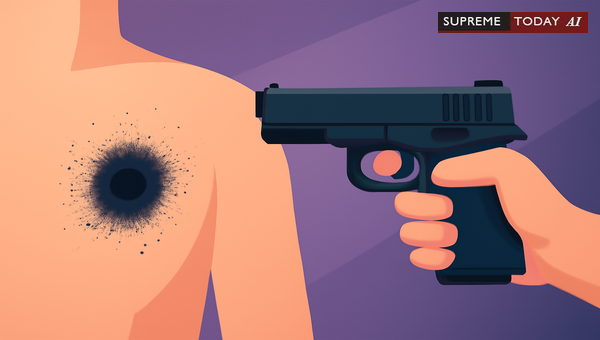
Blackening around a bullet injury is typically caused by the hot gases and other materials expelled from a firearm when it is discharged. This phenomenon can indicate the range from which the firearm was fired. When a gun is fired at close range, unburnt powder, smoke, and soot deposit on the skin or clothing at the entry wound, creating a visible blackened area.
- Close-range shots (typically under 2-3 feet): Pronounced blackening due to direct contact with muzzle gases.
- Contact shots: Even more intense, with possible searing or .
Medical experts note that this blackening is a hallmark of near-muzzle discharges, but its interpretation requires careful analysis 1996 0 Supreme(HP) 77.
Factors Influencing Blackening
The presence and extent of blackening depend on several factors:
- Distance from the muzzle: Closer shots are more likely to produce blackening. Beyond a certain range (often 12-18 inches, depending on the firearm), the particles disperse, reducing or eliminating visible soot 2007 0 Supreme(AP) 470.
- Type of firearm and ammunition: Different weapons and cartridges produce varying amounts of ejecta. Smokeless powder may leave less residue than black powder.
- Environmental conditions: Wind, rain, or the victim's position can affect deposition. For instance, if the victim was moving, soot patterns may be altered.
In one documented case, the absence of blackening around a bullet entry wound suggested a distance greater than claimed by the defense, highlighting how these factors interplay 1996 0 Supreme(HP) 77. However, the absence does not conclusively indicate a long distance; it may reflect specific circumstances 1996 0 Supreme(HP) 77.
From additional sources, environmental and weapon specifics are echoed. For example, in a police firing incident, the bullet injury led to significant disability, with implied close-range effects consistent with blackening 2025 Supreme(Online)(Gau) 8296. Witnesses in another case described immediate post-shot observations, where injury details aligned with expected residue patterns 2024 0 Supreme(MP) 700.
The Role of Medical and Forensic Experts
Medical experts can provide insights into the nature of injuries but may not definitively determine firing range without forensic backing. Post-mortem exams often note features like abrasion rims alongside or absent blackening.
- In a key examination, a rim of abrasion was present around the entry wound, but blackening was absent, indicating a shot from beyond close range 2007 0 Supreme(AP) 470.
- Clothing analysis is vital: Soot on garments can persist even if washed off skin 1996 0 Supreme(HP) 77.
Forensic firearms experts analyze the weapon, cartridges, shells, and residue. As one report emphasized, recovery of bullets and pistols linked directly to injuries via reports confirms causation and proximity 2023 0 Supreme(P&H) 508. The recovery during investigation of these items i.e. bullet, pistol and kurta is established by the prosecution beyond all reasonable doubt, certainly the report of FSL leads to only irresistible conclusion that fire arm injury caused to PW5 Bansi was inflicted by accused Narender with his country... 2023 0 Supreme(P&H) 508.
Witness testimonies further support this. In a shooting, an injured witness described the bullet's impact, with forensic ties reinforcing close-range indicators 2023 0 Supreme(All) 2853. Accused-appellant No. 4 Summeri fired a bullet... who sustained gunshot injury and died.
Case Examples Highlighting Blackening
Real cases illustrate blackening's evidentiary value:
- Absence of Blackening: In a post-mortem, no blackening around the wound led to doubts about close-range claims, as expected signs were missing 1996 0 Supreme(HP) 77. This shifted the narrative on shooting distance.
- Forensic Confirmation: Bloodstained earth, used bullets, and guns collected at the spot tied injuries to specific firearms, implying residue analysis for blackening 2024 0 Supreme(All) 621. The weapon of assault i.e. 12 bore double barrel gun and 12 bore used bullet were also produced (Ext. Ka-16).
Other incidents show immediate death or injury with spot presence: The deceased died on the spot due to the bullet injury 2019 0 Supreme(Jhk) 1432, where proximity forensics would check for blackening. In another, Having sustained a bullet injury on his abdominal region, Butai Noniya fell down on the ground and died at the spot 2014 0 Supreme(Pat) 465, underscoring rapid forensic needs.
Even in defensive shootings, like police actions, injuries without exit wounds or with palpable bullets highlight the need for residue tests
. P.W.12 also found that there was a palpable bullet in the back. There was no exit wound.
Timing and Conditions for Blackening
Blackening appears immediately or shortly after discharge, especially at close range. Sources confirm it develops rapidly, visible during initial exams. Blackening at the injury site is generally observed in firearm injuries, especially when the firearm is fired at close range from summarized analyses.
Distance impacts this: Minimal or absent at longer ranges, as debated in accidental hit arguments 2024 Supreme(Online)(DEL) 12565 mentioned in summaries. Combined with , it reconstructs events.
Importance of Comprehensive Evidence
To assess firing range accurately:
- Collect all evidence: Firearms, shells, clothing.
- Involve experts for FSL reports.
- Corroborate with medical testimonies and witnesses.
As seen in cases, failure to do so can weaken prosecutions or defenses 2023 0 Supreme(Guj) 1239. Learned advocate for the appellant submitted that the prosecution has failed to establish conclusively that the bullet which cause the injury was from the fire arm belonging to the appellant.
Conclusion and Key Takeaways
Blackening at the spot of a bullet injury is a critical forensic indicator, typically present in close-range shootings due to soot and gases. Its absence may suggest greater distance but requires holistic analysis. Cases like 2007 0 Supreme(AP) 470 and 1996 0 Supreme(HP) 77 demonstrate how this evidence influences outcomes.
Key Takeaways:- Blackening signals close proximity; factors like distance and ammo type matter.- Always pair medical findings with firearms expertise.- Preserve scene evidence promptly.
For legal proceedings, engaging specialists ensures robust interpretations. This overview highlights forensic science's role in justice—stay informed, but seek professional counsel for your situation.
References: 1996 0 Supreme(HP) 77 2007 0 Supreme(AP) 470 2025 Supreme(Online)(Gau) 8296 2024 0 Supreme(MP) 700 2023 0 Supreme(All) 2853 2023 0 Supreme(P&H) 508 2024 0 Supreme(All) 621 2023 0 Supreme(Guj) 1239 2019 0 Supreme(Jhk) 1432 2014 0 Supreme(Pat) 465















