


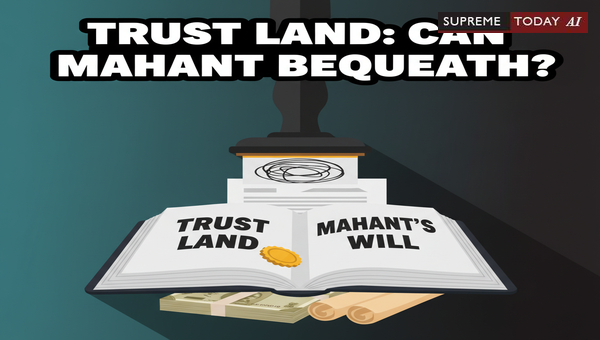
Can a Will ? Key Indian Legal Insights
In the realm of religious and charitable institutions in India, the role of a —as the head or manager of a temple or trust—often sparks important legal questions. One pressing issue is: Can the be willed by the ? This question arises frequently in disputes involving temple properties, successions, and inheritance claims. Understanding the answer requires delving into trust law, the nature of the 's position, and judicial precedents.
This blog post breaks down the legal framework, drawing from the , rulings, and various case documents. While this provides general insights, it is not legal advice—consult a qualified lawyer for specific cases.
Overview of and 's Role
typically refers to property dedicated to religious, charitable, or public purposes, such as temple grounds or mathas (monastic institutions). A acts as the trustee or (manager), overseeing daily operations, maintenance, and rituals. However, this role is , not . The property belongs to the trust, deity, or public, not the individual .
The , governs , but public religious trusts often fall under state-specific laws like the or general principles from Hindu law. Key distinction: benefit an uncertain, fluctuating body (e.g., devotees for prayers), while benefit specific individuals. Most temple trusts are public, limiting personal disposition
Document 10
10.Nature of Public and Charitable Trusts
are by design to preserve their purpose. Properties dedicated to cannot be treated as the 's personal assets. The has ruled that such lands are held in perpetuity for the public or deity
Document 10
10.From case analyses:- In religious endowments, land acquired by a becomes and cannot be alienated by disciples or (followers) 2025 0 Supreme(Raj) 1433.- Properties like belong to the , with the in a managerial role only 2024 0 Supreme(Pat) 404.
A source notes: the property in question is not a property belonging to any public Trust and Moh... but counters that in , Mahants lack ownership 2024 0 Supreme(MP) 496.
Powers of the : Management vs. Ownership
Mahants have authority to —collecting offerings, maintaining structures, and ensuring rituals—but not to or will it freely. restrict trustees from selling or transferring without authorization
Document 10
10.- No Unilateral Alienation: Mahants cannot sell, gift, or bequeath without court approval. allows seeking court opinion for management decisions, including sales
Document 10
10. - Limits: The deed dictates powers; if silent on willing, it's invalid
Document 10
10.
Supporting cases:- A will by Shivgir Guru (last ) was challenged and revoked due to compromise, highlighting scrutiny on such actions 2016 0 Supreme(Bom) 1996.- in favor of Mahants like Balwant Dass were questioned as misrepresentation, with land tied to the trust
.- The Trust Board intervenes post-appointment for , not ownership transfer 2023 0 Supreme(Pat) 220.
Mahants from historical lines (e.g., Balikdas from ) managed as owners in name, but legally as trustees 2024 Supreme(Online)(MP) 41792.
Legal Precedents on Willing
Indian courts consistently protect trust assets:- Holdings: Mahants cannot unilaterally will or sell without provisions and approvals
Document 10
10Document 10
10.- In one case, land was declared not personal but trust-owned, barring exclusive claims by Mohandas 2024 0 Supreme(MP) 496.- Wills creating sub-trusts were scrutinized; even if valid, they reserve minimal personal amounts, dedicating rest to charity 2018 0 Supreme(Bom) 1722.Further:- Trusts must follow schemes for land acquisition/disposal, not private sales 2019 0 Supreme(All) 1025.- No jurisdiction for trusts to handle private land outside rules; absolute rights are rare 2001 0 Supreme(Raj) 1304.
A key quote: 's acquired land becomes and cannot be alienated by disciples or Chelae 2025 0 Supreme(Raj) 1433. Another: the land of is considered to belong to the 2024 0 Supreme(Pat) 404.
Compromises in suits like Title Suit No. 02/2007 settled but upheld trust integrity 2023 0 Supreme(Pat) 220.
Challenges and Court Interventions
Attempts to will invite challenges:- Invalid Wills: Likely void as contravening public trust principles.- Scrutinized: Illegal entries (e.g., Balwant Dass) lead to disputes
.- Revenue Errors: Post-acquisition divisions don't fragment for personal use; trusts need whole parcels 1999 0 Supreme(P&H) 419.
Courts emphasize: What will the Trust do with only the share of land? Full integrity preserved 1999 0 Supreme(P&H) 419.
Conclusion and Key Takeaways
Generally, a cannot will . As manager of public/charitable property, personal bequest violates the Indian Trusts Act and precedents. Any such will would typically be challenged successfully, requiring court nod for transfers.
Key Takeaways:- Review the for specific powers
Document 10
10.- Seek court approval under for major actions.- Trust Boards oversee 2023 0 Supreme(Pat) 220.- Properties vest in /trust, not individuals 2024 0 Supreme(Pat) 404 2023 0 Supreme(All) 587.Recommendations:- Examine documents like and deeds.- Consult legal experts for compliance.- For schemes, follow statutory land acquisition rules 2019 0 Supreme(All) 1025.
This analysis draws from cases like 2024 0 Supreme(Pat) 404, 2025 0 Supreme(Raj) 1433, 2023 0 Supreme(All) 587,
, 2023 0 Supreme(Pat) 220, 2024 Supreme(Online)(MP) 41792, 2024 0 Supreme(MP) 496, and
Document 10
10.Disclaimer: This is general information based on legal principles and cases. Laws vary by state/jurisdiction; professional advice is essential.
#MahantTrustLaw, #IndianTrusts, #TrustProperty















