Searching Case Laws & Precedent on Legal Query.....!
Analysing the retrieved Case Laws
Scanned Judgements…!



Searching Case Laws & Precedent on Legal Query.....!
Analysing the retrieved Case Laws
Scanned Judgements…!
Liability of Vehicle Owner in Road Accidents - Main Points and Insights
When the owner of a vehicle is involved in a road accident resulting in death, liability depends on ownership, insurance coverage, and negligence. If the owner is driving the vehicle rashly or negligently, they may be held liable, especially if they were the driver at the time of the accident ["2025 0 Supreme(Mad) 3075"].
The law emphasizes that the owner of the vehicle, when involved in an accident causing death, is liable under statutory provisions (e.g., Motor Vehicles Act), and the insurer's obligation to pay arises if there is a valid insurance policy covering the vehicle at the time of the accident ["2025 0 Supreme(SC) 2085"], ["NATIONAL INSURANCE CO LTD vs KRISHNAN - Madras"].
Analysis and Conclusion
In cases where the owner of the vehicle dies in the accident, the primary legal considerations involve determining whether the owner was driving at the time, the ownership status (owner vs. borrower), and the existence of valid insurance coverage.
References:- ["2025 0 Supreme(Mad) 3075"]- ["2026 Supreme(Online)(P&H) 759"]- ["2023 0 Supreme(Bom) 1316"]- ["2024 0 Supreme(Kar) 541"]- ["2017 0 Supreme(Mad) 1539"]- ["2015 0 Supreme(All) 3379"]- ["NATIONAL INSURANCE CO LTD vs KRISHNAN - Madras"]- ["2026 Supreme(Online)(All) 17"]
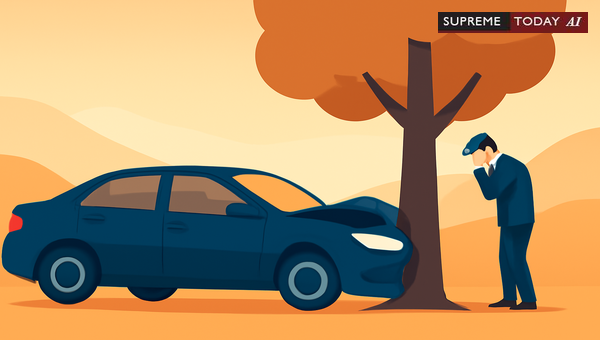
Losing a loved one in a road accident is devastating, especially when the victim is the owner of the vehicle involved. Many families wonder: what case to file when the owner of the car dies in his own car by road accident? This question arises frequently in India, governed primarily by the . While compensation claims may seem straightforward, they hinge on factors like , whether the accident arose out of the use of the vehicle, and the owner's role as driver.
This blog post breaks down the legal landscape, drawing from key judgments and statutory provisions. Note: This is general information based on case law and should not be taken as specific legal advice. Consult a qualified lawyer for your situation.
When the car owner dies in an accident involving their own vehicle, the claim for compensation—typically against the insurer—depends on liability principles. If the owner was driving and the accident resulted from their own , insurers often resist payouts, citing policy exclusions under Section 147 of the Motor Vehicles Act. However, courts examine if the death arises out of the use of the vehicle, a critical test reinforced in multiple rulings. 2007 0 Supreme(Raj) 352
Key considerations include:- Owner as Driver: Liability typically falls on the owner, complicating claims against their own policy.- : Proven owner fault may bar or limit claims, but no-fault provisions offer exceptions.- Legal Heirs' Rights: Family members (dependents) may pursue claims under Sections 140, 163A, or 166.
As per 2007 0 Supreme(Raj) 352, under , an insurance company is not liable for the owner's death when the accident involves the owner himself, especially if the accident is a result of .
Courts consistently apply this principle: Compensation is viable only if the accident stems directly from vehicle use, not personal fault alone. In 2000 3 Supreme 698, it's clarified that claims may not sustain if is established, but statutory no-fault schemes can apply.
For instance, if the owner negligently drives and crashes, their estate generally cannot claim against their own insurer. Yet, exceptions exist under:- Section 140: for death/injury, offering fixed compensation (e.g., Rs. 50,000 for death) without proving fault—primarily for third parties, but heirs may invoke it. 2000 3 Supreme 698- Section 163A: Structured formula for compensation based on income/age, fault irrelevant in some cases.
1981 0 Supreme(Mad) 162 notes that even if the owner is responsible, claims proceed if the accident arises out of vehicle use, though often limited for self-inflicted harm.
In scenarios involving family members or borrowed vehicles, outcomes vary. For example, in 2023 0 Supreme(Bom) 1231, where a son died as an occupant in his father's car, the insurer could not deny liability: Since the deceased was occupant in a car at the time of accident, the insurer has no voice to deny the liability towards his death. This distinguishes owner-drivers from passengers, potentially aiding heirs if the owner wasn't solely driving.
Another case,
, upheld insurer non-liability for a driver's death (husband of owner), but a consumer forum allowed a , ruling the deceased wasn't excluded as he wasn't purely an owner-driver per policy terms.
Legal heirs (spouse, children, parents) file under Section 166 for . However, if owner is proven, success rates drop. 1981 0 Supreme(Mad) 162 discusses heir claims being limited or barred unless statutory criteria like vehicle-use nexus are met.
Steps for Heirs:- File (MACT) petition within .- Prove accident factum, income loss, dependency.- Argue no-fault applicability under Sections 140/163A. 2000 3 Supreme 698
In 2023 0 Supreme(Bom) 1231, dependents (wife, mother) received compensation after deducting 1/3rd for personal expenses, plus consortium/loss of estate—highlighting calculation methods even in owner-related cases.
Sections 140 and 163A provide lifelines:- No-fault (Sec 140): Quick interim relief, applicable if accident arises from vehicle use. Primarily third-party focused, but courts extend to owner cases cautiously. 2000 3 Supreme 698- Sec 163A: for insurers, fault irrelevant.
Limitations:- Pure owner often bars claims. 2007 0 Supreme(Raj) 352- Composite (shared fault) may allow proportionate recovery.
Claims can fail if accident details are disputed. In 2017 0 Supreme(P&H) 1426, the tribunal recalled a fraudulent award: The Tribunal has the power to recall its judgment on the ground of fraud, and the limitation for filing an application in case of fraud starts from the date of knowledge. Claimants must robustly prove vehicle involvement.
Criminal angles, like (, ), arise separately but impact civil claims. 2016 0 Supreme(Mad) 1901 shows courts framing charges based on evidence sufficiency.
In multi-vehicle crashes, like 2011 0 Supreme(All) 1051, equal led to , with insurers paying and recovering shares.
Claims should be pursued under applicable sections (like 140 or 163A) only if the statutory conditions are satisfied. 2000 3 Supreme 698
| Scenario | Likely Outcome ||----------|---------------|| Owner negligent driver | Claim limited/barred, unless no-fault applies 2007 0 Supreme(Raj) 352 || Accident from vehicle use | Possible Sec 140/163A relief for heirs 1981 0 Supreme(Mad) 162 || Occupant (not driving) | Stronger insurer liability 2023 0 Supreme(Bom) 1231 || Fraud/Disputed facts | Risk of recall/dismissal 2017 0 Supreme(P&H) 1426 |
In summary, while challenging, compensation is possible if heirs prove the accident arose out of vehicle use and leverage no-fault provisions. Success depends on facts— doesn't always preclude relief.
References:1. 2007 0 Supreme(Raj) 352: Insurer non-liability for owner death in cases.2. 1981 0 Supreme(Mad) 162: Heir claims when owner at fault.3. 2000 3 Supreme 698: Sec 140/163A applicability.4. 2023 0 Supreme(Bom) 1231: Occupant death in family-owned car.5. 2017 0 Supreme(P&H) 1426: Fraud in claims.6.
: Personal accident policy coverage.
Always seek professional advice tailored to your case.
#CarOwnerAccidentClaim, #MotorVehicleCompensation, #OwnerDeathInsurance


waiting for the Bus passing into the service road by slowing down the speed of the Car driven rashly which ended in the accident. ... On the date of the accident, the said Abdul Gafoor is the absolute owner of the vehicle. This Respondent is not the owner of the vehicle on the date of the accident. The fact of the sale of the vehicle was also intimated to the prior owner Balaraman. ... The 3rd respondent is the owner of the #HL_STAR....

So, keeping in view, the whole facts and circumstances of this case, claimants being widow, father and children of the deceased, deserve reasonable compensation in this case on account of death of Vinod, in the road side accident, as per their claim petition. ... It is admitted case of parties that a stray cow appeared on the road. ... Respondent No.1 was required to stop the vehicle with safety and care, when a cow suddenly appeared on the road, to ....

It went on other side strip of the road. The Tavera car proceeding from its side collided against the toppled car resulting into the death of inmates. 11. ... The respondent no.2 [owner of Tavera car] filed a written statement and objected maintainability of the claim on the ground that the deceased himself was responsible for the accident. ... The Swift car driven by deceased, initially brushed to the road divider and then went fro....

Admittedly, the insurance policy issued in the case is comprehensive policy and sum assured under the personal accident coverage is Rs.1 Lakh. The insurance policy was in existence as on the date of the accident. The deceased was not owner of the Car, but he has borrowed the Car from the owner. ... Therefore, it is submitted that, in the case on hand, the deceased is not the owner of the Car but has borrowed the #H....

Those observations are made when the person was either riding the motorcycle after borrowing it from its owner or driving car after borrowing it from its owner for his own use and met with an accident. ... Since the deceased was occupant in a car at the time of accident, the insurer has no voice to deny the liability towards his death. 11. ... The contention of the insurer that since the car was owned by the father of the deceased, he would step into....

Near Mylanahalli gate, Arsikere, he drove the car in high speed, rash and negligent manner, without following the traffic rules, lost control over the car, as such the car toppled on the road and accident occurred. Ravisha sustained fatal injuries on his head and succumbed to the injuries. ... The averments in the claim petition are that the deceased Sri.N.S.Ravisha drove Fiat Linea car bearing registration No.KA-06 N-5997 in high speed, rash and negligent manner without following the ....

(c) Where death has resulted from the accident, by all or any of the legal representatives of the deceased, as the case may be; or ... (d) by an agent duly authorised. ... ... This is appeal is preferred by an alleged owner of the motor vehicle who was held dis entitled to claim damages that his car had suffered in a road accident. ... 2. ... The inmates of the car suffered injuries and both the injured passenger as well as the petitioner have prefe....

Thereafter, the respondent no.1 being the owner of the car, admitted the factum of accident and also the death of the deceased and the driver of the offending car. ... 4. Respondent no.2 has contested the case and denied the accident. ... In the present case, neither the driver/owner nor the insurer has filed any appeal or cross objection against the findings of the High Court that both the vehicles were responsible for the #HL_STA....

After trial, learned Tribunal came to the conclusion that the deceased, Dharmendra Kumar died in a road accident due to rash and negligent driving of the driver of the car bearing registration No.BR-11R/3303. ... Learned Tribunal also came to the conclusion that the deceased Dharmendra Kumar was aged 34 years at the time of accident and the owner of offending vehicle was having all the valid documents to ply the car on road and the driver of the offending vehicle was ....

The appellants were the claimants before the Motor Accident Claims Tribunal-XXIV-cum-Additional Chief Judge, City Civil Court at Hyderabad. They filed for compensation on account of the death of one A. Srinivas Rao, caused in a road accident which occurred on 12.08.2005. ... It has also to be noticed that Section 163A makes liable the owner of the vehicle or the authorized insurer to pay in accordance with the IInd Schedule in the case of death or permanent disablemen....

In that statement, Parveen Kumar Sardana, Advocate, the alleged owner of the car, had stated that his car never met with an accident on 10.10.1998 and he never went on Guhla Cheeka Road on the day accident took place. The learned Tribunal after receiving the reply, framed issues and thereafter gave opportunity to the claimants as well as to the owner and driver of the vehicle to produce evidence for proving the factum of accident with the Maruti Car. Mr. Deepak Grover also produced statement written by Parveen Kumar Sardana, Advocate, Kaithal, in his own hand, who is the al....
Hence, the accident had occurred only by the driver of the car while came out of the car parking area and crossed the road. Even according to the case of the prosecution, the car was coming out of the car parking area and immediately caused accident to the victims.

This incident happened at about 1:00 hours on 4.3.1992. When he was going further from Agra, it met with an accident with the Truck; In the accident, the Deceased, a relation of the car owner, received injuries and the car driver died on the spot;

(3) Punjab State Consumer Disputes Redressal Commission, Chandigarh— Manjit Kaur & Others v. The Oriental Insurance Co. Limited.3 The appeal was dismissed upholding District Forum order whereby the insurer was held not liable for the death of owner’s husband in the capacity of the driver. (4) HDFC Chubb General Insurance Co. v. Shanti Devi Rajbal Singh In that case the appellant was owner of car and her husband while driving car died of accident.


An indispensable Tool for Legal Professionals, Endorsed by Various High Court and Judicial Officers
Please visit our Training & Support
Center or Contact Us for assistance

Scan Me!
India’s Legal research and Law Firm App, Download now!


For Daily Legal Updates, Join us on :



 Back to top


