Searching Case Laws & Precedent on Legal Query.....!
Scanned Judgements…!



Searching Case Laws & Precedent on Legal Query.....!
Scanned Judgements…!
Right to Opt for TDR Instead of Lawful Compensation - The legal framework indicates that the right to receive TDR/DRC arises only after the compensation amount is finalized. Prior to this, authorities' actions, such as land possession or possession takeovers, do not negate the landowner's right to choose TDR as compensation ["2015 0 Supreme(Mad) 1473"]. The benefit of TDR being extended under the 2010 Regulation is in lieu of compensation.
TDR as an Alternate Mode of Compensation - TDR is recognized as a form of development potential, awarded in lieu of monetary compensation, especially when land is surrendered without formal acquisition or without receiving compensation ["2023 0 Supreme(Kar) 832"]. Denying TDR certificates when land has been surrendered without compensation is unsustainable, as TDR is intended as a beneficial alternative for landowners.
Legal and Procedural Concerns in TDR Allocation - The unilateral determination of compensation in the form of TDR, bypassing the prescribed procedures, is challenged. Courts have emphasized that offering TDR as compensation must follow the statutory steps (e.g., Section 35 of the relevant Act). Arbitrary decisions to substitute monetary compensation with TDR, without proper procedure or formal acquisition, are considered beyond legal bounds ["2024 Supreme(Online)(TEL) 25455"].
Pressure and Improper Influence in TDR Issuance - Several cases highlight that TDR bonds were issued under pressure, with some beneficiaries benefiting disproportionately, and certain applications or permissions being kept in abeyance to benefit specific families. Some landowners purchased TDR bonds unaware of alleged fraud or irregularities, leading to prejudice and questions of natural justice ["2024 Supreme(Online)(AP) 5742"], ["2024 Supreme(Online)(AP) 10727"], ["2024 Supreme(Online)(AP) 11828"], ["2024 Supreme(Online)(AP) 5714"], ["2024 Supreme(Online)(AP) 5750"], ["2024 Supreme(Online)(AP) 5727"], ["2024 Supreme(Online)(AP) 5711"], ["2024 Supreme(Online)(AP) 11512"], ["2024 Supreme(Online)(AP) 10725"], ["2024 Supreme(Online)(AP) 10728"], ["2024 Supreme(Online)(AP) 5703"], ["2024 Supreme(Online)(AP) 10973"], ["2024 Supreme(Online)(AP) 10470"].
Principles of Natural Justice and Fairness - Courts are concerned about violations of natural justice, especially when TDR bonds are issued or detached under pressure, or when permissions are delayed or kept in abeyance due to procedural irregularities. The courts suggest that awarding TDR and detaching bonds should be done transparently and fairly, respecting the rights of landowners ["2024 Supreme(Online)(AP) 5742"], ["2024 Supreme(Online)(AP) 10727"].
Courts recognize TDR as a legitimate alternative to monetary compensation for land acquisition, provided the process adheres to statutory procedures and principles of natural justice. Arbitrary or unilateral decisions—such as issuing TDR without formal acquisition or under pressure—are challenged as unlawful. Landowners exercising their right to opt for TDR should be protected from undue pressure, fraud, or procedural violations. The consistent emphasis across judgments is on ensuring fairness, transparency, and adherence to legal procedures in the issuance and detachment of TDR bonds, safeguarding landowners' rights to choose lawful compensation options.
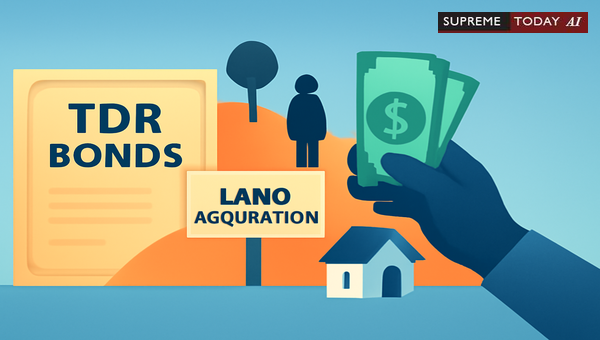
In the complex world of and urban development in India, landowners often face tough choices. A common grievance arises when authorities keep pressure on owners to opt for bonds instead of opting for lawful . This raises a critical question: Can development authorities legally compel landowners to accept TDR over their preferred cash payout?
This blog post dives deep into the legal framework, key court rulings, and practical advice to help you understand your rights. Drawing from statutes like the , and the , we'll explore why TDR must typically be voluntary and what happens when pressure is applied.
Under Indian law, TDR—often issued as bonds or certificates allowing additional development potential elsewhere—cannot be forced on unwilling landowners. The main legal finding is clear: authorities cannot exert pressure or compel acceptance of TDR in lieu of for or surrender. TDR is permissible only by , and landowners retain the statutory right to choose cash compensation as determined under laws like the LARR Act. 2015 3 Supreme 584
Courts have repeatedly emphasized that grant of TDR is a matter of agreement between the acquiring authority and the land owner and the authority cannot be directed to grant TDR if it is not so willing as much as a land owner cannot be compelled to accept TDR in the event he opts to accept compensation for the land acquired. 2015 3 Supreme 584 This principle protects landowner autonomy in development schemes.
TDR schemes under the MRTP Act are designed for flexibility, not coercion. Unilateral imposition defeats their purpose. For instance, courts have ruled that the respondents cannot insist upon or force the petitioner to accept such TDR bonds and that they may be directed to acquire the petitioners property only after considering his objections/representation... and by paying compensation under the provisions of the Right to Fair Compensation... 2018 0 Supreme(AP) 346
This echoes broader concerns about procedural fairness. In one case, petitioners challenged authorities who unilaterally proceeded to determine the compensation by providing TDR, in lieu of , bypassing required steps under relevant acts. 2026 Supreme(Online)(Bom) 200
Absent any agreement, the LARR Act, 2013, steps in with market-value-based payouts. Pressuring TDR or demolishing without payment is unlawful. Absence of agreement for TDR/ means petitioner entitled to under the 2013 Act - Respondents acted contrary to law by demolishing property without compensation. 2025 0 Supreme(Bom) 279
Landowners also have the choice affirmed by courts: the court directed the petitioner to choose between accepting the TDR certificate or seeking compensation through the . 2023 0 Supreme(Mad) 2277
Tactics like delaying cash or arbitrarily allocating TDR portions are invalid. The 2nd respondent has unilaterally decided that an extent of 624 Sq. yards is within buffer zone and has decided to give TDR at the rate of 200% and to award compensation for only the balance land... but the same was not paid. 2024 Supreme(Online)(TEL) 25455 Such actions fail without consent.
Related rulings highlight evolving TDR entitlements. For example, delays in issuing TDR certificates led courts to apply favorable government orders (G.O.s) retrospectively, rejecting binding memos that disadvantaged landowners who surrendered land years earlier. 2022 0 Supreme(AP) 241
While compulsion is generally invalid, exceptions apply:- Prior Agreements Bind: If landowners previously opted for TDR via affidavits, they can't later demand cash (principle of ). Before the , the original landowners specifically filed the affidavits... that they do not wish to avail of TDR and their only prayer... was to acquire the land and to pay them the compensation. Therefore, now it is not open for the respondents-original landowners to pray for the TDR. 2022 0 Supreme(SC) 190- Limited Applicability: TDR suits developable reserved lands or owner-developed amenities, not lapsed reservations or unsuitable plots. 2022 0 Supreme(SC) 190- Scheme-Specific Caps: Prior notifications or paid compensation may limit TDR claims. 2003 3 Supreme 199
In amenity cases, owners constructing roads or facilities on surrendered plots may earn additional TDR or , as per . Courts have directed municipal bodies to grant benefits like 100% amenity TDR where eligible, per Appendix-VII interpretations. 2018 0 Supreme(Bom) 1886
Facing TDR pressure? Here's how to respond:1. Submit Formal Objections: Cite MRTP Act and LARR Act provisions, demanding acquisition with market-value compensation.2. File : Seek to enforce payment and quash coercive notices.3. Document Everything: Record all rejections of TDR to build your case.4. Review Local Rules: Check Development Control Regulations for entitlements before deciding.
Consulting a local lawyer is wise, as specifics vary by scheme.
This overview is for informational purposes only and does not constitute legal advice. Laws and interpretations can vary by jurisdiction and facts—always seek professional counsel for your situation. By understanding these principles, landowners can navigate urban planning pressures confidently.
References (Key Cases):1. 2015 3 Supreme 584 - TDR as consensual.2. 2018 0 Supreme(AP) 346 - No forcing TDR bonds.3. 2025 0 Supreme(Bom) 279 - Compensation absent agreement.4. 2023 0 Supreme(Mad) 2277 - Choice between TDR or court compensation.5. 2022 0 Supreme(SC) 190 - No flip-flopping on prior choices.6. 2024 Supreme(Online)(TEL) 25455 - Unilateral splits invalid.7. 2026 Supreme(Online)(Bom) 200 - Against unilateral TDR determination.8. 2022 0 Supreme(AP) 241 - Favorable TDR ratios apply.
#TDRRights, #LandAcquisition, #LandownerRights


Admittedly, the right to receive the TDR/DRC could only accrue after the compensation is determined. Therefore, prior to that date whatever action taken by the authorities could have no bearing on the right to opt for receiving TDR/DRC. ... In such circumstances, the mere taking over of the possession of the property in 2005, itself cannot defeat the petitioners right to claim the benefit under the Second Master Plan, which introduced the scheme of TDR instead of payment of c....

been surrendered sans compensation, denial of TDR Certificate is unsustainable. ... The alternate mode of compensation, instead of payment of money is TDR, which is nothing but a development potential, in terms of increased floor space index (hereinafter referred to as "FSI") awarded in lieu of the area of land given, conferred in the form of a Development Rights Certificate (hereinafter ... Since the TDR facility avails to the land owner in lieu of compensation, the ....

Under the pressure of local politicians and respondent No.3, they have conducted the Bathukamma festival celebrations and other activities in the petitioner land promising to pay suitable compensation and the petitioner agreed for TDR for 40% of the land and compensation for rest 60% of the land as per ... Though the letter was submitted on 06.11.2017, compensation was paid only on 08.06.2023 and TDR Certificate was issued only on 09.11.2023 and certain documents such as affidavit, und....

for acquisition of their land, by means of Transferrable Development Rights (hereinafter referred to as TDR), instead of monetary compensation. ... It is the case of the petitioners that respondent No.3-competent authority, instead of proceeding as per step-wise procedure contemplated under Section 35 of the said Act, unilaterally proceeded to determine the compensation by providing TDR, in lieu of monetary compensation. ... Thereupon, the said respondent unilaterally....

The petitioners, having purchased TDR bonds oblivious of the alleged fraud, are now put to prejudice i.e. keeping permissions in abeyance. ... All 29 TDR bonds were issued to a couple of families only and benefitted them by escalating the cost of TDR bonds. ... The building applications, under scrutiny, are also kept in abeyance to detach the TDR bonds attached to certain applications. At the request of some of the individuals, the....

The petitioners, having purchased TDR bonds oblivious of the alleged fraud, are now put to prejudice i.e. keeping permissions in abeyance. ... All 29 TDR bonds were issued to a couple of families only and benefitted them by escalating the cost of TDR bonds. ... The building applications, under scrutiny, are also kept in abeyance to detach the TDR bonds attached to certain applications. At the request of some of the individuals, the....

The petitioners, having purchased TDR bonds oblivious of the alleged fraud, are now put to prejudice i.e. keeping permissions in abeyance. ... All 29 TDR bonds were issued to a couple of families only and benefitted them by escalating the cost of TDR bonds. ... The building applications, under scrutiny, are also kept in abeyance to detach the TDR bonds attached to certain applications. At the request of some of the individuals, the....
The petitioners, having purchased TDR bonds oblivious of the alleged fraud, are now put to prejudice i.e. keeping permissions in abeyance. ... All 29 TDR bonds were issued to a couple of families only and benefitted them by escalating the cost of TDR bonds. ... The building applications, under scrutiny, are also kept in abeyance to detach the TDR bonds attached to certain applications. At the request of some of the individuals, the....
The petitioners, having purchased TDR bonds oblivious of the alleged fraud, are now put to prejudice i.e. keeping permissions in abeyance. ... All 29 TDR bonds were issued to a couple of families only and benefitted them by escalating the cost of TDR bonds. ... The building applications, under scrutiny, are also kept in abeyance to detach the TDR bonds attached to certain applications. At the request of some of the individuals, the....
The petitioners, having purchased TDR bonds oblivious of the alleged fraud, are now put to prejudice i.e. keeping permissions in abeyance. ... All 29 TDR bonds were issued to a couple of families only and benefitted them by escalating the cost of TDR bonds. ... The building applications, under scrutiny, are also kept in abeyance to detach the TDR bonds attached to certain applications. At the request of some of the individuals, the....

Advait M. Sethna, J. 1. Rule, returnable forthwith. The respondents waive service. By consent of the parties, heard finally. Absence of agreement for TDR/FSI necessitates monetary compensation under the 2013 Act, as lawful acquisition processes were not followed. 2. This petition is filed under Article 226 of the Constitution of India for the following substantive reliefs:-
It is admitted by the counsel for the respondent No. 2 that the petitioners herein are entitled for the TDR bonds at the ratio of 1:1 instead of 1:4 and if at all the writ petitioners are entitled for TDR at what ratio they are entitled. No. 223, Municipal Administration and Urban Development (M) Department, dated 09.07.2018 cannot be allowed as the lands were surrendered in the year 2009 because the applicability of G.O. ratio of TDR bonds in 2009 and 2018 are not one and the same.

Then he would be entitled to the extent of 25% of FSI. He pointed out that in a case of reserved land, without opting for FSI for the land component for its use on the remaining land, if the owner after constructing DP Road hands over the same to the said Corporation, he was entitled to TDR in respect of both the components under clauses (5) and (6) of Appendix-VII. He pointed out that if the land owner constructs amenity but does not avail FSI benefit on the remainder land, then the benefit is separated from the land and is given in the form of TDR under Regulation 34 read with clause (6) o....
The petitioner is allowed to furnish personal bonds instead of bank guarantee in future. This Miscellaneous Petition is ordered accordingly. In view of the above decision, this Miscellaneous Petition is ordered.

No question arises of payment of compensation as the tenant has not chosen to opt for compensation instead of re-entry. It was also observed that even because of some financial stringency when the landlord could commence his re-construction and after retirement he has occupied the accommodation, as the tenant has exercised his opinion for reentry, the Court has no option but to direct re-delivery of possession. Lastly reliance is placed on a decision of Honble Apex Court in the matter of Ved Singh Vs. Prem Mohan, 1984 MPWN, Note-378 wherein Honble Apex Court has directed th....


An indispensable Tool for Legal Professionals, Endorsed by Various High Court and Judicial Officers
Please visit our Training & Support
Center or Contact Us for assistance

Scan Me!
India’s Legal research and Law Firm App, Download now!


For Daily Legal Updates, Join us on :



 Back to top


