


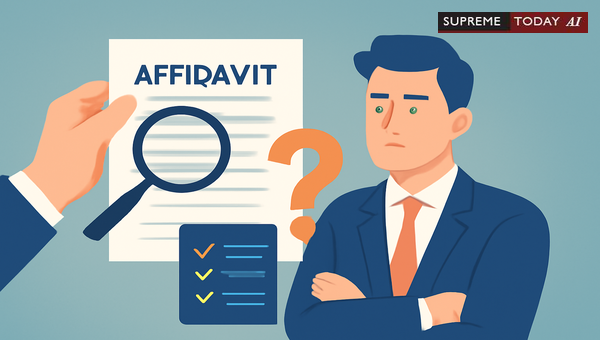
How to Prove a False in Court
Affidavits are used as in , carrying significant weight due to their formal nature. However, when an is suspected to be false, challenging its validity becomes crucial. Many litigants face the question: How to prove false ? Proving falsity requires a strategic approach grounded in , inconsistencies, and court procedures. This guide explores proven methods, drawing from judicial precedents and legal principles. Note that this is general information and not specific legal advice—consult a qualified attorney for your case.
Understanding Affidavits and Their Vulnerabilities
An is a written statement confirmed by oath or affirmation, typically used in court to present facts without . Courts treat them seriously, but they are not infallible. can mislead proceedings, leading to unjust outcomes. To undermine one, you must demonstrate it lacks truthfulness or reliability.
Key vulnerabilities include:- Inherent contradictions with other .- Absence of .- Suspicious origins, such as standardized formats without personalization.
Courts emphasize that affidavits must align with overall . As seen in cases where police inquiries noted affidavits in usual standard format without deeper verification [
#FalseAffidavit, #LegalProof, #CourtEvidence















