


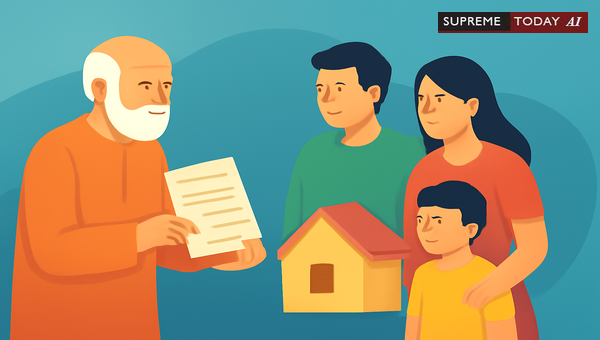
Can Grandchildren Challenge Grandfather's Ancestral ?
In family disputes over , questions often arise about who can challenge a executed years ago. Imagine a scenario: your grandfather sold part of the family ancestral land, a suit to challenge it was dismissed, and now, as an adult grandchild, you wonder if you can step in. Whether grandchildren after attaining majority can challenge a of executed by their grandfather, even after dismissal of the grandfather's suit to challenge the , is a complex issue rooted in Hindu law principles of and .
This blog post breaks down the legal nuances, drawing from key judgments and principles. Note: This is general information, not specific legal advice. Consult a qualified lawyer for your situation.
Understanding Ancestral and Property
forms the backbone of many (HUF) holdings. property means the property which consists of and a coparcener would mean a person who shares equally with others in inheritance in the estate of a common ancestor.2013 5 Supreme 666
A coparcener holds an that enlarges by deaths and diminishes by births in the family.2013 5 Supreme 666 Importantly, so long, on an remains in the hand of a single person, it has to be treated as a separate property and such a person shall be entitled to dispose of the property treating it to be his separate property but if a son is subsequently born, the alienation made before the birth cannot be questioned.2013 5 Supreme 666
Rights in property vest at birth, independent of the ancestor's death. As per supporting sources, a person acquires rights to by virtue of birth, independent of the death of the ancestor. Such rights are considered .2024 Supreme(Online)(MAD) 36008 2024 Supreme(Online)(KER) 32082
Rights of Grandchildren in
Grandchildren, particularly those born after their grandfather's death, become coparceners by birth. The moment a son is born, the property becomes a property and the son would acquire interest in that and become a coparcener.2013 5 Supreme 666
However, these birth rights do not automatically override prior valid transactions. Evidence like birth certificates and legal heir documents often play a role in establishing timelines. For instance, in one case, the birth certificate of the minor discloses that he was born on , highlighting the importance of proving post-sale or post-death birth. 2025 Supreme(Online)(MAD) 14347
Post-birth, grandchildren attain full status upon majority, but their ability to challenge sales depends on the transaction's validity at execution.
Validity of Sale Deeds in Property
A (like a grandfather or father) can treat property as separate and sell it validly before a new coparcener's birth. The held that the property in the hands of defendant no. 2 allotted to him in was a separate property till the birth of the plaintiff and, therefore, after his birth defendant no. 2 could have alienated the property only as for .2013 5 Supreme 666
Sales by a or coparcener are typically binding if made for or in the family's interest. Courts have held that sale deeds made by a or a co-parcener for joint family property are valid unless proved to be made without or in violation of law.2024 Supreme(Online)(MAD) 36008 2025 Supreme(Online)(Mad) 59873
If the sale was executed when the seller had absolute ownership (e.g., as sole survivor), subsequent births do not invalidate it.
Can Grandchildren Challenge the After Majority?
Generally, no—if the sale was valid at execution. A grandchild born after the grandfather's death cannot challenge a executed by his father after his birth, provided that the sale was made by the father as a coparcener or owner, and the sale was valid at the time of execution. However, challenges may succeed if the sale was made during the period when the father’s interest was only as a or under circumstances that render the sale .
Even after a prior suit dismissal (e.g., by grandfather), grandchildren may file if new grounds exist, but could bar if parties/privity align. The legal status of the property (whether or self-acquired) at the time of sale is crucial.2013 5 Supreme 666
Key points:- Alienations before a coparcener's birth are valid unless illegal. 2013 5 Supreme 666- Birth transforms property to , but does not retroactively void valid sales.- Post-majority, grandchildren must prove invalidity like lack of .
In cases involving or partitions, documents like the release deed in favour grandfather of Minor as Ex.P4 underscore title chains. 2025 Supreme(Online)(MAD) 14347
Supporting Case Law and Precedents
Judgments emphasize timing and legality:- Alienations made before the birth of a coparcener are valid unless they are challenged on grounds of legality, , or invalidity at the time of sale.2013 5 Supreme 666- The judgment clarifies that alienations by a are valid if made during his sole surviving period, but can be challenged if made without or proper authority.2013 5 Supreme 666 2023 8 Supreme 123
Further, alienations made during the period when the interest was limited or voidable can be challenged after the birth of a son.2023 8 Supreme 123
Precedents affirm: Sale deeds executed by the or other co-parceners in the interest of the joint family are generally valid, and a person born after the transaction cannot retroactively challenge such deeds unless they can establish illegality or lack of authority.2024 Supreme(Online)(MAD) 36008 2025 Supreme(Online)(Mad) 59873
Examples include sales post- or , where birth dates (e.g., Plaintiff No.1 took birth on ) determine rights. 2025 Supreme(Online)(Kar) 20809 2022 Supreme(Online)(Mad) 95153
Exceptions: When Challenges May Succeed
Grandchildren may challenge if:- Sale lacked or authority (e.g., without family benefit).- Fraud, collusion, or voidable circumstances (e.g., sham and nominal deed). 2022 Supreme(Online)(Mad) 95153- Executed during limited ownership period.- Within limitation periods, with strong evidence like heir certificates (Ex.P3, Ex.P7, Ex.P9). 2025 Supreme(Online)(MAD) 14347
Challenge is permissible if the sale was made without or proper authority, or if it was collusive or fraudulent.
Key Takeaways and Recommendations
- Valid sales by grandfather/father as owner/coparcener bind later-born grandchildren.
- Prove invalidity (no necessity, fraud) for successful challenge post-majority.
- Gather documents: birth certificates, sale deeds (Ex.P1), heir proofs. 2025 Supreme(Online)(MAD) 14347
- File within limitation; prior dismissals may bind.
In conclusion, grandchildren generally cannot challenge a valid ancestral executed by their grandfather, even after majority or prior suit dismissal. Success hinges on proving the sale was void/voidable at execution, not mere birth rights. For tailored advice, consult a property law expert.
#AncestralProperty #CoparcenaryRights #SaleDeedChallenge












