


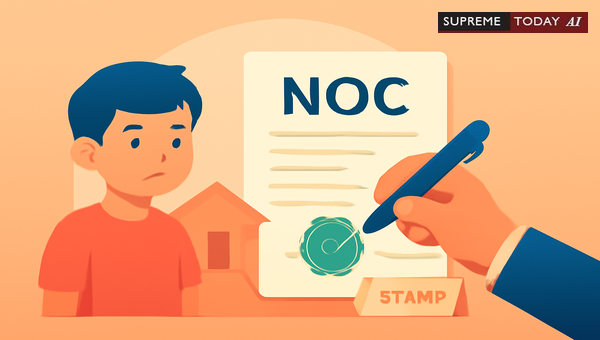
for Minor's Property Sale?
Selling a minor's property is a sensitive legal matter that requires strict adherence to procedural norms, especially when are involved. Imagine a family where a seeks court permission to sell part of a minor's for necessity or benefit. A co-sharer raises —but does it need to be formalized as an ? This question often arises: Whether on Behalf of a Co Sharer in a Case of Grant Permission of Sale of Minor s Property is to be Filed before the Court in the Form of Affidavit in Stamp Paper or Not.
In this post, we explore the legal requirements, judicial precedents, and practical guidance based on key statutes like the , and relevant case law. While courts generally emphasize formal procedures, the exact form may vary by jurisdiction. Note: This is general information, not legal advice—consult a qualified lawyer for your specific case.
Legal Framework for Selling Minor's Property
Under , a cannot sell a minor's without prior court permission, except in cases of necessity or evident advantage to the minor. Without such permission, the sale is typically . 2023 0 Supreme(Chh) 370
The court's role is protective, ensuring the transaction benefits the minor. Applications for permission must include details like property value, sale purpose, and consents from interested parties, such as . , who hold undivided interests in joint family property, play a crucial role. Their () or affidavit can strengthen the guardian's application, signaling consensus. 2024 0 Supreme(All) 509
Failure to obtain proper permissions or handle objections correctly can invalidate the sale. As one judgment notes: The cannot without taking sell any part of the of the minor... Any disposal of which is not necessary or reasonable and proper for the benefit of the minor or is without the is voidable at the instance of the minor. 1993 0 Supreme(SC) 479
The Requirement for from
When seeking court permission for a minor's property sale, guardians often need to demonstrate no opposition from . Courts typically require this in a formal manner to ensure transparency and verifiability.
Must It Be an ?
Legal practice generally mandates that a co-sharer's be filed as a before the court. This ensures it's part of the record and can be scrutinized. The answer is affirmative in most cases: yes, it should be filed as an . Courts emphasize procedural compliance, and informal consents may not suffice. 2001 8 Supreme 292
Key points include:- Formal Filing: Objections (or no objections) must be in the prescribed manner, often as affidavits. 2004 0 Supreme(SC) 1239- Stamp Paper Usage: While not universally mandated, affidavits on stamp paper add evidentiary weight, especially for property matters. Sources indicate courts may require supplying requisite stamp paper within fixed time. 2025 Supreme(Online)(Jhk) 4133- Sworn and Verifiable: Verbal or plain paper statements are typically insufficient; sworn affidavits protect all parties. 2011 0 Supreme(Guj) 546
In partition or sale scenarios involving , final decrees or consents may need engrossment on stamp paper to sever joint rights. For instance: so long the final decree passed on compromise is not engrossed on the stamp paper, it does not severe the rights of the . 2024 0 Supreme(Cal) 331
However, exceptions exist. Some courts accept plain paper affidavits if properly sworn, per jurisdictional rules. It's advisable to use stamp paper for stronger validity, particularly in high-value transactions. 2024 Supreme(Online)(TEL) 21116
Judicial Precedents and Analysis
Courts have consistently stressed formal objections or consents in minor's property sales.
Key Case Insights
- In a pivotal ruling, the validity of a guardian's sale hinged on proper permissions and objections: The question whether the sale was valid or not depends on whether proper permission was obtained and whether objections were filed in the prescribed manner. 2001 8 Supreme 292
- Another emphasized setting aside alienations formally: The requirement of law is to have the alienation set aside before making any claim in respect of such property transferred... In the absence of prayer for setting aside the transfer deeds, the High Court rightly held that appellant was not entitled to any relief. 2004 0 Supreme(SC) 1239
- Permissions are granted only for necessity: No court shall grant permission to the to do any of the acts mentioned in sub-section (2) except in case of necessity or for an evident advantage to the minor. 2023 0 Supreme(Chh) 370
These precedents underscore that no objections from should mirror objection formalities—via —to be effective. Informal NOCs risk being overlooked, potentially upholding the sale. 1993 0 Supreme(SC) 479
in possession act as trustees for others, complicating adverse claims without formal steps. 2019 0 Supreme(All) 1094
Practical Recommendations for Compliance
To navigate this:1. File Promptly: Submit the affidavit early in proceedings, within court timelines.2. Use Stamp Paper: Opt for of appropriate value (varies by state) to affirm seriousness.3. Notarize/Swear Properly: Have it affirmed before an or court.4. Include Details: State relationship to property, consent reasons, and no claim assertions.5. Seek Court Directions: Check local rules; some mandate specific formats. 2025 Supreme(Online)(Jhk) 4133
Guardians should attach co-sharer affidavits to permission applications, alongside valuations and necessity proofs. Failure risks delays or denials. 2024 0 Supreme(Bom) 432
Exceptions and Variations
- Jurisdictional Differences: Not all courts insist on stamp paper; plain affidavits suffice if verified. 2023 0 Supreme(All) 71
- Pre-Emption Rights: In sales triggering pre-emption, formal objections are mandatory, but NOCs may be discretionary. 2024 0 Supreme(P&H) 1356
- Post-Sale Challenges: Late or informal objections rarely succeed. 2019 0 Supreme(Jhk) 1841
Decrees allotting shares may not always need stamp paper unless vesting exclusive rights. 2018 0 Supreme(Del) 1343
Conclusion and Key Takeaways
In summary, while not universally statutory, filing a co-sharer's as an is generally required or highly recommended for court permission to sell a minor's property. This upholds procedural integrity, protects the minor, and binds effectively. Courts prioritize formal, verifiable consents to prevent disputes.
Key Takeaways:- Always formalize no objections via sworn affidavits.- Use stamp paper where practicable for evidentiary strength.- Comply with Hindu Minority Act and local rules.- Consult professionals to avoid voidable transactions.
Property laws evolve, so verify with current precedents. For tailored advice, engage a legal expert. This analysis draws from established cases to guide informed decisions.
#MinorsPropertyLaw, #NoObjectionCertificate, #PropertySaleIndia












