


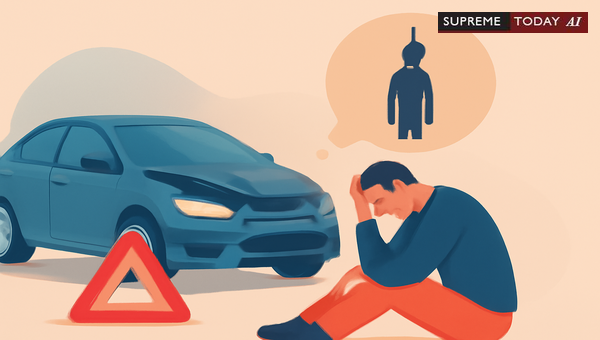
Compensation for Suicide After Accident Injuries & Depression
Motor vehicle accidents can lead to devastating physical injuries, but what happens when those injuries trigger severe mental health issues like depression, culminating in suicide? Many families wonder: due to accident sustained injuries and got depression and committed suicide – can legal representatives claim compensation for such a death under Indian law?
This is a complex and sensitive legal issue governed primarily by the (Sections 166 & 168). Courts have grappled with establishing a between the accident, resulting depression, and suicide. While compensation is possible if a strong evidentiary link exists, it's not automatic. This post breaks down the key principles, landmark cases, and practical advice, drawing from judicial precedents. Note: This is general information based on case law and not specific legal advice – consult a qualified lawyer for your situation.
Main Legal Finding: Establishing the
In the , courts recognize that injuries from a motor accident leading to mental depression and subsequent suicide can entitle (wife, children, parents) to compensation for the victim's death, provided there is sufficient evidence proving the depression arose directly from the injuries (e.g., medical testimony). Compensation may be awarded, sometimes reduced (e.g., to 50%) to account for the suicide as a voluntary act influenced by depression. However, claims fail without proof linking the accident to the suicide. 2008 0 Supreme(Ker) 581 2016 0 Supreme(Del) 3998 2013 0 Supreme(Kar) 1144 2022 0 Supreme(Bom) 1704
Key requirements include:- No pre-accident depression: Evidence of a happy, normal life before the accident.- Post-accident behavioral changes: Witness testimonies on sudden withdrawal or helplessness.- Medical evidence: Doctor's depositions or certificates linking injuries to depression. 2008 0 Supreme(Ker) 581 2016 0 Supreme(Del) 3998
Compensation treats the death as consequent to the accident, but courts may apply partial for the intervening suicide. 2008 0 Supreme(Ker) 581 2013 0 Supreme(Kar) 1144
Case Studies: When Compensation Was Awarded
Severe Injuries Leading to Proven Depression-Suicide Link
In a pivotal case, the victim suffered serious injuries, developed severe depression (no prior history, evidenced by family life and doctor's testimony), feeling worthless and helpless, leading to suicide. The court upheld negligence and awarded 50% of Rs.5,75,000 to : From the evidence, it can be seen that his severe depression and worthilessness and helplessness came after the accident in view of the accidental injuries... compensation should be given to the legal representative for the death as death was caused due to the mental depression developed consequent to the injuries - Reduction can be given and only 50% of the compensation payable for the death need be granted.2008 0 Supreme(Ker) 581
Another bus accident case saw severe injuries cause depression propelling suicide. Relying on precedent (), the court upheld the tribunal's award: The court found that the victim''''s suicide was propelled by injury-related depression and upheld the compensation awarded by the ... The main legal point established in the judgment is the connection between the accident, depression, and suicide.2016 0 Supreme(Del) 3998
Foot injuries (laceration, fracture, infection) led to disgust and suicide in yet another instance, supported by the same Kerala HC case: depression arose consequent to head injuries sustained in accident-Thus death was caused due to accident-Legal representatives of deceased entitled to claim compensation, affirming Rs.35,000. 2013 0 Supreme(Kar) 1144
Additional precedents reinforce this. In one appeal, the Tribunal confirmed a link for Mrs. Santha's suicide post-accident (3 months later): The court established that a direct link exists between injuries from a motor accident and subsequent suicide due to mental distress.2023 Supreme(Online)(Ker) 72681 The , her children, succeeded based on this nexus.
In another, legal representatives impleaded after suicide during claim pendency, alleging depression from injuries: chronic depression, a sustained in RTA. Partial compensation (Rs.1,70,000 additional) was allowed, considering due to impaired judgment.
A car accident case noted: only due to the depression for the injuries sustained by him in the accident, the injured committed suicide, holding a nexus existed.
THE MANAGER vs GOPALAKRISHNAN - 2021 Supreme(Online)(MAD) 22704
When Compensation Is Denied: Lack of Evidence
Courts strictly scrutinize evidence. In a case where suicide occurred six months post-accident, the tribunal awarded based on assumption, but the quashed it: The court found that the Tribunal''''s decision to award compensation based on the deceased''''s suicidal death due to accidental injuries was improper and illegal, as there was no evidence to prove the cause of suicide.2022 0 Supreme(Bom) 1704
Mere isn't enough; alternative causes must be ruled out. 2008 0 Supreme(Ker) 581 2022 0 Supreme(Bom) 1704
Insights from Broader Precedents
in Paulson (2008 (4) KLT 920) has been influential: Legal representatives of a suicide victim due to post-injury depression were entitled to compensation. This was cited in multiple cases, including one questioning if death was due to injuries: , considered the claim made by the legal representatives of the deceased who committed suicide due to mental depression developed consequent to the injuries sustained by the deceased in an accident.2024 Supreme(Online)(KER) 42424 2009 0 Supreme(Ker) 587
In an context (analogous principles), suicide from post-employment injury was compensable, drawing from English law (): consequent on the employment injury the employee was suffering from acute him feel that life had become intolerable to him and driving him to commit suicide by hanging.2009 0 Supreme(Ker) 587
A Karnataka case affirmed nexus for suicide on due to depression from injuries: on account of depression suffered by him due to accidental injuries, the injured committed suicide.2024 Supreme(Online)(KAR) 30301
Even in non-MV contexts, like burns leading to sepsis/depression, courts link outcomes to initial injuries if evidence supports. 2020 0 Supreme(AP) 57
Exceptions, Limitations, and Evidentiary Thresholds
- High Proof Standard: Pre-accident mental health records, post-accident psych reports, doctor depositions essential. Temporal links (e.g., suicide months later) alone fail. 2008 0 Supreme(Ker) 581 2022 0 Supreme(Bom) 1704
- Compensation Reduction: Courts may deduct 50% for suicide as contributory, recognizing impaired judgment. 2008 0 Supreme(Ker) 581 2016 0 Supreme(Del) 3998
- MV Act Scope Only: Applies to accident claims, not (abetment) or general insurance suicides. 2008 0 Supreme(Ker) 581
- Permanent Disability Context: Related claims for disablement/depression emphasize future income loss (Sarla Verma, Pranay Sethi precedents). 2022 0 Supreme(Guj) 1224
Recommendations for Legal Representatives
To strengthen claims:- Collect medical evidence (pre/post psych reports, wound/disability certificates). 2021 Supreme(Online)(MAD) 5401- Secure witness statements on behavioral changes. 2021 0 Supreme(Ker) 1162- File under MV Act Section 166, implead heirs for death claims.- Appeal tribunal denials if nexus ignored.
Insurers should counter with evidence of unrelated causes. Tribunals must avoid routine denials of genuine claims. 2021 0 Supreme(Ker) 1162
Conclusion: Key Takeaways
Indian courts generally allow MV Act compensation for suicides linked to accident-induced depression if is proven via robust evidence, though reductions apply. Cases like 2008 0 Supreme(Ker) 581 and 2016 0 Supreme(Del) 3998 show success is possible, while 2022 0 Supreme(Bom) 1704 warns of reversal risks.
Families facing this tragedy should act swiftly with expert legal help. Just compensation can provide closure and support – but proof is paramount.
Disclaimer: This article summarizes case law for informational purposes. Laws evolve, and outcomes depend on facts. Seek professional advice tailored to your case.
#MVActClaims #AccidentSuicideCompensation #MotorVehicleLaw












