


Compensation for Suicide in Jai: Key Court Cases
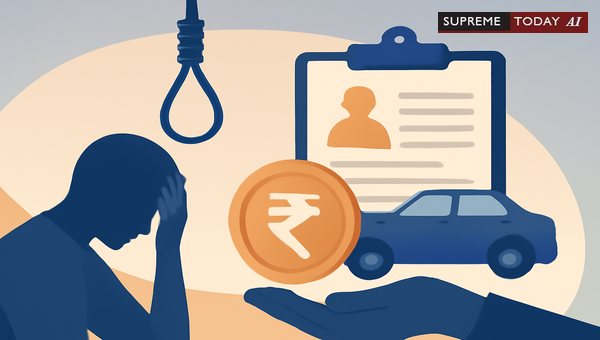
Suicide is a tragic event, but when it stems from injuries or depression caused by an accident, families may seek legal recourse for compensation. In Jai-related jurisdictions, courts have grappled with cases relating to compensation for suicide, balancing the need for justice with evidentiary requirements. This post explores pivotal legal principles, precedents, and trends, drawing from landmark judgments to help understand when such claims may succeed.
Note: This is general information based on case law and not specific legal advice. Consult a qualified attorney for personalized guidance.
Legal Principles Governing Suicide Compensation Claims
Indian courts, particularly in contexts like Jai, apply statutes such as the , , and constitutional principles to assess compensation. The core issue is establishing a between an accident or injury and the suicide. Without this, claims often fail.
Courts emphasize that compensation aims to fully and adequately restore the claimant to the position prior to the accident 2020 0 Supreme(P&H) 926. This principle extends to fatal outcomes like suicide if depression from injuries is proven as the propellant.
Connection Between Accident, Depression, and Suicide
A key recognition in jurisprudence is that can be treated as linked to the original accident. Legal representatives of the deceased may then be eligible for compensation.
- In Venugopal Narayanan Nair v. T.L. Paulson and Corr (Administratrix of Corr deceased) vs. IBC Vehicles Ltd., courts upheld that depression caused by accident injuries can propel the victim to commit suicide, and compensation can be awarded accordingly 2016 0 Supreme(Del) 3998.
- The ’s decision in the Venugopal case, affirmed on appeal, dismissed defenses where depression was accident-linked 2016 0 Supreme(Del) 3998.
This causal chain—accident → injuries → depression → suicide—is crucial. Evidence like medical records, inquest reports, and psychiatric history strengthens claims.
Entitlement to Compensation: When Claims Succeed
Claimants are typically entitled if the suicide is propelled by injury-related depression, with the accident-death connection proven. Courts reject outright suicide defenses when evidence supports this link.
- Compensation has been awarded to legal heirs, emphasizing the accident's role over the act of suicide itself 2016 0 Supreme(Del) 3998.
- In motor accident contexts, tribunals assess just compensation under , considering loss of earnings, pain, and future prospects 2017 0 Supreme(P&H) 1427.
However, pure suicide without accident nexus leads to rejection. Courts focus on circumstances and evidence 2017 0 Supreme(Del) 3683.
Distinction Between Suicide and Accidental Death
Differentiating intentional suicide from accidental death is pivotal, especially in employment or custodial settings.
Employment-Related Deaths
When death occurs during employment, courts scrutinize if it arose out of and in the course of employment.
- In DD 29A cases, compensation was upheld for accident-linked deaths, rejecting suicide claims based on inquest reports 2017 0 Supreme(Del) 3683.
- For instance, in a Jammu case, the court found the deceased (a chowkidar) died due to an accident in employment, awarding Rs.3,05,775 plus interest. The court found that the deceased died due to an accident arising out of and in the course of his employment, based on the evidence presented by... 2023 0 Supreme(J&K) 229. The appeal was dismissed, upholding compliance with Employees Compensation Act rules.
Time limits are strict: Commissioners must dispose of claims within three months 2017 0 Supreme(Del) 3681, 2018 0 Supreme(Mad) 4574. Delays in wage revisions under the Act have been criticized, with calls to align with Motor Vehicles Act standards for pain, suffering, and estate loss 2018 0 Supreme(Mad) 4574.
Custodial Deaths
Custodial suicides trigger heightened scrutiny. While actionable, awards may be lower if suicide is evident.
- Police duty includes preventing self-harm: even if death is by suicide, police negligence can lead to compensation liability IND_SC_12728_SC_12728.
- Courts award compensation if negligence in prevention is established, as in IND_SC_12728_SC_12728.
Integrating Motor Accident Precedents
Motor vehicle cases provide analogies for suicide-linked claims. Courts apply without strict proof, ensuring innocent victims aren't denied relief 2016 0 Supreme(Mad) 3165.
- In one appeal, negligence was confirmed, enhancing compensation for permanent disability (traumatic paraplegia) to Rs.17,93,075, rejecting late pleas 2020 0 Supreme(P&H) 926.
- Another enhanced award to Rs.12,89,000 for 77% disability post-head injury, citing : The object of awarding damages is to make good the loss suffered... in a fair, reasonable and equitable manner 2017 0 Supreme(P&H) 1427.
These principles bolster accident-suicide claims by prioritizing restorative justice.
Legal Outcomes and Emerging Trends
Trends show courts consistently upholding claims with proven causal links:
- Venugopal dismissed appeals, affirming awards 2016 0 Supreme(Del) 3998.
- Employment cases like the Jammu watchman death confirm coverage for work-related incidents 2023 0 Supreme(J&K) 229.
- Rejections occur for unlinked suicides 2017 0 Supreme(Del) 3683.
Critiques highlight stagnant Employees Compensation Act caps, urging alignment with inflation and MV Act heads like future earnings loss 2018 0 Supreme(Mad) 4574.
Key Takeaways and Recommendations
- Establish the link: Crucial evidence ties accident/injury to depression and suicide for success 2016 0 Supreme(Del) 3998 2017 0 Supreme(Del) 3683.
- Employment/Custody: Prove arising out of and in course of employment or negligence 2023 0 Supreme(J&K) 229IND_SC_12728_SC_12728.
- Pure suicide claims: Less likely without nexus.
- Families should gather medical, inquest, and witness evidence promptly.
In Jai contexts, these precedents offer hope where tragedy follows injury. Courts aim for equity, but outcomes hinge on facts. For tailored advice, engage legal experts familiar with local tribunals.
References: Cases cited per document IDs; full judgments via legal databases.
#SuicideCompensation, #JaiLegalCases, #AccidentClaims















