


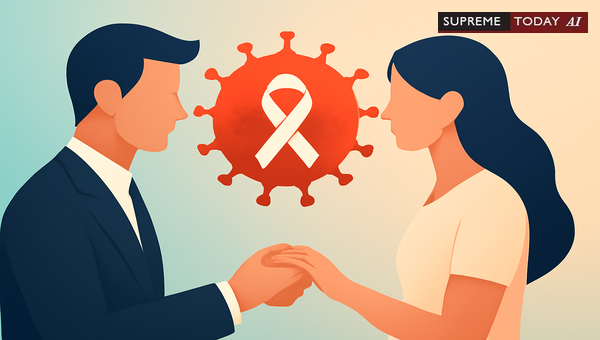
Concealing HIV Before Marriage: Criminal Liability Under Indian Law
Marriage is a sacred bond built on trust, but what happens when one partner hides a serious illness like HIV? This raises profound legal questions about consent, public health, and criminal responsibility. When a person marries somebody concealing his serious illness like HIV positive, then criminal sections attracted for his offences and what will be the offences? This is a critical issue under Indian law, where nondisclosure can lead to severe consequences.
In this post, we explore the relevant provisions of the (), judicial interpretations, and practical recommendations. Note: This is general information based on legal precedents and should not be considered specific legal advice. Consult a qualified lawyer for personalized guidance.
Key Legal Provisions: Sections 269 and 270
Under Indian law, concealing a serious communicable disease like HIV before marriage can attract criminal liability if it involves , negligence, or recklessness that endangers the spouse. The primary sections invoked are .
- : Punishes any . This applies to unlawful or negligent actions that risk transmitting diseases like HIV/AIDS. Punishment: Up to 6 months imprisonment, fine, or both. 1998 9 Supreme 220
- : Targets , involving . Punishment: Up to 2 years imprisonment, fine, or both. 1998 9 Supreme 220
These sections recognize that knowingly hiding such a disease or engaging in conduct that risks transmission constitutes an offence. For instance, entering marriage without disclosure, especially if leading to sexual relations, may qualify as negligent or malignant behavior. 1998 9 Supreme 220
HIV Status: Balancing Confidentiality and Public Health
Medical confidentiality is protected, but exceptions exist when public health or others' safety is at risk. Disclosure of HIV status is permitted in such scenarios. 1998 9 Supreme 220 2003 2 Supreme 962
The law imposes a moral and legal duty on individuals with HIV to inform partners before marriage or intimate relations. Failure to do so, particularly with intent to marry, can be seen as reckless conduct under Sections 269 and 270 , especially if transmission occurs or is risked. 1998 9 Supreme 220
In one judicial observation, courts have noted that hospitals should not maintain strict secrecy when health risks are involved. 1998 9 Supreme 220
Judicial Precedents and Case Insights
Indian courts have addressed HIV-related concealment in various contexts, reinforcing criminal liability for nondisclosure.
In a significant ruling, the in held that if an HIV positive person contracted marriage with a willing partner, then the same would not constitute the offences defined by Sections 269 and 270 . However, this was partly overruled in a review, emphasizing that nondisclosure with knowledge of risk changes the equation.
Another case outlined criteria for conviction in aggravated sexual assault involving HIV: (i) non-disclosure or misrepresentation of HIV status knowing the risk; (ii) significant risk of serious harm; (iii) lack of consent if status was known. 2020 0 Supreme(Del) 1449
Courts have also directed blood tests for HIV in matrimonial disputes without violating Article 21 rights. Compelling a person to give his blood sample for testing purpose would not be violative of his fundamental right guaranteed under Art.20(3) or 21.
Related cases highlight broader implications:- Bail considerations for HIV-positive accused, factoring illness into decisions without commenting on merits. 2024 Supreme(Online)(Mp) 35068- Charges under other sections like 498A (cruelty) alongside HIV mentions, but not directly linking to 269/270.
2022 Supreme(Online)(Mad) 72949
These precedents underscore that are pivotal; mere HIV status doesn't criminalize marriage, but concealment does.
Exceptions and Limitations
Not every case leads to prosecution. Key limitations include:- : No offence if disclosed.
- : Honest disclosure and safe practices may negate liability.- : Protected unless public health demands disclosure. 1998 9 Supreme 220- Employment contexts: HIV alone doesn't justify termination unless duties can't be performed. 2013 0 Supreme(Kar) 871
The law targets , not the disease itself.
Practical Recommendations
To avoid legal pitfalls:- Disclose status pre-marriage: Essential to prevent charges under 269/270.- Seek counseling: Medical professionals should guide on ethical disclosures when risks exist. 1998 9 Supreme 220- Legal awareness: Those with HIV must understand concealment risks criminal charges.- Spouses' rights: If deceived, report promptly; courts may order tests.
Conclusion: Prioritize Transparency for Trust and Compliance
Concealing HIV before marriage can indeed attract Sections 269 and 270 if endangers others, balancing individual privacy with public health. Judicial trends emphasize disclosure duties, with exceptions for .
Key Takeaways:- .- .- .
Stay informed, disclose responsibly, and consult professionals. For more legal insights, follow our blog.
References:- 1998 9 Supreme 220 — Core principles on 269/270 and HIV disclosure.- 2003 2 Supreme 962 — Privacy vs. public health conflicts.- 2020 0 Supreme(Del) 1449,
,
— Judicial criteria and precedents. #HIVLawIndia, #IPC269270, #MarriageDisclosure












