


Section 152 CPC: Fixing Clerical Errors in Judgments
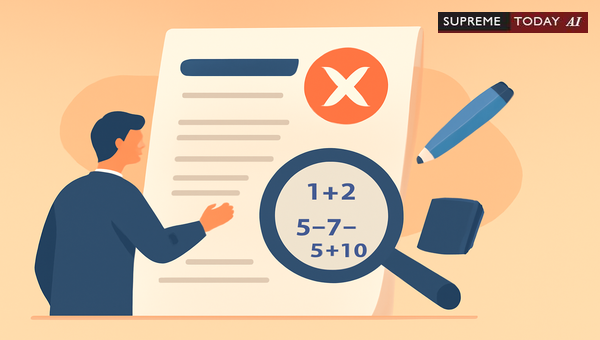
In the complex world of civil litigation under India's Civil Procedure Code (CPC), 1908, precision in judicial records is essential to ensure justice. Litigants and lawyers often grapple with questions like whether movable property can be attached in Civil Procedure Code proceedings—typically yes, subject to provisions under and , with exceptions for necessary goods. However, an equally critical aspect is rectifying inadvertent errors in court documents. Enter Section 152 of the CPC, a vital procedural tool designed to correct clerical or arithmetical mistakes in judgments, decrees, or orders without reopening the merits of the case. This provision upholds the principle that —an act of the court shall prejudice no one. 2011 0 Supreme(All) 1389
This blog post delves into Section 152 CPC, its scope, judicial interpretations, limitations, and practical applications, drawing from statutory text and case law. Note: This is general information, not legal advice. Consult a qualified lawyer for your specific situation.
Overview of Section 152 CPC
Section 152 provides a straightforward mechanism for maintaining the integrity of judicial records. It states: Clerical or arithmetical mistakes in judgments, decrees or orders or errors arising therein from any accidental slip or omission may at any time be corrected by the Court either of its own motion or on the application of any of the parties. 2011 0 Supreme(Mad) 483 2023 0 Supreme(Bom) 368 2018 0 Supreme(All) 1241 2015 0 Supreme(Kar) 394 2011 0 Supreme(Del) 874
This power ensures that minor slips do not derail justice. Courts can act (on their own) or upon a party's application, and importantly, there is no time bar—corrections can be made at any time. 2023 0 Supreme(Bom) 368 The focus is on accidental errors, not deliberate changes or reinterpretations. 2014 6 Supreme 513 2019 0 Supreme(Pat) 843
Key Provisions and Nature of Corrections
The provision is narrowly tailored:- Clerical Mistakes: These include typographical errors, misspellings, or wrong names in cause titles. For instance, amending a party's name due to a scrivener's error. 2022 Supreme(Online)(KER) 34449- Arithmetical Errors: Obvious miscalculations, like incorrect interest computations or date discrepancies.- Accidental Slips or Omissions: Errors from oversight, such as omitting a party's relief inadvertently. 2011 0 Supreme(Mad) 483
As observed in a case: We have perused Sec.152 of CPC, which provides corrections in the order passed... Hence as per , it being clerical & arithmetical mistake out of accidental slip in the judgment and order as mentioned above can be corrected when it is brought to the notice.
Courts emphasize that these corrections align with procedural accuracy, preventing prejudice from trivial flaws. 2025 0 Supreme(Ori) 3
Scope and Application in Practice
Section 152 applies post-judgment, when the court is generally (having discharged its duty). Yet, it carves an exception for non-substantive fixes. 2019 0 Supreme(Pat) 843 2011 0 Supreme(Mad) 483
- Court's Authority: Exercisable or on application. No formal appeal needed, making it efficient. 2023 0 Supreme(All) 967 2023 0 Supreme(Bom) 368
- Examples from Case Law:
- Amending operative portions or cause titles due to slips. 2022 Supreme(Online)(KER) 34449 2023 Supreme(Online)(MAD) 24839
- Correcting decree dates or amounts from arithmetic slips, as in execution proceedings where plaintiffs discovered errors late. 2009 0 Supreme(Bom) 793
In one ruling: is more than justified in drawing our attention to the provisions of which is structured in line with Sec. 152 of CPC, 1908; this provision provides remedy at the departmental level. 2023 0 Supreme(Kar) 1226
Courts liberally invoke Sections 151 (inherent powers) alongside 152 to ensure justice, but only for true clerical issues.
2007 7 Supreme 687 2025 0 Supreme(Ori) 3
Judicial Interpretations and Precedents
Indian courts, including the , have clarified Section 152's boundaries:- Not for Substantive Changes: It cannot alter the judgment's true intent or grant new relief. The corrections permitted under Section 152 are strictly limited to clerical or arithmetical errors and accidental omissions. They do not extend to substantive changes. 2014 6 Supreme 513 2019 0 Supreme(Pat) 843- Complement with : Inherent powers aid but cannot override finality.
- Actus Curiae Principle: Emphasized to protect parties from court errors. 2011 0 Supreme(All) 1389
A High Court noted: On a plain reading of Section 152 of makes it clear that at any time, any clerical or arithmetical... 2015 0 Supreme(Kar) 394 Another affirmed: What is sought to be modified is the decree under Section 152 of the Code. 2011 0 Supreme(Del) 874
Recent viewpoints reaffirm liberal exercise for procedural fixes, but dismissals occur if substantive review is sought. 2023 Supreme(Online)(Mad) 86564 2023 Supreme(Online)(MAD) 24839 2025 Supreme(Online)(Ker) 47908
Limitations and Common Pitfalls
While powerful, Section 152 has clear limits:- No Review of Merits: Cannot claim un-granted relief or reinterpret facts—use appeal/review instead. 2005 3 Supreme 586 2014 6 Supreme 513- No Interpretation: Factual or legal analysis requires higher remedies. 2025 0 Supreme(Ori) 3- Debates on Scope: Some cases debate if amendments affect substantive rights, leading to cautious application. 2023 Supreme(Online)(Mad) 86564
One court rejected an application: the present application does not fall within the ambit and scope as per the provisions of Section 152... 2018 0 Supreme(All) 1241
Post-finality, courts lose authority except under this section. 2019 0 Supreme(Pat) 843
Procedural Tips for Practitioners
To leverage Section 152 effectively:1. Identify Error Clearly: Specify the clerical/arithmetical nature with evidence.2. File Prompt Application: Though no time limit, act swiftly to avoid complications.3. Support with Precedents: Cite cases like those emphasizing accidental slips.
4. Avoid Overreach: Distinguish from appeals to prevent dismissal.
Familiarity with related rules (e.g., in some contexts) aids. 2023 0 Supreme(Kar) 1226
Conclusion and Key Takeaways
Section 152 CPC stands as a sentinel for judicial accuracy, enabling swift corrections of clerical, arithmetical mistakes, or accidental slips without undermining case finality. It embodies efficiency in civil procedure, ensuring records mirror the court's true intent. However, its use demands precision—sticking to non-substantive fixes.
Key Takeaways:- Applicable anytime, or on application. 2023 0 Supreme(Bom) 368- Limited to clerical/arithmetical errors, not merits. 2014 6 Supreme 513- Complements inherent powers but respects judgment finality.
- Liberal judicial approach for justice, with precedents guiding application.
Legal professionals should wield this tool judiciously, bolstering applications with cited authorities. For queries on attachment of movable property or other CPC matters, professional advice is recommended.
References: 2011 0 Supreme(Mad) 483 2023 0 Supreme(Bom) 368 2014 6 Supreme 513 2019 0 Supreme(Pat) 843 2023 0 Supreme(All) 967
2007 7 Supreme 687 2011 0 Supreme(All) 1389 2005 3 Supreme 586
2023 0 Supreme(Kar) 1226 2018 0 Supreme(All) 1241 2015 0 Supreme(Kar) 394 2011 0 Supreme(Del) 874 2009 0 Supreme(Bom) 793 2025 0 Supreme(Ori) 3 #Section152CPC, #ClericalErrors, #CivilLawIndia












