


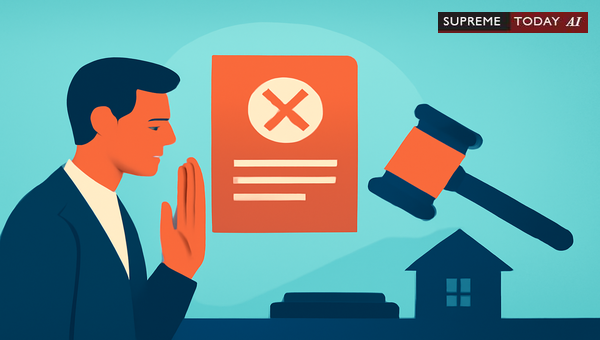
What Is '' in Court?
In legal proceedings, certain terms can sound intimidating or mysterious to the uninitiated. One such phrase is '' or . If you've ever wondered, What is the meaning of ?, you're not alone. This concept often arises in , particularly in cases involving or serious misconduct. Understanding it is crucial for defendants, lawyers, and anyone navigating the court system.
This post breaks down the definition, legal principles, when it applies, its consequences, and insights from relevant cases. Note that this is general information based on established legal precedents and should not be taken as specific legal advice—consult a qualified attorney for your situation.
Definition and Legal Principles of Striking Off Defense
refers to a whereby the court disallows a party—typically the defendant—from presenting its defense in a case. This is considered a and is generally used only in specific circumstances 2001 0 Supreme(Del) 914.
Courts approach this remedy with caution because it effectively curtails a party's . The legal standard is stringent: it should not be based solely on photocopies or claims/disputes disclosed in affidavits. Instead, the defense is typically struck off only when , deliberate, or of court orders or proceedings is evident writ large 2001 0 Supreme(Del) 914.
As one judicial observation emphasizes, in interpreting legal expressions, the Courts must find out what is legal, not what is right 2016 0 Supreme(Cal) 1044. This underscores the need for clear, statutory or precedential grounding before imposing such a penalty.
When Can a Defense Be Struck Off?
Courts reserve this power for extreme situations. Here are key scenarios:
- : For instance, failure to deposit rent or costs in may lead to . However, courts stress that this should be done sparingly and only when justified 1996 0 Supreme(All) 1242 1992 0 Supreme(Pat) 11.
- Deliberate default or : When misconduct is clear and serious, such as , striking off is justified. Courts prefer milder measures unless the behavior is egregious 2001 0 Supreme(Del) 914.
In eviction cases under statutes like the , this order is particularly relevant. The defendant may face it for persistent violations, but proportionality is key—courts weigh the defendant's actions against less punitive options.
Relatedly, in statutory contexts like insurance claims under the , insurers are limited to unless they obtain court permission to take over the full defense. Without a reasoned order under , they cannot have a wider defense on merits than what is available to it by way of statutory defense
NATIONAL INSURANCE CO. LTD. VS V. VISHALAKSHY
UNITED INDIA INSURANCE CO. LTD. VS ANITA
2007 0 Supreme(Del) 2720. This illustrates how courts guard against expansive defenses without proper authorization, mirroring the restraint in striking off defenses.Scope, Limitations, and Impact on the Defendant
Once a defense is struck off:
- The defendant cannot lead evidence or cross-examine witnesses beyond pointing out weaknesses or falsity of the plaintiff's case, especially in eviction proceedings 1990 0 Supreme(Raj) 385.
- The order is final and binding, limiting the defendant's role to challenging the order itself rather than re-arguing merits 1990 0 Supreme(Raj) 385.
- The defendant loses the right to adduce evidence or participate actively, restricting involvement to minimal challenges 1990 0 Supreme(Raj) 385.
This drastically limits participation, turning the trial into a one-sided affair. The impact is profound: the case proceeds as if the defendant has no substantive rebuttal, potentially leading to or eviction orders.
Insights from Broader Legal Contexts
While primarily a civil remedy, parallels exist in other areas. For example, in U.S. reviews, deficient performance by counsel may prejudice the defense if there's a reasonable probability that, but for counsel’s unprofessional errors, the result of the proceeding would have been different 2023 Supreme(US)(ca4) 104. Though jurisdictional differences apply, the principle of protecting core defense rights resonates globally.
In promotion disputes under service rules, courts have struck down overly rigid qualifications that permanently shut out eligible employees without fair mechanisms, emphasizing that restrictions cannot however go to the extent of seriously jeopardizing the chances of promotion 2012 0 Supreme(Kar) 324. This highlights judicial reluctance to impose barriers that eviscerate opportunities, akin to striking off defenses without strong cause.
Under the , interpretations rely on plain grammatical meaning, refusing expansive readings that protect disqualifications improperly 2016 0 Supreme(Cal) 1044. Such statutory interpretation reinforces that striking off defenses demands precise, evident grounds.
Key Case Examples
- In a matter, post-striking off, defendants were confined to exposing plaintiff's case flaws, with no evidence allowed 1990 0 Supreme(Raj) 385.
- Precedents warn against routine use: done sparingly for rent defaults 1996 0 Supreme(All) 1242 1992 0 Supreme(Pat) 11.
- or defiance must be evident writ large for justification 2001 0 Supreme(Del) 914.
These cases collectively affirm: striking off is a drastic measure for exceptional circumstances like , deliberate defiance, or serious non-compliance 2001 0 Supreme(Del) 914 1990 0 Supreme(Raj) 385 1996 0 Supreme(All) 1242.
Recommendations and Best Practices
- For defendants: Comply rigorously with interim orders (e.g., rent deposits) to avoid this risk. Challenge applications to strike off vigorously, citing the high threshold.
- For plaintiffs: Seek this only with ironclad evidence of misconduct; courts may opt for costs or adjournments instead.
- Litigators: Document all compliance meticulously. Appeal striking orders promptly, as they bind trials tightly.
Use this measure cautiously, ensuring grounds meet strict criteria 2001 0 Supreme(Del) 914. Once imposed, contesting is confined to the order's legality.
Conclusion: Key Takeaways
'' means the court has ordered the defendant's defense disallowed due to misconduct, default, or abuse—restricting evidence and participation severely. It's justified only in exceptional cases, applied sparingly to uphold fairness.
Key takeaways:- Harsh remedy for /defiance 2001 0 Supreme(Del) 914.- Limits defendant to minimal role 1990 0 Supreme(Raj) 385.- Sparingly used; prefer alternatives 1996 0 Supreme(All) 1242.
Stay proactive in court obligations to safeguard your defense. For tailored guidance, reach out to a legal professional. This overview equips you to navigate proceedings confidently.
#StruckOffDefense, #LegalTerms, #CourtProcedures















