


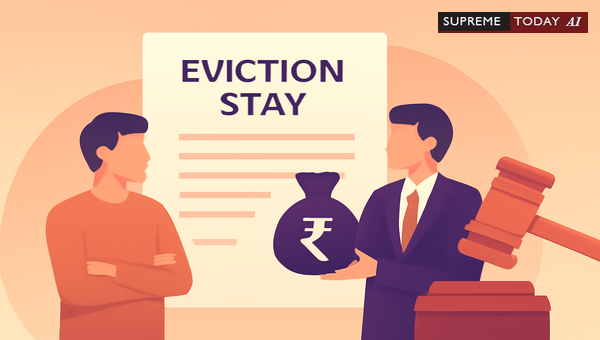
Can Trial Court Stay an Subject to Payment of ?
In the high-stakes world of landlord-tenant disputes in India, an can upend lives and businesses. But what if a tenant wants to appeal? A common question arises: can be Stayed by Trial Court Subject to Payment of . This principle balances the rights of both parties, allowing tenants a fighting chance while ensuring landlords aren't left high and dry. This blog explores the legal framework, key precedents, and practical insights drawn from judicial decisions.
Note: This is general information based on legal precedents and not specific legal advice. Consult a qualified lawyer for your situation.
Understanding the Power of Trial Courts to Stay Eviction Decrees
Under the Indian judicial system, particularly in and civil procedure contexts, trial courts possess the authority to stay the execution of an . This is not automatic but typically conditioned on the tenant paying —compensation for continued use of the property. The goal? Prevent of the tenant and compensate the landlord for delays. 2023 0 Supreme(Del) 1794 2023 0 Supreme(Del) 2149
Courts invoke provisions like , which empowers appellate or trial courts to impose conditions for stays, including payment of or . This ensures fairness during the pendency of appeals. 2009 8 Supreme 397 2015 0 Supreme(HP) 1715
Key Conditions for Granting a Stay
When considering a stay, courts generally impose these conditions:- Payment of : Set at current , not just , to reflect the property's true value. This avoids tenants benefiting from outdated rents.
2018 0 Supreme(Cal) 158- Reasonable and Non-Punitive Amount: Charges must be fair, not excessive. Courts may reassess if initial figures don't match market conditions. 2018 0 Supreme(Cal) 578 2005 1 Supreme 469- Timely Compliance: Failure to pay can vacate the stay automatically.
For instance, in one case, the court stated: stay order can be promulgated subject to payment of occupational charges of Rs. 10,000/- per month. 2023 0 Supreme(Cal) 1556 This was after reviewing prevailing rents in Bidhannagar, staying execution of Title Execution Case No. 28 of 2016 pending appeal.
Landmark Case Law on
Indian courts have consistently upheld this balanced approach through pivotal judgments:
- Atma Ram Properties Case: Once an is passed, tenants become liable for or market-rate compensation for use and occupation. This shifts the dynamic post-decree. 2005 3 Supreme 417
- Kanak Projects Case: Tenants must pay until vacation, as delaying payment could lead to . 2021 0 Supreme(Cal) 73
Additional precedents reinforce this:- In a dispute, the court fixed at Rs. 1,00,000/- per month for shop blocks, considering ready reckoner values, property age, and a recent lease deed at Rs. 86,580/-. A figure of Rs. 1,00,000/- per month is a reasonable amount towards . 2019 0 Supreme(Bom) 2575- Under the , courts directed Estate Officers to quantify post-eviction proceedings. 2017 0 Supreme(Cal) 839
These cases highlight that post-decree, tenancy terminates, but stays protect tenants' appeal rights while safeguarding landlords. 2023 0 Supreme(Cal) 1556
Determining Fair : Market Rate Matters
differ from rent:- : Fixed by agreement, often below market.- /: Current market value, proven via rent deeds, ready reckoners, or locality surveys.
Courts emphasize evidence-based fixation. In arbitration proceedings under , a receiver was appointed to inventory occupants and collect , holding them in fixed deposits until resolution. This prevented misuse by unauthorized occupants. 2016 0 Supreme(Cal) 904
However, pre-eviction, courts typically avoid mandatory orders for charges, preserving tenant rights until a final decree. Until and unless a final order and/or decree is passed for eviction, a landlord cannot encroach upon the rights of the tenant. 2016 0 Supreme(Cal) 904
Practical Implications for Landlords and Tenants
For Tenants Facing Eviction
- Prepare Evidence: Gather market rent data to negotiate reasonable charges.
- Document Payments: Court-ordered payments should be recorded to avoid disputes.
- Appeal Strategically: Highlight business impacts, as in cases where stays were granted to protect a tenant's only business source. 2023 0 Supreme(Cal) 1556
For Landlords Seeking Enforcement
- Demand : Support with affidavits, lease comparables, or expert valuations.
- Monitor Compliance: Non-payment vacates stays, expediting execution.
- Challenge Low Fixes: If charges seem undervalued, seek reassessment. 2018 0 Supreme(Cal) 158
In public premises or long-term tenancies (e.g., 40+ years), courts still prioritize market-aligned compensation. 2019 0 Supreme(Bom) 2575
Balancing Rights: The Judicial Philosophy
This framework embodies equity. Tenants get time to appeal without immediate dispossession, while landlords receive ongoing compensation. As one ruling noted: Appellate court may impose reasonable conditions for stay to compensate decree-holder for delay. 2023 0 Supreme(Cal) 1556 Payments during stays are often without prejudice, adjustable post-final orders. 2017 0 Supreme(Cal) 839
Conclusion and Key Takeaways
Trial courts in India may stay eviction decrees subject to at , promoting justice for both sides. Key takeaways:- Stays are conditional on fair, market-based payments.
2018 0 Supreme(Cal) 158- Post-decree liability for is standard. 2005 3 Supreme 417- Always substantiate rates with evidence to avoid disputes.
Landlords and tenants should approach courts prepared, as outcomes hinge on facts and precedents. For tailored guidance, engage a legal expert familiar with local rent laws.
References:- 2023 0 Supreme(Del) 1794 2023 0 Supreme(Del) 2149
2018 0 Supreme(Cal) 158 2018 0 Supreme(Cal) 578 2005 1 Supreme 469 2009 8 Supreme 397 2015 0 Supreme(HP) 1715 2005 3 Supreme 417 2021 0 Supreme(Cal) 73 2023 0 Supreme(Cal) 1556 2019 0 Supreme(Bom) 2575 2017 0 Supreme(Cal) 839 2016 0 Supreme(Cal) 904
This principle ensures eviction processes remain humane yet enforceable, reflecting India's evolving tenancy jurisprudence.
#EvictionStay #OccupationCharges #TenantLaw












