


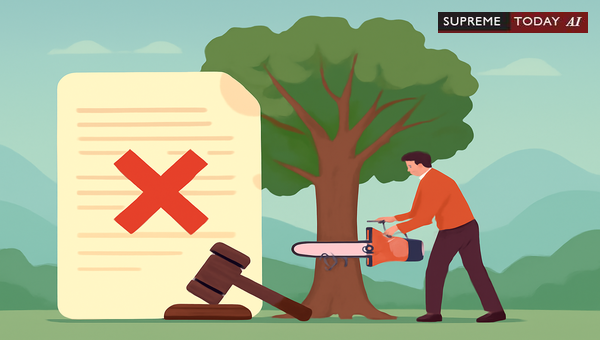
When Courts Deny Tree Cutting Injunctions in India
In India, property owners and neighbors often clash over trees—whether sacred symbols, safety hazards, or obstacles to development. A common legal plea arises: Granted. But does the court always side with preservation? Generally, no. Courts typically refrain from issuing to halt lawful tree removal, prioritizing , safety, and legal obligations. This blog delves into the nuances, drawing from key judgments and statutes, primarily in Kerala, to clarify when such injunctions are denied.
Disclaimer: This article provides general information based on legal precedents and is not specific legal advice. Consult a qualified lawyer for your situation.
The Core Legal Question: When is a 'Not to Cut Tree' Injunction Granted?
The question at hand is whether courts will grant a permanent injunction to prevent tree cutting, especially when authorized by law. The answer, rooted in Indian jurisprudence, is that such injunctions are rarely issued without a clear, . Courts emphasize that religious or cultural sentiments alone do not create binding obligations. Instead, they uphold statutes regulating tree felling and defer to competent authorities. 1921 0 Supreme(Cal) 29
Main Legal Finding
Under Indian law, particularly in Kerala, to block lawful tree removal decrees are not favored. Temporary relief may be possible, but permanent ones demand proof of a recognized legal or religious right enforceable by law. Absent this, courts deny relief, as seen in cases involving sacred trees or dangerous ones. 1921 0 Supreme(Cal) 29
Neither authority nor principle has been invoked in support of the alleged legal obligation which the plaintiffs seek to impose upon the defendants... We hold, accordingly, that the refusal to grant a perpetual injunction will not lead to the breach of an obligation, that is, of a duty enforceable by law. 1921 0 Supreme(Cal) 29
Key Points from Court Precedents
- Sacred Trees and Religious Rights: Courts acknowledge trees like Bilva, Kadamba, and Jamba as worship objects but rule that veneration does not impose legal duties preventing lawful removal. 1921 0 Supreme(Cal) 29
- Statutory Regulation: Laws such as the , require prior permission for cutting, with exceptions for dangers like disease or windfall. 2016 0 Supreme(Ker) 101
- Landowner Rights: Under the , owners can cut trees after filing declarations and obtaining permits, unless protected. Government has no automatic rights over post-assignment planted trees. 2015 0 Supreme(Ker) 1506 2025 Supreme(Online)(Ker) 58522
- Government Trees: Trees on government-assigned land may vest with the Forest Department, requiring sanction. , prohibits felling without permission. 2023 0 Supreme(Ker) 81
- No Interference in Lawful Acts: do not restrain authorities exercising statutory powers, especially for safety. 2016 0 Supreme(Ker) 101 2015 0 Supreme(Ker) 1506
- Procedural Safeguards: Emergency removals for imminent danger must be reported, with inspections mandated. 2023 0 Supreme(Ker) 340
Detailed Analysis: Sacred Trees vs. Legal Obligations
Recognition of Religious Reverence
In a pivotal case, plaintiffs sought to protect a sacred tree via injunction, claiming religious rights. The court recognized cultural significance but held:
Religious sentiments alone do not create a that warrants a permanent injunction. 1921 0 Supreme(Cal) 29
This sets a high bar: mere reverence insufficient without statutory backing.
Statutory Framework in Kerala
The mandates authorized officer permission for felling, exempting dangerous or diseased trees. Post-action reporting is required. 2016 0 Supreme(Ker) 101
The empowers landowners:
... they have every right to cut and remove the trees therein as per ... after filing a declaration containing details such as the survey number. 2025 Supreme(Online)(Ker) 58522
Courts quashed denials of removal permissions, affirming owners' exclusive rights over planted trees on assigned lands, absent specific government claims. 2025 Supreme(Online)(Ker) 58522
Conversely, for government property, assignees must protect trees, including future growth, per assignment terms and . Petitioners were denied self-help cutting but advised to seek statutory permission. 2023 0 Supreme(Ker) 81
Court Rulings on Injunctions
- Dismissal for Lack of Legal Duty: Suit for perpetual injunction failed; no enforceable obligation found. 1921 0 Supreme(Cal) 29
- Limits: jurisdiction not for blocking lawful dangerous tree removal without prior authority application. 2023 0 Supreme(Ker) 812 2022 0 Supreme(Del) 896
- Appeal and : In Daman and Diu, courts remanded appeals for reasoned orders, halting cutting during proceedings to avoid infructuous appeals. 2018 0 Supreme(Bom) 292
- Violation Proof: Injunction breach claims demand ironclad proof under ; unproven allegations fail. 1999 0 Supreme(Pat) 917
Other cases highlight clean hands: Petitions dismissed for concealed facts in tree-related disputes. 2017 0 Supreme(Del) 1328
Exceptions and Emergency Provisions
Courts may grant temporary injunctions for procedural lapses or imminent non-safety harm. However:
- Imminent Danger: Swift removal allowed, followed by documentation. 2016 0 Supreme(Ker) 101 2015 0 Supreme(Ker) 1506
- Protected Trees: Rare legal recognition of sacred status could sway, but uncommon.
- Public Projects: Permissions with (e.g., 5x trees) upheld. 2024 Supreme(Online)(NGT) 5128
In one instance, post-cyclone fallen trees led to disputes, but access rights prevailed over preservation without legal bar. 2007 0 Supreme(Mad) 369
Practical Recommendations
- Establish Legal Right: Prove statutory protection or enforceable religious duty for permanent injunction.
- Seek Temporary Relief: Ideal for urgent procedural challenges.
- Follow Procedures: Landowners: File declarations/permits. Authorities: Inspect and report.
- Approach Authorities First: Exhaust remedies before courts. 2023 0 Supreme(Ker) 81
Conclusion and Key Takeaways
Indian courts, especially in Kerala, balance preservation with practicality. Permanent not to cut tree injunctions are typically denied absent enforceable legal obligations, favoring statutes like the 1986 and 2005 Acts. Religious sentiments, while respected, do not override lawful removal for safety or development.
Key Takeaways:- No automatic injunctions against authorized felling.- Prioritize permissions and safety compliance.- Temporary relief possible; permanent rare.
Stay informed on evolving environmental laws. For tailored guidance, engage a legal expert.
References:1. 1921 0 Supreme(Cal) 29 - Religious trees analysis.2. 2016 0 Supreme(Ker) 101 - 1986 Act procedures.3. 2015 0 Supreme(Ker) 1506 - 2005 Act landowner rights.4. 2023 0 Supreme(Ker) 340 - Judicial limits.5. 2025 Supreme(Online)(Ker) 58522 - Assigned land tree rights.6. 2023 0 Supreme(Ker) 81 - Government tree protections.
#TreeCuttingLaw #InjunctionIndia #KeralaTrees












