


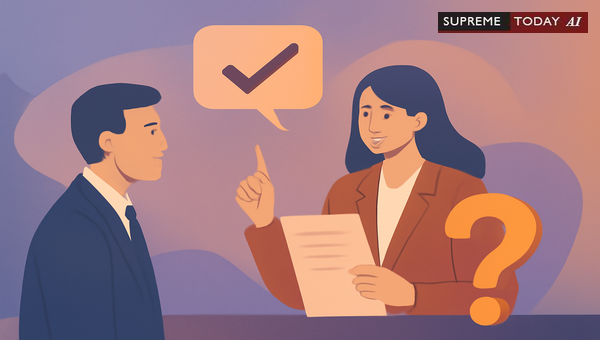
Purpose of : The in Indian Courts
In the high-stakes arena of courtroom battles, where truth hangs in the balance, one tool stands out as the ultimate verifier: . Often described as an , it ruthlessly probes the reliability of witness testimony. But what exactly is the purpose of ? If you've ever wondered, is an —what is its purpose?, this comprehensive guide dives deep into its role within the Indian judiciary system.
This article explores the legal principles, objectives, and real-world applications of , drawing from established precedents and statutory frameworks. Please note: This is general information for educational purposes and not specific legal advice. Consult a qualified lawyer for your situation.
Understanding in the Indian Legal System
is a fundamental phase in trials under the () and the . It follows the , where a party presents its witness. The opposing party then has the right to question that witness to test their evidence.
As courts have repeatedly emphasized, is an acid-test of the of a witness's statement made on oath 2020 0 Supreme(Pat) 380 2019 0 Supreme(HP) 631 2018 0 Supreme(All) 2196 2018 0 Supreme(Gau) 869 2020 0 Supreme(All) 76. This metaphor underscores its power to corrode falsehoods, revealing the core truth beneath.
Core Purposes of
The multifaceted objectives of ensure justice by scrutinizing evidence. Here's a breakdown:
1. Testing Truthfulness and Reliability
At its heart, verifies if a witness's testimony holds water. It acts as an to judge the of statements made during 2018 0 Supreme(All) 682.
- Paramount Importance in Trials: The fate of the criminal trial depends upon the truthfulness or otherwise of the witnesses and, therefore, it is of paramount importance. To arrive at the truth, its should be judged and for that purpose is an 2018 0 Supreme(All) 682 2015 0 Supreme(Ker) 1450 2014 0 Supreme(Del) 1197 2014 0 Supreme(Del) 807 2013 0 Supreme(Raj) 1430.
- Courts rely on it to assess character and reliability, influencing how much weight is given to testimony 2020 0 Supreme(Pat) 380.
In , it was highlighted as essential for impeaching credibility 2020 0 Supreme(Pat) 380 2018 0 Supreme(All) 2196.
2. Impeaching Witness Credibility
exposes cracks in a witness's story:- Inconsistencies and Contradictions: By revealing falsehoods, it discredits the witness 2020 0 Supreme(Pat) 380.- Challenging Eyewitness Accounts: In acid attack cases, revealed admissions like the victim being in deep slumber when attacked, casting doubt on prosecution claims 2025 Supreme(Online)(RAJ) 7433.
This prevents unreliable evidence from swaying verdicts, as seen where unchallenged testimony in bolstered defenses
.
3. Eliciting Favorable Facts
Beyond demolition, it builds the cross-examiner's case:- Admissions from Opponent's Witnesses: Uncovers suppressed facts supporting the defense 2008 0 Supreme(Kar) 836 2018 0 Supreme(Gau) 869.- Establishing Own Case: Turns opponent witnesses into unwitting allies by drawing out helpful admissions 2008 0 Supreme(Kar) 836.
For instance, in kidnapping cases, tested victim testimonies, ensuring only credible evidence prevailed 2014 0 Supreme(Del) 1197.
4. Ensuring Justice and Fair Trials
is no formality—it's a for truth-seeking 2020 0 Supreme(Pat) 380 1979 0 Supreme(Raj) 446. The has called it the most efficacious method to establish truth and expose falsehood 2018 0 Supreme(All) 2196 2022 0 Supreme(Gau) 953.
Denial of this right vitiates trials:- In a murder case, lack of counsel led to unchallenged witnesses, violating of the ; trial was set aside for proceedings 2018 0 Supreme(All) 682.- Similarly, in robbery convictions, failure to cross-examine material witnesses denied fair trial, prompting remand 2014 0 Supreme(Del) 807.- The High Court ruled: The right to is an essential part of fair trial and cannot be curtailed briskly or denied mechanically 2013 0 Supreme(Raj) 1430.
Limitations and Key Considerations
While powerful, has boundaries:- Right of Adverse Party Only: Available only to parties with conflicting interests 2020 0 Supreme(All) 76 (ENNEN CASTING PRIVATE LIMITED).- No Obligation Without Conflict: Absent adversity, it may not apply 2020 0 Supreme(All) 76.- Court's Discretion: Under , courts can recall witnesses, but mechanical denial is impermissible 2013 0 Supreme(Raj) 1430.
In practice, skilled advocates must navigate these, as lengthy cross-examinations can sometimes fail to shake firm witnesses
.
Landmark Cases Illustrating the
Real judgments bring the purpose alive:
- Acid Attack Appeal: Prosecution failed beyond reasonable doubt due to inconsistent testimonies exposed in ; conviction quashed 2025 Supreme(Online)(RAJ) 7433.
- Kidnapping and Abuse: Testimonies held reliable post-, but one accused's trial remanded for lack of representation 2014 0 Supreme(Del) 1197.
- Fair Trial Violations: In @ Zulfikar Ali v. State, 's denial was quashed, affirming its role as the 2013 0 Supreme(Raj) 1430.
These cases show how sifts truth from fabrication, often deciding trial outcomes.
Strategic Tips for Effective
For legal professionals or those observing trials:1. Prepare Thoroughly: Study for contradictions.2. Use : Control responses to elicit admissions.3. Focus on Material Points: Avoid irrelevancies to maintain impact.4. Preserve Record: Objections ensure fairness.
Judges value precision, as meandering cross-examinations dilute effectiveness.
Conclusion: The Bedrock of Judicial Truth
remains the —fundamental to testing truthfulness, impeaching credibility, revealing facts, and upholding justice in India's . As precedents affirm, its denial undermines fair trials, potentially vitiating entire proceedings 2018 0 Supreme(All) 682 2014 0 Supreme(Del) 807.
Key Takeaways:- Primarily tests witness and reliability 2020 0 Supreme(Pat) 380.- Essential for both weakening opposition and bolstering one's case.- Safeguards constitutional rights to fair trials.- Limited to adverse parties with conflicts.
Understanding its purpose empowers better navigation of legal processes. For personalized guidance, reach out to a legal expert.
Word count: Approximately 1050. Sources cited are for illustrative purposes from Indian case law.
#CrossExamination, #IndianLaw, #LegalInsights












