Searching Case Laws & Precedent on Legal Query..!
Scanned Judgements…!



Searching Case Laws & Precedent on Legal Query..!
Scanned Judgements…!
Cross-Examination Rights of the Accused - The law emphasizes that the accused has a right to cross-examine the complainant during the evidence stage to rebut the presumption under Section 139 of the Negotiable Instruments Act. Denying this right can prejudice the accused's fair trial. Courts have recognized that cross-examination can be conducted even if evidence is given on affidavit, provided the accused makes a proper application with specific grounds. For instance, the accused is entitled to have a fair trial which includes cross-examination of the Complainant and his witnesses ["2025 Supreme(Online)(Mad) 72136"], and such evidence of the Complainant and the witnesses may be given on affidavit, but, on an Application made by the Accused, the Court shall summon and examine the person giving evidence on affidavit ["G.SHANMUGAM Vs THE INSPECTOR OF POLICE - Madras"].
Procedure for Cross-Examination - The courts have clarified that the accused must specify grounds for cross-examination and make proper applications to the court, which should not be denied without valid reasons. The reasons assigned by the trial Court would mean that the accused has to satisfy the trial Court, the grounds to recall complainant and as to on what points the accused intends to cross-examine the complainant ["2023 0 Supreme(Bom) 2309"]. Additionally, to ensure a speedy trial, there is no right to cross-examine a complainant unless the accused makes an application stating specifically the grounds ["2023 0 Supreme(Bom) 2309"].
Relevance and Limitations - Cross-examination is permitted even when witnesses give evidence on affidavits, but the accused must demonstrate a need to challenge the witness's testimony. Courts have held that if no opportunity is given to cross-examine the Complainant, the Accused would certainly lose his right to rebut the presumption ["2021 Supreme(Online)(MAD) 951"], and the accused did not provide reasons on what point he intends to cross examine the Complainant ["2023 0 Supreme(Bom) 2309"]. Furthermore, the right to cross-examine co-defendants or witnesses is limited to adverse parties; co-defendants who are not adverse parties cannot be cross-examined by each other ["G.SHANMUGAM Vs THE INSPECTOR OF POLICE - Madras"].
Impact of Denial of Cross-Examination - Denying the accused the opportunity to cross-examine can lead to a miscarriage of justice and can be challenged on appeal. Courts have observed that the accused be permitted to cross-examine the complainant to enable him a fair opportunity to rebut the case of complainant and prosecution ["2023 0 Supreme(Bom) 2264"].
Analysis and Conclusion:The main insight is that the defendant in a criminal case, especially under Section 138 of the N.I. Act, has a statutory right to cross-examine the complainant and witnesses. Proper procedural steps include filing an application with specific grounds for cross-examination. Courts should facilitate this right to ensure a fair trial; refusal without valid reasons can be challenged legally. The courts recognize that cross-examination is essential for testing the veracity of the evidence and for the accused to mount an effective defense.
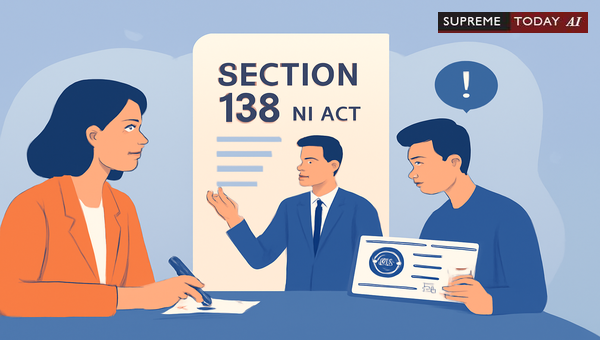
In cases under (NI Act), defendants often face high stakes when a cheque is for alleged unpaid debts. Imagine a scenario where the suit amount is Rs.1,00,000, and during the trial, the defendant has already paid Rs.20,000. A common question arises: in a 138 case 100000 is the suit amount. During trial 20000 paid by the defendant. how to cross examine the complainant in .
becomes crucial at the to challenge the complainant's claims, highlight partial payments, and potentially weaken the 's case. This blog explores effective strategies grounded in the and (CPC), drawing from key legal precedents. While this provides general insights, consult a legal professional for case-specific advice.
is a fundamental right that tests the , reliability, and completeness of the complainant's evidence. Under the , it allows the defense to probe inconsistencies, especially regarding debt amounts and payments. As noted, is a vital tool to test the and reliability of evidence, including statements related to suit amounts and partial payments 2021 0 Supreme(Ker) 817.
In NI Act cases, where presumes the existence of a debt unless rebutted, thorough can shift the burden back by exposing gaps in proof. Courts emphasize this right, particularly when probable defenses like partial payments are raised. For instance, in a related NI Act matter, the court held that If no opportunity is given to cross-examine the Complainant, the Accused would certainly lose his right to under Sec. 139 of the N.I. Act 2024 0 Supreme(Bom) 585.
Sections 137, 139, 141, 142, 143, and 154 of the form the backbone. These allow parties to cross-examine witnesses called by the opposing side or even their own, at the court's discretion. Under , parties have the right to cross-examine their own witnesses and witnesses called by the opposing side, which can be exercised at the court’s discretion 2001 0 Supreme(Ker) 64. is particularly useful for highlighting inconsistencies in testimony about payments.
This rule empowers courts to recall witnesses for clarification, aiding probes into discrepancies like partial payments. permits courts to recall witnesses at any stage for clarification or further examination, which can be strategically used to probe discrepancies related to suit amounts or partial payments 2016 2 Supreme 396. However, it's not for filling substantive evidentiary gaps.
In NI Act trials, which blend criminal and , these provisions ensure fair play. One judgment reinforced that even after delays, courts may allow subject to costs, balancing justice: The court allowed the accused-petitioner to cross-examine the complainant, subject to payment of a specified amount as cost 2018 0 Supreme(Raj) 2018.
Effective requires preparation. Focus on the specifics of your case: Rs.1,00,000 suit with Rs.20,000 paid during trial.
Challenge Oral Evidence Credibility: Ask about payment dates, amounts, modes (e.g., cash, cheque, bank transfer), and receipts. Question witnesses about the specifics of payments, including dates, amounts, and mode of payment, to establish contradictions or gaps 2021 0 Supreme(Ker) 817.
Scrutinize Documentary Evidence: Query authenticity of pronotes, ledgers, or bank statements. Demand proof of the original debt minus the Rs.20,000 adjustment. Cross-examine witnesses about the authenticity, receipt, and proper maintenance of documents such as receipts, bank statements, or agreements 2021 0 Supreme(Ker) 817.
Probe Personal Knowledge: Confirm if the complainant has direct knowledge or relies on . Probe whether the witness has personal knowledge of the transaction, or if their testimony is 2021 0 Supreme(Ker) 817.
Highlight Inconsistencies: Compare claims with trial payments and documents. If the complainant admits the Rs.20,000, press on why the suit wasn't adjusted.
Leverage Recall Powers: Request witness recall under Order 18 Rule 17 for payment-related clarifications 2016 2 Supreme 396.
In a case involving disputed debts, the dismissed the complaint for lack of enforceable debt proof, underscoring the need to test evidence: The after considering the evidence and the documents... dismissed the complaint on the basis that there is no 2020 0 Supreme(Bom) 61.
Partial payments like your Rs.20,000 can significantly bolster the defense. Cross-examine on:
Courts have acquitted where notices lacked transaction details or failed to address payments properly: The court found that were improperly addressed... resulting in
. Use this to argue incomplete claims post-partial payment.
Timely action is vital; delays may invite costs, as seen where accused paid Rs.15,000 for belated 2018 0 Supreme(Raj) 2018.
In a Section 138 NI Act case with a Rs.1,00,000 suit and Rs.20,000 partial payment, strategic can expose evidentiary weaknesses, rebut presumptions, and strengthen your defense. Leverage Evidence Act sections and CPC Rule 17(18) judiciously, always focusing on credibility and proof.
Key Takeaways:- Test payment specifics and documents rigorously 2021 0 Supreme(Ker) 817.- Use recall powers for clarifications 2016 2 Supreme 396.- Rebut debt presumption via inconsistencies 2024 0 Supreme(Bom) 585.
This is general information based on legal principles and not specific advice. Laws vary by jurisdiction and facts; consult a qualified lawyer.
References:- 2021 0 Supreme(Ker) 817, 2001 0 Supreme(Ker) 64, 2016 2 Supreme 396, 2013 1 Supreme 322, 2024 0 Supreme(Bom) 585, 2020 0 Supreme(Bom) 61, 2018 0 Supreme(Raj) 2018,
#NIAct138, #ChequeBounce, #CrossExamination


Fine amount, if any paid is directed to be adjusted. ... /- 100000/- 40000/- 150000/- 50000/- 50000/- 50000/- - - - - - - - - - - 75000/- 50000/- 20000/- 20000/- 100000/- 40000/- 150000/- 50000/- 50000/- 50000/- 6. ... In this regard, P.W.29- P.K.Subramaniam, who is the Investigating Officer in this case gave evidence before the trial Court as except the deposits made by P.W.1- Philipose, P.W.2-Lalu Mathews and P.W.11-Sevalliappan....
/- 100000/- 40000/- 150000/- 50000/- 50000/- 50000/- ---------- 75000/- 50000/- 20000/- 20000/- 100000/- 40000/- 150000/- 50000/- 50000/- 50000/- 6. ... In this regard, P.W.29-P.K.Subramaniam, who is the Investigating Officer in this case gave evidence before the trial Court as except the deposits made by P.W.1-Philipose, P.W.2-Lalu Mathews and P.W.11-Sevalliappan, the deposits made by the other witnesses are not matured one. ... to be paid to the ....

The Trial Court after considering the evidence and the documents and the facts and circumstances of the case, dismissed the complaint on the basis that there is no legally enforceable debt or other liability. 12. ... Therefore, we have to consider whether the conclusion arrived at by the Trial Court is possible on the basis of evidence on record or whether the conclusion arrived at by the Trial Court is perverse. ... Complainant and two accused were shareholders of on....

The trial court has decreed the suit by holding that the appellant no.1/defendant no.2/son/Sh. ... By the impugned judgment, the trial court has decreed the suit for recovery of moneys filed by the respondent/plaintiff for an amount of Rs. 7,11,187/- along with interest at 9% per annum on account of such moneys being invested by the respondent/plaintiff with the defendant no.1, and this amount was ... Juneja had died during the pendency of the #HL_ST....
Act for permission to cross-examine the Complainant. 11. In the said Application filed under Sec. 145 of the N.I. Act, Petitioner claimed that the Complainant filed an affidavit in evidence along with documents. ... If no opportunity is given to cross-examine the Complainant, the Accused would certainly lose his right to rebut the presumption under Sec. 139 of the N.I. Act. ... (supra) as at that stage, nothing more is expected fro....
Since the accused has not paid the amount within the stipulated period, the complainant was constrained to file the above complaint for the alleged offence under Sections 138 r/w 142 of Negotiable Instruments Act. ... As rightly contended by the learned counsel for the complainant, the trial Court's assumption that the complainant, being an advocate, could have approached the police is unfounded. The defence failed to extract anything substantial from P.W.1's #HL_ST....

The reasons assigned by the trial Court would mean that the accused has to satisfy the trial Court, the grounds to recall complainant and as to on what points the accused intends to cross-examine the complainant. ... To ensure a speedy trial, there is no right to cross-examine a complainant unless the accused makes an application stating specifically the grounds on which he wishes to cross-#HL_STA....

Such quality evidence is fully lacking in the facts of this case and the complainant has not cared to let in any evidence of such quality. ... Even the evidence of the complainant would show that the transactions which led to the liability in question in the instant case was between the complainant and the Proprietor of M/s.Aiswarya Agencies. ... Case Nos. Cheque Nos. Exhibit Nos. Cheque amount Rs. Total Rs. No....

the respondent in cross-examination. ... The amount of arrears shall be paid within two months from today. 11. The respondent shall pay the amount of maintenance as above monthly and regularly also, without fail. 12.With the aforesaid directions, the petition stands disposed of. 13. ... In as much as, the income of respondent is admitted as Rs.100000/- per month, hence, the petitioner is entitled to expense the amount of 25% as per status of her husband. ... Judge whereby the learne....
The said sum of Rs.18.00 lacs shall be paid to Shri. H. R. ... For acquitting accused, the Trial Court observed that the prosecution had failed to prove its case. ... Court after considering the evidence and the documents and the facts and circumstances of the case, dismissed the Complainant, through himself and through others, held 2000 fully paid p style="position:absolute;white-space:pre;margin:0;padding ... , which complainant had not compl....

28. Criminal Case No.1648/2017 is fixed for before charge evidence. During before charge evidence the applicant has the opportunity to cross-examine the complainant and raise all his objections at the stage of charge argument.

Mr. P.K. Lohra, J. - Accused-petititoner has preferred this misc. petition under Section 482 Cr.P.C., 1973 to assail impugned orders dated 03.03.2017 and 24.06.2017, passed by Civil Judge and Metropolitan Magistrate No.9, Jodhpur (for short, 'learned trial Court). Later on, at the behest of petitioner an endeavor was made for reconsidering his prayer to permit him to cross-examine the complainant, but the same was also turned down by the learned trial Court on 24.06.2017. The learned trial Court, while rejecting the prayer of petitioner, has observed that the complainant appeared on eight oc....

The total compensation thus payable would be Rs. 18,14,400 + 100000 + 100000 + 20000 + 20000 = Rs.20,54,400/-. To this, a sum of Rs.1 lac is added for loss of consortium, a sum of Rs.1 lac is added for loss of love and affection for the child, a sum of Rs.20,000/- is added for loss of estate (Rs.5,000/- already allowed by the Tribunal) and a sum of Rs.20,000/- is added for funeral expenses (Rs.5,000/- already allowed by the Tribunal). The amount of the minor would be deposited in the fixed deposit till the minor attains majority. The Tribunal had allowed Rs.12,34,000/-, whi....

But, the Consumer Protection Act 1986 (in short CP Act) is a social act, therefore very stringent approach towards Complainant’s prayer will defeat the purpose of CP Act. At this juncture we cannot ignore the entire circumstances and sufferings of Complainant in this case. Considering the above condition as per Annexure 1, the complainant is entitled for 20% of Rs.100000/- i.e. Rs.20000/- only.
In case the said amount is paid, he shall be given the right to cross-examine the defendant No.1 (the respondent No.2 before this Court). Considering the fact that the order dated 16.03.2010 is an ambiguous one, considering the fact that the petitioner does have the right to cross-examine the defecation No.1, considering the fact that there is bona-fide mistake of fact, this Court is of the opinion that the petitioner should be given one month's time to pay the cost of Rs. 1750/-.


An indispensable Tool for Legal Professionals, Endorsed by Various High Court and Judicial Officers
Please visit our Training & Support
Center or Contact Us for assistance

Scan Me!
India’s Legal research and Law Firm App, Download now!


For Daily Legal Updates, Join us on :



 Back to top


