Searching Case Laws & Precedent on Legal Query.....!
Analysing the retrieved Case Laws
Scanned Judgements…!



Searching Case Laws & Precedent on Legal Query.....!
Analysing the retrieved Case Laws
Scanned Judgements…!
Disinheritance or attempts to avoid maintenance through legal maneuvers like disinheritance or desertion are viewed skeptically by courts, which focus on the financial capacity of the husband and the needs of the wife and daughter (2024 Supreme(Online)(ORI) 878,
Meghrajsinh S/o Manharsinh Chudasma VS Meghaviniba W/o Meghrajsinh Chudasama D/o Prahladsinhji Pradyumansinhji Jadeja - Current Civil Cases (2024)
).Analysis and Conclusion:
References:- Shahid Khan, 2015 SCC 705 ["2024 0 Supreme(P&H) 1193"]- Anil Kumar, 2014 SCC 715- Kalyani Sanjay Kale, 2020 SCC Bom 694- Rohtash Singh, 2000 SCC 180 ["2024 0 Supreme(Guj) 863"]- 2024 Supreme(Online)(ORI) 878-
Meghrajsinh S/o Manharsinh Chudasma VS Meghaviniba W/o Meghrajsinh Chudasama D/o Prahladsinhji Pradyumansinhji Jadeja - Current Civil Cases (2024)
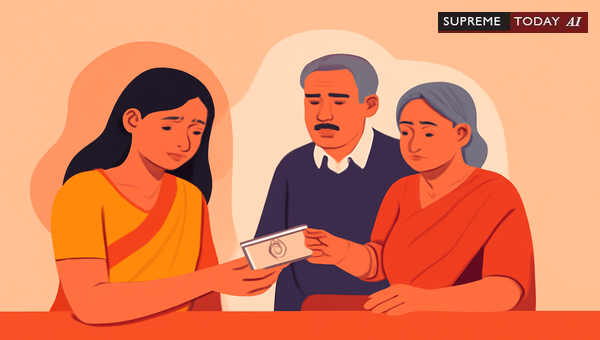
In Indian family law, often spark confusion, especially after the death of a spouse. A common question arises: Whether a Daughter in Law is Liable to Pay Maintenance to the Parents of her Deceased Husband? This issue intersects provisions under the , the , and principles of . While parents may seek support from children, the liability of a daughter-in-law (DIL) is not straightforward and typically flows in the opposite direction.
This blog post examines relevant legal principles, key judgments, and considerations for wills, providing general guidance. Note: This is not legal advice; consult a qualified lawyer for your specific situation.
Maintenance laws aim to protect dependents unable to support themselves. Key statutes include:
Courts emphasize realistic amounts based on income, lifestyle, and dependency, often requiring . 2024 0 Supreme(Jhk) 439 2024 0 Supreme(Cal) 365
Generally, no. Indian law does not impose a direct statutory obligation on a DIL to pay maintenance to her in-laws after her husband's death. Obligations under CrPC Section 125 for parents are from children (sons/daughters), not in-laws. HAMA reinforces this by granting DILs rights to receive maintenance, not pay it.
In 2025 0 Supreme(Del) 516, the court held: A Hindu wife... shall be entitled to be maintained after the death of her husband by her father-in-law: Provided... she is unable to maintain herself. This confirms a widowed DIL's claim against her father-in-law's estate, contingent on and dependency. The appeal was allowed, remitting the matter for disposal, underscoring DILs as protected dependents. 2025 0 Supreme(Del) 516
Other cases highlight husbands' or fathers-in-laws' duties to wives and daughters, not vice versa:- In 2024 0 Supreme(All) 1471, a major daughter could claim under HAMA Section 20 if unable to maintain herself, but not automatically under CrPC 125 post-majority.- 2024 0 Supreme(Guj) 1640 upheld to wife (Rs.75,000) and daughters (Rs.50,000 each), stressing husbands' obligations regardless of wife's prior earnings.- 2023 0 Supreme(Bom) 975 confirmed maintenance to wife and daughter based on family needs and husband's capacity.
No provided judgments mandate DILs paying parents-in-law. Instead, waivers of (e.g., maintenance agreements) are void if against . 2020 0 Supreme(Ker) 205 2018 0 Supreme(Ker) 582
Complications arise in succession. If a will disinherits a dependent wife or daughter (potentially extending to DIL contexts) without maintenance provisions, courts view it suspiciously.
Main Legal Finding: of like a wife or daughter without explanation is unnatural and may invalidate the will. Courts scrutinize for . 2024 0 Supreme(Mad) 1048 1997 0 Supreme(P&H) 1263 2001 0 Supreme(HP) 206
No provision is made to the widow who was all along living with him... If it disinherits a natural heir, it is a which has to be explained. 1997 0 Supreme(P&H) 1263 2001 0 Supreme(HP) 206
Disinheriting married daughters to keep property in the family may be justified if explained, but unexplained exclusion of dependents raises red flags. 2011 0 Supreme(P&H) 494
While not directly a 'natural heir' like wife/daughter, a dependent DIL living with the family could invoke similar scrutiny if fully disinherited without maintenance. Absence of provisions for dependents signals unnatural disposition. 2013 0 Supreme(P&H) 1424
Courts consider estranged relations or criminal proceedings as explanations, but dependency trumps. 2001 0 Supreme(HP) 206
When assessing maintenance or challenging wills:- Dependency: Was the claimant living with and dependent on the deceased? 1997 0 Supreme(P&H) 1263- Financial Capacity: Affidavits required per guidelines (Rajnesh v. Neha). 2024 0 Supreme(Jhk) 439 2024 0 Supreme(Cal) 365- Societal Norms: expected to be provided for unless justified. 2024 0 Supreme(Mad) 1048- : Agreements waiving maintenance are unenforceable. 2020 0 Supreme(Ker) 205 There is statutory obligation of the husband to maintain his wife and minor son and he cannot be permitted to contract out of such an obligation. 2018 0 Supreme(Ker) 582
Interim orders are final and enforceable. 2024 0 Supreme(Guj) 1640
A daughter-in-law is typically not liable to pay maintenance to her deceased husband's parents under core statutes like CrPC 125 or HAMA. Instead, laws protect DILs as potential claimants, especially if widowed and dependent. Suspicious without maintenance provisions can challenge wills, emphasizing natural family expectations.
Key Takeaways:- DILs entitled to receive maintenance from father-in-law's estate if unable to self-support. 2025 0 Supreme(Del) 516- Unexplained of dependents is suspicious. 1997 0 Supreme(P&H) 1263 2001 0 Supreme(HP) 206- Husbands/fathers bear primary obligations; waivers invalid. 2020 0 Supreme(Ker) 205- Always comply with affidavit requirements for claims. 2024 0 Supreme(Jhk) 439
Family disputes require nuanced handling. Seek professional advice to navigate your case effectively.
References:1. 2024 0 Supreme(Mad) 1048 Suspicious principles.2. 1997 0 Supreme(P&H) 1263 Wife unnatural.3. 2001 0 Supreme(HP) 206 Dependency and suspicion.4. 2013 0 Supreme(P&H) 1424 Non-provision for dependents.5. 2025 0 Supreme(Del) 516 Widowed DIL rights.
#DILMaintenance #FamilyLawIndia #MaintenanceRights


Shahid Khan, 2015(2) Marriage L.J. 147 (SC), (2015) 5 SCC 705 cited the judgement in Chander Parkash (supra) with approval, and held that the obligation of the husband to provide maintenance stands on a higher pedestal than the wife. ... Learned counsel asserts that the petitioner never refused to maintain his wife or the minor daughter (respondent herein). ... Anil Kumar (2014) 16 SCC 7....

Anil Kachwaha the wife had a postgraduate degree, and was employed as a teacher in Jabalpur. The husband raised a contention that since the wife had sufficient income, she would not require financial assistance from the husband. ... It is further not in dispute that private opposite parties i.e. opposite party nos. 2 and 3 are the wife and daughter of the petitioner respectively. ... ……....

Before considering the rival submissions of the parties, it will be useful to note the provisions of Act of 1956 regarding maintenance of wife and daughter. 19. ... On this basis the minor son and unmarried daughter are entitled to maintenance from his or her father, aged parents from their son and the wife from her husband. ... Per contra, learned cou....

maintenance from her husband. ... Against the monthly expenditure of Rs.5,75,383/- of the wife, the Family Court has granted Rs.1,75,000/- considering the expenditure maintenance amount of Rs.75,000/- for the wife and Rs.50,000/- for the each daughter. 42. ... The husband declared to pay further amount towards maintenance for wife and....

It has been demonstrated that appellant-husband to turn around in wanting to take back respondent-wife and the daughter is to avoid discharging the liability of maintenance in arrears. Nothing is there in the record to substantiate allegations made by appellant-husband, of cruelty or desertion. ... He reminds us that maintenance is in arrears and it is a ploy under....

The applicant/husband has impugned the order of Family Court in Petition E-91 of 2020, dated 17.01.2020. The learned Judge, Family Court, granted the maintenance allowance of Rs.6000/- per month to respondent No.1/wife and Rs.2000/- per month to respondent No.2/daughter. ... Therefore, the revision application is liable to be allowed and the maintenance awarded to respondent No.1/wife is....

Application No.1003 of 2016 before the learned Family Court seeking maintenance and on 14.02.2023, the learned Family Court vide impugned judgment and order directed the petitioner to pay Rs.40,000/- as maintenance towards the respondent wife and her daughter. Hence, the present revision is filed. ... In a proceeding under Section 125 of the Cr.P.C., it is a tendency to avoid placing the correct scenario ....

Maintenance of widowed daughter-in-law.―(1) A Hindu wife, whether married before or after the commencement of this Act, shall be entitled to be maintained after the death of her husband by her father-in-law: Provided and to the extent that she is unable to maintain herself ... The liability of father-in-law regarding the maintenance of his widowed daughter-in-law also e....

Wife has deserted her husband and therefore, wife is not entitled for maintenance. ... Even if husband has got decree of divorce against wife on the ground of wife having deserted hi,, it is no bar for the wife to claim maintenance against the husband under section 125 of Cr.P.C. [see : Rohtash Singh vs. Ramendra - (....

The maintenance amount awarded must be reasonable and realistic, and avoid either of the two extremes i.e. maintenance awarded to the wife should neither be so extravagant which becomes oppressive and unbearable for the respondent, nor should it be so meagre that it drives the ... An order of interim maintenance is conditional on the circumstance that the wife or husband#HL_EN....

This Court repelled the contention holding that there is statutory obligation of the husband to maintain his wife and minor son and he cannot be permitted to contract out of such an obligation and such agreement is opposed to public policy. It was held that a waiver in derogation of a statutory right cannot be recognised by the court as it affects public policy and as it is against the very statutory obligation imposed on a husband to maintain his wife and children who are unable to maintain t....

It was held that a waiver in derogation of a statutory right cannot be recognised by the court as it affects public policy and as it is against the very statutory obligation imposed on a husband to maintain his wife and children who are unable to maintain themselves. This Court repelled the contention holding that there is statutory obligation of the husband to maintain his wife and minor son and he cannot be permitted to contract out of such an obligation and such agreement is opposed to publ....

It was held that a waiver in derogation of a statutory right cannot be recognised by the court as it affects public policy and as it is against the very statutory obligation imposed on a husband to maintain his wife and children who are unable to maintain themselves. In Haroon v. Sainabha, 1992 (1) KLT 868, a contention was raised that the wife and child cannot claim maintenance from the husband because in an earlier proceedings the matter was settled out of court and the wife had ex....

The decision of the Family Court was reversed, meaning thereby that declaration in favour of the appellant-husband that marriage between him and the respondentwife was null and void was granted and the decree for judicial separation obtained by the latter was set aside. He disputed not only validity of the marriage but also the parentage of Puja. Appeal and cross-objection at the instance of the appellant-husband and the respondent-wife respectively followed in the High Court. The Fa....

The High Court accepted the validity of the document of dissolution of marriage executed between the parties and also took into consideration the fact that they had lived as husband and wife for about 9 years. On such consideration, both the appeals came to be dismissed. Dismissing the two appeals preferred both by husband and the wife, the Supreme Court held that in the facts of the case the Courts below were fully justified in granting maintenance both to the wife and the daughter....


An indispensable Tool for Legal Professionals, Endorsed by Various High Court and Judicial Officers
Please visit our Training & Support
Center or Contact Us for assistance

Scan Me!
India’s Legal research and Law Firm App, Download now!


For Daily Legal Updates, Join us on :



 Back to top


