


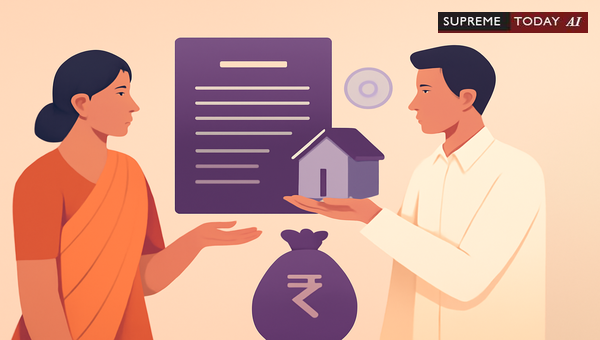
Daughters' Rights to Father's Property After Death: A Guide Under Hindu Law
In many families, the passing of a father raises critical questions about property distribution, especially when a male heir sells the property to a third party. A common query is: Property belongs to father after his death; male member of the family sold to third party—can daughters be entitled to a share in Mohammedan Law? While Mohammedan (Muslim) personal law has its own rules for inheritance, this article focuses on the , which governs Hindus and provides clear frameworks for daughters' rights. Understanding these laws can prevent disputes and ensure fair distribution. Note: This is general information; consult a legal expert for specific advice.
Main Legal Findings on Heirs
Under the , when a (without a will), his property devolves primarily upon his . These include sons, daughters, widow, mother, and certain descendants of predeceased children. 2022 2 Supreme 272 The Act specifies that the estate of a Hindu male who dies intestate devolves firstly upon the heirs, being the . 2023 Supreme(Online)(KER) 6804
Key points:- take precedence: Sons, daughters, widow, and mother share equally. 2022 2 Supreme 272- No distinction between direct and indirect heirs: The , does not classify legal heirs into direct heirs and indirect heirs.
- : Property devolves equally among as , not . This means each heir has a distinct, undivided share. 2021 Supreme(Online)(MAD) 41814
If no exist, it passes to like siblings. outlines this order. 2023 Supreme(Online)(KER) 6804
Daughters' Coparcenary and Inheritance Rights
Daughters' rights have evolved significantly:- Pre-: Daughters had rights in as but limited in . If the father died before , traditional law often excluded daughters from inheritance.
Radhabai Balasaheb Shirke, since deceased, through her heirs & L. Rs. VS Keshav Ramchandra Jadhav - Current Civil Cases (2024)
- Post- Amendment: The , made daughters coparceners by birth with equal rights as sons. Daughters are recognized as coparceners with equal rights as sons in the coparcenary property only from the commencement of the . 2023 4 Supreme 421However, amendments are . Rights depend on the date of death: The inheritance opens at the time of death, and the applicable law depends on whether the death occurred before or after the enactment of relevant laws. 2019 0 Supreme(SC) 1289 For deaths before , daughters may not claim coparcenary in . 1951 0 Supreme(SC) 78
From other precedents: As per the Section, the property of a male Hindu dying intestate devolves firstly, upon the heirs, being the Class I of the Schedule. 2023 Supreme(Online)(KER) 6804 This ensures daughters' inclusion where applicable.
List of (, Schedule)
- Son
- Daughter
- Widow
- Mother
- Son of predeceased son
- Daughter of predeceased son
- Son of predeceased daughter
- Daughter of predeceased daughter
- Widow of predeceased son
- And further descendants... 2022 2 Supreme 272 2021 Supreme(Online)(MAD) 38106
What If a Male Heir Sells the Property to a Third Party?
A pivotal concern in the query is the sale by a male member post-death. Under Hindu law:- Simultaneous devolution: All acquire rights instantly upon death. No single heir, like a son, can sell the entire property without partition or consent. 2025 Supreme(Online)(Kar) 20620- rule: Upon the death of a Hindu male, property devolves equally among as , not as joint tenants or coparceners. 2021 Supreme(Online)(MAD) 41814- Daughters can challenge the sale for their share. The buyer takes subject to existing heirs' rights, and courts may order restitution or partition. This codifies away from , protecting individual shares. 2021 Supreme(Online)(MAD) 38106
Example: If a son sells without daughters' consent, daughters can file a suit for of their share, even from the third party. 2025 Supreme(Online)(P&H) 4781
Self-Acquired vs.
- Self-acquired: Full succession under to equally. Daughters have absolute rights. 2022 Supreme(Online)(KER) 6650
- Ancestral/Coparcenary: Pre-, sons had preference; post-, daughters equal. But for pre- deaths, daughters typically excluded.
Radhabai Balasaheb Shirke, since deceased, through her heirs & L. Rs. VS Keshav Ramchandra Jadhav - Current Civil Cases (2024)
2023 4 Supreme 421
The law of succession is governed by the , with amendments clarifying and expanding the rights of female heirs, but these are . 1951 0 Supreme(SC) 78
Additional insight: X of the Act would be in his hand vis-a-vis his own son; that would amount to creating two classes among the heirs mentioned in class I... This rejects unequal treatment post-amendment. 2025 Supreme(Online)(Del) 7075
Exceptions and Date-Based Applicability
- Deaths before : Traditional applies; daughters often had no share in .
Radhabai Balasaheb Shirke, since deceased, through her heirs & L. Rs. VS Keshav Ramchandra Jadhav - Current Civil Cases (2024)
- -: Daughters Class I for self-acquired, limited coparcenary.
- Post-: Full equality. 2023 4 Supreme 421
The Supreme Court has held that the provisions... are . 1951 0 Supreme(SC) 78
Special cases:- Predeceased heirs' children step in.- Widow's rights under for absolute ownership. 2022 Supreme(Online)(KER) 6650
Recommendations for Families
- Verify date of death and property nature to apply correct law. 2019 0 Supreme(SC) 1289
- Seek partition deed before any sale.
- Will execution to override intestate rules.
- Consult a lawyer for family settlements or suits.
Conclusion and Key Takeaways
Daughters are generally entitled to a share in their father's property as under the Hindu Succession Act, subject to the date of death and amendments. The changes empowered them equally, but sales by one heir don't extinguish others' rights— status protects shares. While the query references Mohammedan law (where daughters get fixed shares, sons double, and heirs are co-owners), Hindu law offers a structured, evolving framework promoting equality.
Key Takeaways:- : Sons, daughters, widow, mother—equal shares. 2022 2 Supreme 272- Post-: Daughters full coparceners. 2023 4 Supreme 421- Sale by son: Daughters can claim back share. 2021 Supreme(Online)(MAD) 41814- : Check death date. 2019 0 Supreme(SC) 1289
This guide draws from established precedents 1951 0 Supreme(SC) 78
Radhabai Balasaheb Shirke, since deceased, through her heirs & L. Rs. VS Keshav Ramchandra Jadhav - Current Civil Cases (2024)
, but laws evolve—professional advice is essential. #HinduSuccessionAct, #DaughtersPropertyRights, #InheritanceLaw












