Searching Case Laws & Precedent on Legal Query.....!
Analysing the retrieved Case Laws
Scanned Judgements…!



Searching Case Laws & Precedent on Legal Query.....!
Analysing the retrieved Case Laws
Scanned Judgements…!
Maintainability of Suit by Family Members - Family members or legal heirs of a plaintiff have the right to continue a defamation suit initiated by the deceased or incapacitated individual. Courts have held that such suits are maintainable by family members, as defamation impacts reputation and is a personal right ["SHYMA.K vs JAYATHILAK T.P. - Kerala"], ["SHYMA.K vs JAYATHILAK T.P. - Kerala"].
Nature of Defamation Action - An action for defamation is generally maintainable only by the person directly defamed. However, courts recognize that family members can also file suits if their reputation is affected, especially when the defamatory statement pertains to the family or its members ["SHYMA.K vs JAYATHILAK T.P. - Kerala"], ["SHYMA.K vs JAYATHILAK T.P. - Kerala"].
Legal Proceedings and Issues - Preliminary issues such as whether the suit is maintainable or barred are often considered, but issues of whether the suit can be continued by heirs involve mixed questions of law and fact, and are typically not decided at the preliminary stage ["SHYMA.K vs JAYATHILAK T.P. - Kerala"].
Specific Cases and Defamation Claims - In cases involving public figures or companies, the suit's maintainability depends on jurisdiction and whether part of the cause of action arose within the court’s jurisdiction. The nature of the defamatory act and whether it caused harm to reputation are central considerations ["CHURCHILL BRAZ ALEMAO vs BHANUSHALI STUDIOS LTD. AND 2 ORS - Bombay"], ["CHURCHILL BRAZ ALEMAO vs BHANUSHALI STUDIOS LTD. AND 2 ORS - Bombay"].
Defamation and Family Interference - Cases also involve allegations of family interference, threats, and harassment, which strengthen the claim for defamation and related damages. Courts consider the impact on mental peace and reputation of the plaintiff and their family ["RATTAN LAL JOSHI vs MAHESH KUMAR TIWARI AND ORS - Punjab and Haryana"].
Defense of Truth and Evidence - The defense of truth is valid in defamation suits. Courts examine whether the publication or statement has genuinely damaged the reputation, regardless of the intent. Evidence regarding whether the publication lowered the reputation among the right-thinking members is crucial ["H.KRISHNAMURTHI RAO MALATHKAR vs S.SIVAGANESH RAO GHATTE - Madras"].
Analysis and ConclusionCourts generally recognize that family members and legal heirs can maintain defamation suits if their reputation is affected by defamatory statements concerning the family. While traditionally defamation suits are filed by the directly defamed individual, legal precedents support the maintainability of such suits by family members, especially when the defamatory act impacts the family’s reputation. The key considerations include whether the statement caused reputational harm, the jurisdictional aspects, and whether the suit is barred by procedural provisions. Defense arguments such as truth and lawful publication are also significant. Overall, the legal framework supports the maintainability of defamation suits by family members under appropriate circumstances ["SHYMA.K vs JAYATHILAK T.P. - Kerala"], ["SHYMA.K vs JAYATHILAK T.P. - Kerala"], ["CHURCHILL BRAZ ALEMAO vs BHANUSHALI STUDIOS LTD. AND 2 ORS - Bombay"].
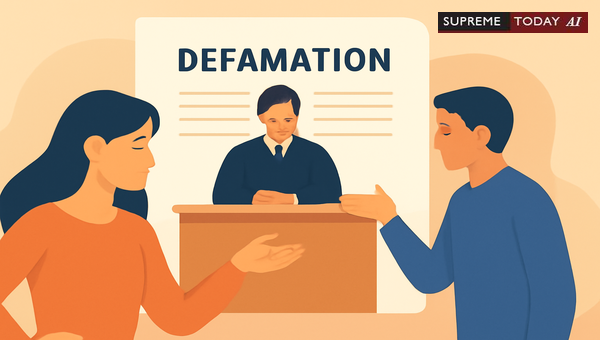
In family disputes, harsh words can escalate into serious legal battles. Imagine a spouse or relative spreading false rumors that damage your reputation—can you seek compensation for defamation in Family Court? This is a common question: What is the Provision under which I can File a Claim for Compensation for Defamation in the Family Court and what are the Factors to be Included to Constitute the above Said Defamation?
While Family Courts primarily handle matters like marriage, divorce, maintenance, and child custody under the Family Courts Act, 1984, defamation claims between family members may not always fit neatly here. Generally, defamation suits—civil or criminal—are filed in civil or magistrate courts. However, if tied to marital disputes, they might intersect with family proceedings. This post explores the legal landscape, key provisions, essential elements, and practical considerations under Indian law. Note: This is general information, not legal advice. Consult a qualified lawyer for your specific case.
Family Courts have jurisdiction over 'suits or proceedings between the parties to a marriage' or involving family relationships, as per the Family Courts Act, 1984. However, pure defamation claims for compensation typically fall under civil courts via suits for damages under tort law or Order XXXVII of the CPC for summary suits. Suprabha VS K. K. Sivaraman - 2006 0 Supreme(Ker) 50
Defamation suits between family members are maintainable if the plaintiff is legally aggrieved, but Family Court jurisdiction depends on whether the claim arises from a marital relationship. For instance, in marital discord cases involving allegations, ancillary defamation claims might be considered, but standalone suits often go to civil courts. In one case, the court clarified jurisdiction noting, It is not a suit for land. It is suit for defamation. Situs of properties is not material to decide on jurisdiction. Since part of cause of action arose within jurisdiction of this Court, this suit is maintainable. NILANCHAL GRIH NIRMAN LIMITED vs SUSOVAN BANERJEE - 2023 Supreme(Online)(HC) 6743
Key takeaway: Check if your defamation claim links directly to family matters; otherwise, file in the appropriate civil court.
Civil suits for defamation seek compensation (damages) and injunctions. No specific 'provision' mandates Family Court; instead:- Section 19, Indian Penal Code (IPC) (now Bharatiya Nyaya Sanhita) defines defamation, but civil remedies are under general tort law.- Section 340, CrPC (now BNSS) for criminal complaints, but only by a 'person aggrieved' under Section 198, CrPC. Brij Bhusan VS State Of Delhi - 1949 0 Supreme(SC) 54
Requires a complaint by the aggrieved person. Families can't sue as an 'indeterminate body'; it must be a specific individual. Brij Bhusan VS State Of Delhi - 1949 0 Supreme(SC) 54
In family contexts, courts assess if the plaintiff has 'direct interest.' Suprabha VS K. K. Sivaraman - 2006 0 Supreme(Ker) 50
To succeed, prove these core elements:- Defamatory Statement: Tends to lower the person's reputation in others' eyes. Suprabha VS K. K. Sivaraman - 2006 0 Supreme(Ker) 50- Falsity: The statement must be false, made with malice or knowledge of falsity. Suprabha VS K. K. Sivaraman - 2006 0 Supreme(Ker) 50- Publication: Communicated to a third party. Suprabha VS K. K. Sivaraman - 2006 0 Supreme(Ker) 50- Harm: Actual injury, or presumed in libel cases. Suprabha VS K. K. Sivaraman - 2006 0 Supreme(Ker) 50- Aggrieved Plaintiff: Must be a 'person aggrieved'—not a group or deceased's family unless living members' reputation is hit. Brij Bhusan VS State Of Delhi - 1949 0 Supreme(SC) 54Ruba Ahmed VS Hansal Mehta - 2022 0 Supreme(Del) 2118
In a YouTube defamation case, the court outlined burden of proof: Plaintiffs first prove defamation, then defendants prove truth. In defamation cases, the burden of proof initially lies with the plaintiffs to prove defamation, after which it shifts to the defendants to prove the truth of their statements. K. Vasudeva Asranna S/o. Late K. Srinivasa Asranna Vs Vasanth Giliyar S/o. Sooryanarayana Shetty - 2025 Supreme(Online)(KAR) 3437
Not all statements qualify as actionable:- Privileged Communications: Absolute protection for judicial proceedings, lawyers, or official duties. Statements made in judicial proceedings... are protected by absolute privilege. G. Padmaraju Pantulu VS S. S. Vencatramana Iyer - 1908 0 Supreme(Mad) 120Pankaj Oswal Through His Constituted Attorney Mr. Sanjay Wall VS Vikas Pahwa - 2023 0 Supreme(Del) 2783- Deceased Persons: No action unless it harms living family reputation or targets feelings maliciously. Ruba Ahmed VS Hansal Mehta - 2022 0 Supreme(Del) 2118- Truth as Defense: If proven true and for public good.
In family feuds, counter-blast suits often arise. One case noted a civil suit for injunction against 'false complaints' by family, questioning maintainability under Specific Relief Act. SHRIYA vs HARBANS PRAN AND OTHERS - 2023 Supreme(Online)(P&H) 10487
Another highlighted misbehavior and threats by family, leading to defamation claims amid public humiliation. RATTAN LAL JOSHI vs MAHESH KUMAR TIWARI AND ORS
Grievance Letters as Defamation: A letter alleging wrongdoing, circulated publicly, led to nominal damages (Rs.1,000) and injunction. Use of derogatory terms without substantiation in a grievance letter constitutes defamation. NILANCHAL GRIH NIRMAN LIMITED vs SUSOVAN BANERJEE - 2023 Supreme(Online)(HC) 6743
Family Interference: Threats and public defamation by relatives were actionable when harming reputation. RATTAN LAL JOSHI vs MAHESH KUMAR TIWARI AND ORS
These illustrate that even in family-like disputes, unsubstantiated claims damage reputations and invite suits.
Recommendations:- Verify no privilege applies (e.g., court statements). G. Padmaraju Pantulu VS S. S. Vencatramana Iyer - 1908 0 Supreme(Mad) 120- Prove malice and falsity clearly.- For deceased-related claims, show impact on living kin. Ruba Ahmed VS Hansal Mehta - 2022 0 Supreme(Del) 2118
Defamation claims between family members are viable under Indian law if elements are met and you're a 'person aggrieved,' but Family Court jurisdiction is limited—often better suited for civil courts unless intertwined with family proceedings. Suprabha VS K. K. Sivaraman - 2006 0 Supreme(Ker) 50 Always establish falsity, publication, and harm while navigating defenses like privilege.
Key Takeaways:- No direct Family Court provision for standalone defamation; link to marital issues for possible fit.- Prove: Defamatory, false, published statement harming reputation.- Watch for privileges and 'person aggrieved' requirement.- Burden shifts to defendant for truth after your prima facie case. K. Vasudeva Asranna S/o. Late K. Srinivasa Asranna Vs Vasanth Giliyar S/o. Sooryanarayana Shetty - 2025 Supreme(Online)(KAR) 3437
Facing family defamation? Seek professional advice promptly to protect your rights. Share your thoughts below!
References:- Suprabha VS K. K. Sivaraman - 2006 0 Supreme(Ker) 50, Brij Bhusan VS State Of Delhi - 1949 0 Supreme(SC) 54, G. Padmaraju Pantulu VS S. S. Vencatramana Iyer - 1908 0 Supreme(Mad) 120, Pankaj Oswal Through His Constituted Attorney Mr. Sanjay Wall VS Vikas Pahwa - 2023 0 Supreme(Del) 2783, Ruba Ahmed VS Hansal Mehta - 2022 0 Supreme(Del) 2118, NILANCHAL GRIH NIRMAN LIMITED vs SUSOVAN BANERJEE - 2023 Supreme(Online)(HC) 6743, K. Vasudeva Asranna S/o. Late K. Srinivasa Asranna Vs Vasanth Giliyar S/o. Sooryanarayana Shetty - 2025 Supreme(Online)(KAR) 3437, RATTAN LAL JOSHI vs MAHESH KUMAR TIWARI AND ORS, SHRIYA vs HARBANS PRAN AND OTHERS - 2023 Supreme(Online)(P&H) 10487
#DefamationLawIndia, #FamilyCourtClaims, #LegalCompensation


Therefore, the family members/legal heirs of the plaintiff have every right to continue the suit for defamation. ... In support of the contention that an action for defamation is maintainable only by the persons defamed and not by his friends, relatives or family members, reliance is placed on the decision of the Delhi High Court in Harsh Mendiratta v.....

Therefore, the family members/legal heirs of the plaintiff have every right to continue the suit for defamation. ... In support of the contention that an action for defamation is maintainable only by the persons defamed and not by his friends, relatives or family members, reliance is placed on the decision of the Delhi High Court in Harsh Mendiratta v.....

It is not a suit for land. It is suit for defamation. Situs of properties is not material to decide on jurisdiction. Since part of cause of action arose within jurisdiction of this Court, this suit is maintainable from jurisdictional point of view. ... According to the Defendants, the suit is liable to be dismissed. On the basis of rival pleadings following issues were framed: 1. #HL_STA....

In para 13 the defendants deny that there is any efort to “villainize” the plaintif or his family members. ... Dhond, learned Senior Advocate and Mr Mayur Khandeparkar, appearing for the Respondents/original defendants have submitted as under: (a) hat preventive action in a suit for defamation is not maintainable before the ilm is released. ... as a “Villain” and would allow the producers to make commerci....
In para 13 the defendants deny that there is any efort to “villainize” the plaintif or his family members. ... Dhond, learned Senior Advocate and Mr Mayur Khandeparkar, appearing for the Respondents/original defendants have submitted as under: (a) hat preventive action in a suit for defamation is not maintainable before the ilm is released. ... as a “Villain” and would allow the producers to make commerci....

Further, it is averred that defendants No.2 to 7 and their family members started misbehaving and interfering in daily routine work of the plaintiff and his family members. They started extending threats to the plaintiff. ... Besides the defamation of plaintiff amongst the public and societies at large the plaintiff and his family members humil....

Civil Procedure Code suggesting an additional issue which is as follows: "Whether the defendants prove that the publications caused by them as against the plaintiffs and Asranna Family are true and just?" ... Thus, he contends that the defendant is bound to establish the said fact to non suit the plaintiffs. Therefore, he contends that the Trial Court ought to have framed an issue as to whether the defendants prove that th....

members. ... members. ... That present complaint has been filed with a mala fide intention to harass the petitioner and her family members. ... It is therefore held that this of the suit before the Civil Court at Diu by the petitioner.
In order to counter- blast the above said complaints, respondent-Harbans Pran has filed one Civil Suit against petitioner and her family members, which is related to suit for permanent injunction from restraining petitioner/defendant No.1 entertain false complaints and hence suit of the plaintiff is not maintainable under Section 41 (c), (d), (h), of Specific Relief Act. ... (NAM....

(b) "Whether the publication of defaulters' name in the annual temple magazine amounts to defamation and suit for damages is maintainable ?" 7. Heard both sides. Both the Courts below have missed a critical issue. ... The first appellate Court was of the opinion that the decision of the said suit alone can decide whether the plaintiff is a defaulter of rent or not, and whereas in the pr....


An indispensable Tool for Legal Professionals, Endorsed by Various High Court and Judicial Officers
Please visit our Training & Support
Center or Contact Us for assistance

Scan Me!
India’s Legal research and Law Firm App, Download now!


For Daily Legal Updates, Join us on :

 Back to top


