


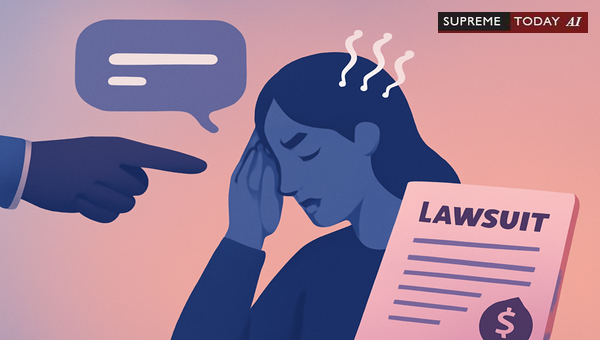
Can Insomnia or Anxiety Sufferers File a Defamation Suit?
In today's digital age, defamatory statements can spread rapidly online or through word-of-mouth, potentially devastating someone's reputation. But what if you're already grappling with mental health challenges like insomnia or anxiety? Does your condition affect your ability to seek justice through a ? Many individuals wonder: Whether a person suffering from insomnia or anxiety can file defamation in court.
The short answer is yes—mental health conditions like these do not bar you from filing a defamation suit. However, success hinges on proving key elements of the claim, including how the harmed your reputation and exacerbated your condition. This article breaks down the legal considerations, drawing from judicial precedents and expert insights, to help you navigate this complex area. Note: This is general information, not legal advice. Consult a qualified attorney for your specific situation.
: Who Can File a ?
Fundamentally, any person who has directly or indirectly suffered in his own reputation by the defamation complained can move the court and file a complaint.2011 0 Supreme(Gau) 813 This principle underscores that in defamation cases is broad and not restricted by personal health issues.
Regardless of insomnia, anxiety, or other mental health struggles, you retain the right to sue if harm your reputation. Courts focus on whether the statements were published to a third party and caused identifiable damage, not on the plaintiff's baseline health status. Precedents affirm that mental health does not disqualify claimants; instead, it may factor into damage assessments 2021 0 Supreme(Ker) 746.
Key Elements of a
To build a strong case, plaintiffs typically must establish:- Falsity: The statement must be provably false.- : Shared with at least one third party.- Harm: Damage to reputation, which can include emotional distress.- Fault: or by the defendant, especially for public figures 2019 0 Supreme(HP) 1778.
Mental health evidence can bolster the 'harm' element, as we'll explore next.
Proving : The Role of Mental Health Conditions
Success in defamation often turns on proof of . For those with pre-existing insomnia or anxiety, demonstrating how defamatory statements worsened these conditions is crucial. Courts may consider mental health impacts when quantifying harm 2022 0 Supreme(All) 961.
Responsive psychological difficulties include, among others, insomnia, anxiety, depressive, eating, and borderline personality disorders.2018 0 Supreme(UK) 239 If false accusations trigger or intensify these, medical records, , or therapy notes can substantiate claims.
For example, in cases involving severe stress, observations like He was not taking food and he was suffering from Schizophrenia and insomnia highlight how mental states are documented and relevant 2017 0 Supreme(Bom) 2448. Similarly, alprazolam is a tranquilizing medicine and is used in patient suffering from... conditions like anxiety, showing courts recognize pharmaceutical evidence of exacerbated symptoms 2019 0 Supreme(MP) 594.
However, plaintiffs should anticipate scrutiny. Courts might question —did the defamation cause the worsening, or was it pre-existing? Gathering timelines, witness statements, and professional opinions is essential
2021 0 Supreme(Ker) 1088.
, Intent, and Credibility Challenges
Proving the defendant acted with or strengthens claims, particularly when mental health is invoked 2019 0 Supreme(HP) 1778. If statements recklessly disregarded your vulnerability to anxiety or sleep disorders, this could elevate .
That said, the presence of mental health issues such as insomnia or anxiety may complicate the case. Defendants might challenge your credibility, arguing instability affects reliability
2021 0 Supreme(Ker) 1088. Prepare counter-evidence, like consistent documentation, to mitigate this.
Judicial precedents show courts weigh the plaintiff's mental state in damage evaluations but rarely dismiss cases outright on this basis 2021 0 Supreme(Ker) 746.
Integrating Mental Health Evidence Strategically
To maximize your claim:- Document Everything: Collect screenshots, emails, or recordings of defamatory content.- Medical Proof: Obtain certificates detailing insomnia or anxiety, linking them to the incident (e.g., moderate depression or severe anxiety post-event).- Expert Witnesses: Psychologists can testify on causation, such as how triggers psychosomatic responses like hypertension or chronic pain alongside insomnia 2018 0 Supreme(UK) 239.- Categories: Seek compensation for economic losses (e.g., job impacts), non-economic (emotional distress), and punitive if is proven.
Sources emphasize that while mental health doesn't hinder filing, it enriches damage proofs without being a barrier 2011 0 Supreme(Gau) 813. No precedents suggest insomnia or anxiety prevents suits; core requirements remain and .
Judicial Precedents and Real-World Insights
Courts have considered plaintiffs' mental states in defamation contexts. For instance, evaluations of abnormal behavior or hospital referrals for insomnia underscore relevance in harm assessments 2017 0 Supreme(Bom) 2448 2021 0 Supreme(Ker) 746.
In broader defamation law, the law emphasizes to third parties and the damage to reputation as core elements, with mental health as a supporting factor, not a prerequisite or obstacle. References like
LAU KOK GUAN @ LOW KOK GUAN vs CHEAH CHIA HSING - High Court Malaya Johor Bahru
and others affirm this universally applicable framework.Recommendations for Filing Your Claim
If pursuing a defamation suit:1. Consult a Lawyer Early: They can assess viability and gather evidence.2. Build a Robust Record: Track mental health changes pre- and post-defamation.3. Anticipate Defenses: Address potential credibility attacks head-on.4. Consider Alternatives: Mediation or retractions may resolve issues faster.
Gather comprehensive evidence of the defamatory statements and their impact on mental health. Consider regarding the relationship between the defamatory statements and the plaintiff’s mental health conditions. Prepare for potential challenges regarding the credibility of claims related to mental health issues.
Conclusion: Empowering Your Legal Rights
Individuals with insomnia or anxiety can file defamation claims, provided they substantiate harm and reputational damage. Mental health conditions may even amplify damage awards if properly evidenced, but they introduce complexities best handled with professional guidance 2022 0 Supreme(All) 961 2019 0 Supreme(HP) 1778
2021 0 Supreme(Ker) 1088 2021 0 Supreme(Ker) 746.
Key Takeaways:- is not impeded by mental health.- Focus on proving causation for aggravated symptoms.- Use medical and expert evidence strategically.- Always seek tailored legal counsel.
By understanding these nuances, you can approach defamation with confidence. Share your thoughts in the comments—have you faced amid health struggles?
References: 2022 0 Supreme(All) 961 2019 0 Supreme(HP) 1778 2021 0 Supreme(Ker) 1088 2021 0 Supreme(Ker) 746 2019 0 Supreme(MP) 594 2018 0 Supreme(UK) 239 2017 0 Supreme(Bom) 2448 2011 0 Supreme(Gau) 813


















