


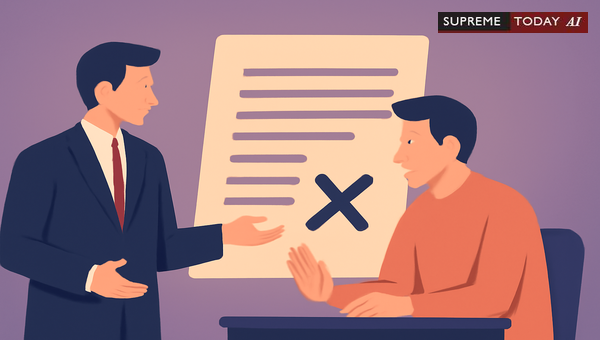
Defendant Deposition vs Written Statement: Legal Risks
In legal proceedings, consistency is key to credibility. But what happens if a defendant deposes before court against his written statement? This common yet critical issue can dramatically shift the trajectory of civil or criminal cases. Whether you're a litigant, lawyer, or simply curious about courtroom dynamics, understanding the implications of conflicting statements is essential.
This blog post breaks down the legal framework, procedural rules, and real-world impacts under Indian law, drawing from key precedents and Evidence Act provisions. Note: This is general information, not specific legal advice. Consult a qualified attorney for your situation.
The Core Legal Question: Conflicting Statements Explained
The question at hand—what are the legal implications if a defendant deposes before court against his written statement—strikes at the heart of evidence law. A written statement, often filed early in proceedings under the , sets the defendant's position. A later deposition (oral testimony under oath) that contradicts it raises red flags on reliability.
Courts view such discrepancies not just as minor slips but potential indicators of deceit or unreliability. As we'll explore, this can lead to and even sway case outcomes 2012 0 Supreme(Ker) 1017.
Legal Framework Governing Prior Statements
Distinction Between and Inconsistent Statements
Evidence law draws a clear line: are substantive proof against the maker, usable regardless of context 2012 0 Supreme(Ker) 1017. , however, primarily impeach credibility unless elevated to .
- : Allows (e.g., in a signed written statement) to be proved against the party 2012 0 Supreme(Ker) 1017.
- : Mandates confronting the witness with prior statements during cross-examination, highlighting contradictions for the court to judge 1990 0 Supreme(Ker) 537.
Procedural Safeguards for Fairness
Fair trial principles demand the witness gets a chance to explain discrepancies 1990 0 Supreme(Ker) 537. Skipping this—say, by marking entire depositions without specifics—can render evidence inadmissible, risking appeals or reversals 1990 0 Supreme(Ker) 537.
In one case, the court stressed: the trial court has solely banked upon the alleged of the defendant in its written statement... The court ought to have required the plaintiff to produce the relevant documents 2025 Supreme(Online)(KER) 2938. This underscores that written statements aren't gospel; they must align with evidence.
Impact on Credibility and Case Strength
Impeachment Power of Contradictions
A deposition clashing with a written statement severely undermines credibility. Courts probe if it's a memory lapse or fabrication 2012 0 Supreme(Ker) 1017.
- Impeachment Tool: Opposing counsel uses it to portray the defendant as unreliable 2012 0 Supreme(Ker) 1017.
- Substantive Weight: If the written statement is an admission (e.g., admitting supply of goods), it bolsters the opponent's case 2025 Supreme(Online)(KER) 2938.
For instance, in a suit for unpaid goods, the defendant's written statement admitted supply but denied dues without proof. The court upheld the decree, noting procedural compliance and 2025 Supreme(Online)(KER) 2938.
Civil vs. Criminal Ramifications
- Civil Cases: Contradictions can doom claims or defenses. In recovery suits, failure to deny specifics leads to deemed , as seen where defendants didn't substantiate quality issues 2025 Supreme(Online)(KER) 2938.
- Criminal Cases: Defendant credibility is often pivotal; conflicts may tip judgments on guilt 1992 0 Supreme(Ker) 83.
Power-of-attorney holders add complexity. Courts rule: It is a settled legal proposition that the 2022 Supreme(Online)(MAD) 17670. If a PoA files the written statement but the principal deposes contradictorily, it invites scrutiny 2021 Supreme(Online)(MAD) 39515.
Key Case Law Insights
The in clarified: prior statements assess credibility, distinguishing substantive use from impeachment 2012 0 Supreme(Ker) 1017.
Other precedents reinforce:- Defendants must enter the witness box independently; joint statements via PoA weaken defenses 2021 Supreme(Online)(MAD) 39515.- Evasive written statements without evidence support lose weight 2025 Supreme(Online)(KER) 2938.- Courts reject unverified filings, like those without principal instructions: Mother is old and she could not have given instruction for filing written statement. This Court cannot accept the written statement filed by her before her death as solomon truth 2021 Supreme(Online)(MAD) 27928.
In state representations, proper authorization for signing/deposing is crucial, as notifications empower officials but demand compliance
.
Procedural Pitfalls to Avoid
Non-compliance dooms evidence:1. No Confrontation: Must show specific contradictory portions under S.145 1990 0 Supreme(Ker) 537.2. No Explanation Opportunity: Violates fairness 1990 0 Supreme(Ker) 537.3. Improper PoA Use: Can't substitute principal testimony 2022 Supreme(Online)(MAD) 17670.
Failure here leads to exclusions, appeals, or retrials 1990 0 Supreme(Ker) 537.
Practical Tips for Defendants and Litigants
- Consistency is Crucial: Align depositions with written statements; prepare thoroughly.
- Leverage Explanations: Use cross-examination chances to clarify honest errors.
- Substantiate Claims: Back denials with documents, avoiding evasive pleas 2025 Supreme(Online)(KER) 2938.
- PoA Caution: Ensure principals depose; PoA limited to filings 2021 Supreme(Online)(MAD) 39515.
Key Takeaways
- Conflicting defendant depositions vs. written statements critically impair credibility2012 0 Supreme(Ker) 1017.
- Procedural rigor under Evidence Act Sections 21 & 145 is non-negotiable 1990 0 Supreme(Ker) 537.
- in written statements carry substantive weight; inconsistencies amplify risks 2025 Supreme(Online)(KER) 2938.
- Courts prioritize fairness, demanding evidence and explanations to prevent prejudice.
- Outcomes hinge on contradiction nature, witness reliability, and compliance—potentially rejecting testimony or decrees.
Conclusion
When a defendant's deposition contradicts their written statement, it opens a Pandora's box of credibility challenges and procedural hurdles. From impeachment under the to case-shifting , the stakes are high in both civil and criminal arenas. By heeding procedural safeguards and ensuring consistency, parties can mitigate risks.
This overview draws from established precedents 2012 0 Supreme(Ker) 1017 1992 0 Supreme(Ker) 83 1990 0 Supreme(Ker) 537 2025 Supreme(Online)(KER) 2938 2021 Supreme(Online)(MAD) 27928 2022 Supreme(Online)(MAD) 17670 2021 Supreme(Online)(MAD) 39515 . Always seek professional legal counsel tailored to your case.
Stay informed, stay consistent—your statements shape your fate in court.
#DefendantDeposition #EvidenceAct #WitnessCredibility












