


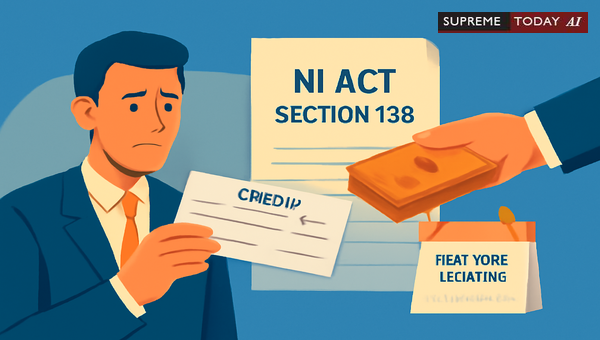
Missed Cheque Deposit on First Hearing: What Are the Accused's Rights?
In cases under (NI Act), timely compliance with court directives is crucial. But what happens when the judge does not give the accused an opportunity to deposit the cheque amount on the first date of hearing? This common query raises important questions about , statutory benefits, and the right to a . While this article provides general insights based on legal precedents, it is not a substitute for professional legal advice—consult a lawyer for your specific situation.
Understanding the Core Issue: Judge Has Not Given Opportunity to Accused to Deposit Cheque Amount on First Date of Hearing
The phrase Judge has Not Given Opportunity to Accused to Deposit Cheque Amount on First Date of Hearing typically arises in cheque bounce proceedings. The first date of hearing is pivotal, often defined as the date fixed for case disposal, especially in specialized courts like . Failure to deposit on this date can lead to loss of benefits, such as protection under certain statutes. However, courts stress and fairness. If no opportunity is provided, it may amount to a procedural lapse affecting the accused's rights. 1976 0 Supreme(All) 458
Defining the First Date of Hearing
- In , this is treated as the final hearing date, with no routine extensions for deposits. 1976 0 Supreme(All) 458
- Courts hold that non-deposit on this date forfeits benefits like those under . 2002 1 Supreme 667
Key Legal Principles Governing Deposits in Cheque Cases
Mandatory vs. Discretionary Deposits
Under the NI Act, deposits serve to expedite resolutions and provide to complainants. However:- have discretion under to direct 20% deposit of fine/compensation, but it is not compulsory. Thus, it has been specified that it is not mandatory for the learned Appellate Court to pass an order for the compulsory deposit of 20% of the cheque amount. 2024 0 Supreme(Guj) 1632- Waiver is possible in exceptional cases, like financial distress, with recorded reasons. The court may quash harsh orders if perverse. 2024 0 Supreme(Guj) 1632
In trial stages, similar principles apply. must exercise discretion judiciously under CrPC provisions.
Opportunity and
- Courts recognize that all dues must be deposited on the first date, but minor deficiencies with demonstrated willingness may suffice. 2002 1 Supreme 667
- If the court is unavailable on the scheduled date, it may not count as the first hearing, allowing reconsideration. 2002 1 Supreme 667
- Exact quote: the entire amount have not been deposited, on the first date of hearing and the Judge, has not recorded any finding with regard to the deposits made from time to time. 2008 0 Supreme(All) 1034
and Procedural Safeguards
The right to a under Article 21 includes chances to comply with directives. Denying deposit opportunity could violate this, warranting . 2023 0 Supreme(Mad) 1408- Parties must get opportunities to adduce evidence before under . First is if the Court thinks that in a situation it is proper to adjourn the hearing, then the Magistrate shall not acquit the respondent – accused. 2024 0 Supreme(Guj) 1018- Acquittals for non-prosecution require judicial discretion; immediate dismissal without opportunity is improper. 2024 0 Supreme(Guj) 1018
Relevant Case Law and Precedents
and Rulings
- Damodar S. Prabhu v. Sayed Babala H.: The emphasized that Section 138 offences are , mandating fair opportunities for compliance. 2013 0 Supreme(HP) 949
- In appeals, conditions like partial deposits must be reasonable. Even in DILIP S. DAHANUKAR (supra) the Hon'ble clearly mentioned that while granting appeal bail the Court has the power to impose conditions, but the condition should be reasonable and should not be harsh. 2016 0 Supreme(Mad) 4104
Appellate Deposit Discretion
- Courts can direct cheque amount deposit for , but not automatically dismiss bail for non-compliance. requires hearing. 2016 0 Supreme(Mad) 4104 2005 0 Supreme(Del) 580
- The additional before whom appeal was assigned had only ordered for deposit of the cheque amount and not double the amount of the cheque. 2005 0 Supreme(Del) 580
Eviction Analogies and First Hearing Strictness
Though primarily NI Act-focused, parallels from rent laws highlight first hearing rigidity:- Tenants lose Section 20(4) benefits for non-deposit on first hearing, but courts scrutinize findings. 2012 0 Supreme(All) 2589 2008 0 Supreme(All) 1030- It has held that tenant is not entitled for such benefit having failed to deposit requisite amount.... 2012 0 Supreme(All) 2589
and Prosecution Lapses
- Prolonged complainant absence justifies under , protecting accused from harassment. 2024 0 Supreme(Guj) 625
- Restoration possible if opportunity denied. 2024 0 Supreme(Guj) 1018
Practical Remedies for the Accused
If opportunity was denied:1. File a Motion/Revision: Challenge proceedings citing and violation. 2023 0 Supreme(Mad) 14082. Demonstrate Willingness: Submit evidence of readiness to deposit, arguing . 2002 1 Supreme 6673. Seek : Request restoration for cross-examination or defense presentation. 2023 0 Supreme(Mad) 14084. Appeal Deposit Waivers: In higher courts, highlight discretion under Section 148. 2024 0 Supreme(Guj) 1632
In one case, despite notice under Section 138, non-payment led to scrutiny, but deposit slips were considered.
Conclusion and Key Takeaways
Denial of opportunity to deposit on the first hearing may undermine trial fairness, opening avenues for challenge. Key points:- First hearing deposits are strict but not absolute; discretion and fairness prevail. 1976 0 Supreme(All) 458- Use for appellate relief; avoid harsh conditions. 2024 0 Supreme(Guj) 1632 2016 0 Supreme(Mad) 4104- Always prioritize evidence of compliance intent.
This analysis draws from precedents like 2004 0 Supreme(All) 1415 1976 0 Supreme(All) 458 2002 1 Supreme 667 2023 0 Supreme(Mad) 1408 2013 0 Supreme(HP) 949, emphasizing procedural justice. For tailored advice, engage a legal expert promptly to safeguard your position in cheque-related disputes.
#ChequeBounce #NIAct138 #AccusedRights












