


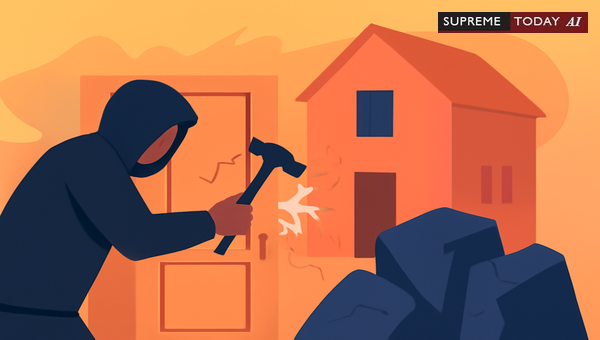
Is Destroying Joint Property Punishable Under IPC Section 427?
In family disputes, business partnerships, or shared ownership scenarios, conflicts over property are common. One pressing question arises: Whether Destruction of Joint Property is Punishable under ? This issue often surfaces when co-owners clash, leading to acts that damage shared assets like land, vehicles, or household items. Understanding the legal boundaries can prevent escalation from civil disagreements to criminal charges.
This blog post breaks down , its application to joint property, essential elements for liability, and insights from judicial precedents. Note: This is general information based on legal principles and is not specific legal advice. Consult a qualified lawyer for your situation.
What is Section 427 IPC?
Section 427 IPC addresses to property valued at fifty rupees or more. It punishes whoever commits mischief and thereby causes loss or damage to the amount of fifty rupees or upwards with imprisonment up to two years, or a fine, or both. The core element is causing destruction, change, or injury to property that diminishes its value or utility2019 0 Supreme(Cal) 499 2019 0 Supreme(Ker) 294.
Mere possession or unauthorized use without actual damage does not qualify. As one legal document clarifies: Damage must involve actual destruction or alteration of property; mere possession or unauthorized use without destruction does not constitute an offence under Section 427 1998 0 Supreme(P&H) 1162.
Applicability to Joint or Shared Property
A common misconception is that Section 427 applies only to individually owned property. However, damage to joint or shared property can indeed attract liability under this section, provided key conditions are met:
- Damage Threshold: The loss must be fifty rupees or more 2019 0 Supreme(AP) 99.
- Actual Destruction or Change: There must be tangible harm reducing the property's value or utility 2019 0 Supreme(Cal) 499 2019 0 Supreme(Ker) 294.
- Wrongful Intent (): The act must be done with intent to cause damage or knowledge that damage is likely. Acts in good faith or asserting a , without malice, may not qualify 2002 0 Supreme(Bom) 758 2019 0 Supreme(Ker) 294.
Even in civil disputes over joint property, unlawful acts causing damage can lead to criminal charges. For instance, if a co-owner deliberately destroys a shared fence or crops during a dispute, it could invoke Section 427, unless proven as a lawful assertion of rights 2019 0 Supreme(Ker) 294.
Key Elements for Prosecution Under Section 427
To establish an offence, prosecutors must prove:1. The Act of Mischief: Voluntary act causing destruction or change.2. Property Damage: Quantifiable loss ≥ ₹50.3. Intent or Knowledge: Wrongful motive, not mere negligence.
Intent is critical. Intent and are critical; acts done in good faith or asserting a , without malice, may not constitute mischief 2002 0 Supreme(Bom) 758 2019 0 Supreme(Ker) 294.
Judicial Insights: When Courts Uphold or Quash Charges
Courts scrutinize facts closely, often quashing proceedings if elements are absent. Here are relevant precedents:
Cases Where Charges Were Quashed
In a family land dispute, an under Sections 427 and 447 IPC was quashed because the petitioner was a joint co-owner, and allegations were vague with no proof of damage or wrongful intent. The court noted: Even otherwise, the petitioner is the joint co-owner in possession of the land in question. The ingredients for commission of offences punishable under Section 427 and 447 of IPC have not been at all attracted in this case, as there are vague allegations in the 2025 0 Supreme(P&H) 75. This highlights that co-ownership and lack of specifics can defeat charges.
Another alleging tree branch cutting () was quashed as it failed to specify damage amount, possession, or date: The also does not reveal that on account of the action of the petitioners, any damage or loss has been caused and to whom. Hence, the offence punishable under section 427 IPC is also not made out 2014 0 Supreme(Raj) 1943. Courts rely on principles to quash if allegations don't constitute an offence.
Cases Involving Convictions or Modifications
In a shop damage case, the accused was acquitted under Section 427 but convicted under the lesser due to discrepancies in damage value and weapon description. Further, the accused/appellant is also acquitted for the offence punishable under , however, he is convicted for the offence punishable under Section 426 of IPC 2020 0 Supreme(Kar) 369. This underscores the importance of proving the ₹50 threshold.
Police refusal to register a case under Section 427 was challenged, affirming that if a is disclosed, registration is mandatory: However, the said Police Station did not register the case on the ground that respondent nos. 2 and 3 committed offence punishable under which is not cognizable 2015 0 Supreme(Del) 1529. (Note: Section 427 is cognizable.)
These cases show courts distinguish civil disputes from criminal mischief, especially in joint property contexts.
Counterpoints and Limitations
Not every act on joint property triggers Section 427:- No Actual Damage: Vague or no-loss claims fail 1998 0 Supreme(P&H) 1162.- Below Threshold: Damage under ₹50 shifts to Section 426.- Bona Fide Acts: Lawful self-help or good-faith claims exempt liability 2002 0 Supreme(Bom) 758.- Civil Disputes: Ongoing civil suits may recharacterize acts as non-criminal, quashing FIRs to prevent abuse of process 2025 0 Supreme(P&H) 75.
Practical Recommendations
If facing or alleging such damage:- Document Everything: Photos, estimates, witnesses for damage proof.- Assess Intent: Was it malicious or a rights assertion?- Explore Civil Remedies: Partition suits or injunctions before criminal complaints.- Seek Legal Counsel: Facts determine outcomes; thresholds and are pivotal.
Assess whether the damage to joint property involved actual destruction or change meeting the monetary threshold. Investigate the intent behind the act—whether it was malicious or in good faith 2019 0 Supreme(Ker) 294.
Conclusion and Key Takeaways
Destruction of joint property can be punishable under Section 427 IPC if it involves actual damage ≥ ₹50, with wrongful intent, diminishing value or utility. However, co-ownership, good faith, vague allegations, or sub-threshold damage often lead to acquittals or quashing.
Key Takeaways:- Prove tangible damage and for conviction.- Joint property doesn't immunize but requires clear wrongful acts.- Courts protect against frivolous criminalization of civil disputes.- Always prioritize evidence and consult professionals.
Stay informed on property laws to safeguard rights. For personalized guidance, reach out to a legal expert.
(Word count: ~950. Sources cited from legal documents; general analysis only.)
#IPCSection427, #JointPropertyLaw, #CriminalMischief












