


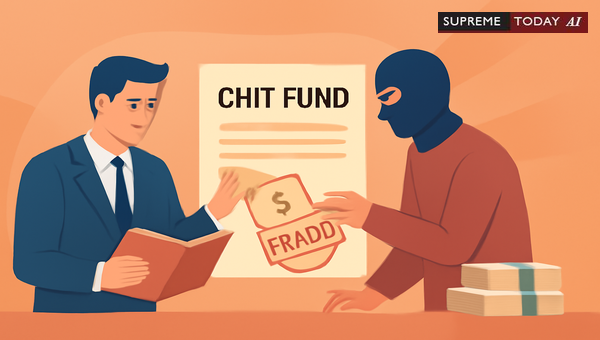
Chit Fund Fraud: Are Agents Criminally Liable?
Chit funds, popular savings schemes in India, have often been at the center of massive frauds, leaving thousands of investors in distress. But when a chit fund company or principal orchestrates a scam, a burning question arises: Whether for a Chit Fund Fraud the Agents are Criminally Liable? Agents, who collect subscriptions and manage local operations, are frequently scrutinized. This post delves into the legal nuances of agent liability under Indian agency law, drawing from judicial precedents and key principles.
Note: This is general information based on legal precedents and not specific legal advice. Consult a qualified lawyer for your situation.
Understanding Chit Fund Frauds and Agent Roles
Chit funds operate under the , but many devolve into Ponzi-like schemes banned under the . Agents act as intermediaries, promising high returns while collecting funds from subscribers. In fraud cases, regulators like the or police target not just principals but also agents.
The core issue is : Does the agent's role make them criminally responsible for the principal's deceit? Generally, liability hinges on the agent's involvement, intent, and .
Main Legal Finding: When Are Agents Liable?
The legal position is clear: An agent is generally liable for fraud if they act within their with or deceit. However, if the agent operates in , without fault, and strictly within authority, they are not liable for the principal's fraud 2006 9 Supreme 50.
Key points include:- Agents acting without fault or in are protected 2006 9 Supreme 50.- Liability arises if the agent commits fraud or deceit within employment scope, especially with intent 2003 0 Supreme(Mad) 1688 2021 0 Supreme(Bom) 62.- Fraud must be proved, not merely alleged; evidence is required 1937 0 Supreme(Cal) 351.
In Bhaurao Dagdu Paralkar, the stressed: fraud has a definite meaning in law. It must be proved and not merely alleged and inferred 1937 0 Supreme(Cal) 351. Courts inquire into allegations and demand evidence.
Scope of Agent’s Liability for Principal’s Fraud
Under agency law, principals are liable for agents' frauds within authority, even if for the agent's benefit. The in Lloyd v. Grace, Smith & Co. (1912 A.C. 716) held: the principal is liable for the fraud of his agent acting within the scope of his authority, whether the fraud is committed for the benefit of the principal or of the benefit of the agent 2006 9 Supreme 50.
For chit fund agents, this means if they knowingly collect funds for a fraudulent scheme, they share liability. But honest agents, unaware of the scam, may escape.
Conversely: the only difference... is that in the latter case the principal is liable for the wrong done to the person defrauded by his agent acting within the scope of his agency 2006 9 Supreme 50. Implication: Non-involved agents are shielded.
When Agents Are Not Liable
Agents acting honestly, without knowledge, and within scope are typically protected 1973 0 Supreme(Ker) 264 2003 0 Supreme(Mad) 1688. No liability without proof of negligence, , or participation.
In insurance contexts mirroring chit funds, no action against agents absent FIRs for fraud, emphasizing physical verification by agents doesn't imply deceit
. Similarly, banks aren't liable for forged documents by rogue managers unless proven within course of business 2017 0 Supreme(Cal) 568.
liable only for fraud or willful wrong 1937 0 Supreme(Cal) 351
. Chit fund agents, as , follow suit.
Exceptions: When Liability Attaches
Liability kicks in if:- Agent connives or colludes in fraud.- Acts negligently to facilitate deceit.- Operates with dishonest intent2003 0 Supreme(Mad) 1688.
In consumer cases, principals bear agent frauds within authority, as in insurance policies where companies paid claims despite agent misrepresentations
. A principal is liable for the agent’s fraud acting within the scope of his authority whether the fraud is committed for the benefit of the principal or for the benefit of the agent
.
Banking frauds reinforce: Bank managers as agents make principals liable if in business course 2017 0 Supreme(Cal) 568. Auditors or KMPs in chit-like debenture scams faced scrutiny for compliance roles 2023 0 Supreme(Mad) 223.
and Judicial Safeguards
Mere allegations fail; evidence must be led and thereafter fraud must be proved 1937 0 Supreme(Cal) 351. In service tax evasion, no extended limitation without proven suppression or fraud 2023 0 Supreme(Bom) 361. Chit fund probes demand concrete evidence against agents.
In SARFAESI cases, technical notice flaws didn't absolve if no prejudice, but fraud proof remains key 2022 0 Supreme(AP) 289.
Insights from Related Cases
- Insurance Agents: No liability without fraud proof; companies liable for agent acts
.
- Finance Firms: Not liable for dealer warranties absent agency proof 2024 Supreme(US)(ca5) 264.
- Air Cargo Fraud: liable for willful wrongs under
.
- Debentures: KMPs liable for managerial roles in fraudulent issuances 2023 0 Supreme(Mad) 223.
These parallel chit fund dynamics, where agents' collection roles demand scrutiny but protects.
Key Takeaways for Chit Fund Investors and Agents
- For Investors: Pursue principals first; target agents only with evidence of complicity.
- For Agents: Document actions; avoid exceeding authority.
- Factors: , knowledge of fraud, negligence.
In summary, chit fund agents are not automatically criminally liable. Protection exists for actors, but participation invites prosecution. Courts emphasize proof, safeguarding innocents.
This analysis draws from precedents like Lloyd v. Grace and Indian rulings. Always seek professional advice for chit fund disputes.
References
- 2006 9 Supreme 50: Agent liability scope.
- 1937 0 Supreme(Cal) 351: Fraud proof requirements.
- 1973 0 Supreme(Ker) 264: protection.
- 2003 0 Supreme(Mad) 1688: liability.
- Other cases as cited.















