


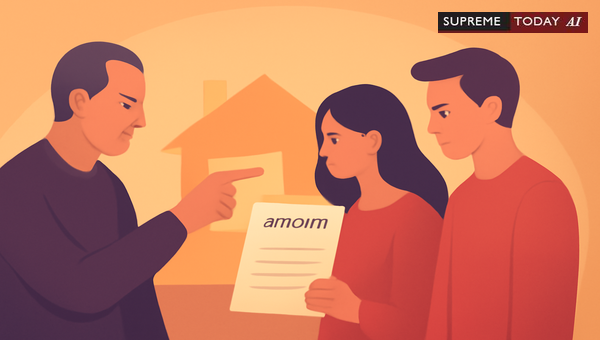
& Daughter-in-Law: Legal Impacts
In many families, emotional disputes can lead parents to take drastic steps like publicly disowning a son or daughter-in-law through newspaper ads, affidavits, or notices. But what are the legal consequences of and daughter in law? Does such an act truly cut off , , or ? This blog delves into Indian law, primarily under Hindu personal laws, the (DV Act), and inheritance statutes, to clarify these misconceptions.
While disownment may feel final emotionally, courts consistently rule it has limited legal weight. We'll break down judicial perspectives, key rights affected, and when formal steps are needed. Note: This is general information based on precedents; consult a lawyer for personalized advice.
Legal Framework: Does Disownment Sever Family Ties?
The question Legal Consequences of and Daughter in Law often arises amid family feuds over property or living arrangements. Indian courts, including the and , have addressed this repeatedly. Disowning a son or daughter-in-law through public notices, advertisements, or affidavits does not have a dispositive legal effect that terminates familial or legal ties. Such acts are tentative and fail to override statutory protections unless backed by formal , , or separation 2014 0 Supreme(Del) 148
.
For instance, even if a parent disowns a son, upon the parent's (dying without a will), property typically devolves to the son under inheritance laws like the . Mere proclamations don't change this 2014 0 Supreme(Del) 148.
Disownment Affidavits: Legal Status and Limitations
Affidavits declaring disownment are common but ineffective alone. Courts have emphasized caution in relying solely on such affidavits to deny statutory rights, especially rights granted under the 2005 Act in favor of wives and family members2014 0 Supreme(Del) 148
. The holds that these affidavits lack the weight of formal deeds. Thus, disownment doesn't extinguish a daughter-in-law's (DIL) rights to residence or inheritance 2014 0 Supreme(Del) 148
.
In one case, a mother-in-law tried to evict her DIL and grandchildren after disowning her son, claiming no relationship via a will. Courts protected the DIL's residence rights in the , as she had lived there continuously for over 25 years under 2016 0 Supreme(Bom) 1215. The court quashed the eviction, stating the DIL is entitled to protection even against the mother-in-law, distinguishing it from where no joint living existed 2016 0 Supreme(Bom) 1215.
Conversely, if the property is purely self-acquired by in-laws with no husband's interest, it may not qualify as a 2015 0 Supreme(Del) 1739. Here, the court noted: the property which exclusively belongs to the father-in-law or the mother-in-law, in which the husband has no right, title, or interest, cannot be called a ''2015 0 Supreme(Del) 1739.
Impact on Property Rights and Inheritance
Disownment doesn't automatically sever property claims:- Inheritance: Sons remain under Hindu Succession Act. Disownment affidavits can't override this without a will or deed 2014 0 Supreme(Del) 148.- Daughter-in-Law and Children: Their rights persist, especially in . Heirs of a son might claim shares like 17/24th in some partitions post-deaths 2024 0 Supreme(Bom) 202.
Courts protect family members' shares. In an adoption case, an adoptive mother's half share vested under the , passing to her daughter's heirs despite sales by the adopted son 2024 0 Supreme(Bom) 202. The legal heirs of the daughter were entitled to a share in the suit lands as determined by the Court2024 0 Supreme(Bom) 202.
Rights of Wives and Daughters-in-Law Under DV Act 2005
The DV Act prioritizes protection: Courts are cautious in denying statutory rights to wives based solely on disownment acts, particularly under the provisions of the 2005 Act2014 0 Supreme(Del) 148
2018 0 Supreme(Del) 1860. A DIL's right to reside in the stands, regardless of disputes.
Key cases illustrate:- Parents disowned their son abroad, refusing maintenance to stranded DIL. Court upheld Rs.10,000/month maintenance by in-laws, as she had no income or stay options 2019 0 Supreme(P&H) 1547. She has no other source of income and no place to stay2019 0 Supreme(P&H) 1547.- In a , family tensions including disownment claims were overridden for welfare under 2021 0 Supreme(Del) 973.
Even in contexts under personal law, multiple wives qualify as heirs for partitions 2023 Supreme(Online)(Ker) 53685. The definition of 'family' under personal law allows multiple wives to be legal heirs2023 Supreme(Online)(Ker) 53685.
Exceptions: When Disownment Has Legal Effect
Informal disownment is non-binding, but exceptions exist:1. Formal Deeds: Relinquishment, , or separation deeds conclusively sever rights 2014 0 Supreme(Del) 148.2. Wills: A valid will can exclude heirs.3. Legal Separation/Divorce: Ends spousal claims.
Formal , , or legal separation are necessary to conclusively sever familial and property rights. Without such documentation, disownment acts are considered non-binding2014 0 Supreme(Del) 148
. Courts view casual disownments as fleeting, upholding statutory protections.
In cases, disowning a minor adopted son was seen as cruelty, but required proof of intent 2018 0 Supreme(Del) 3305. requires the intentional permanent forsaking... without reasonable cause2018 0 Supreme(Del) 3305.
Key Takeaways and Recommendations
- Public notices or affidavits alone do not sever familial ties or property rights.
- DILs retain residence and maintenance rights under DV Act 2005, especially in shared households.
- Inheritance laws prevail without formal partitions or wills.
- Courts protect vulnerable family members, prioritizing welfare over disputes.
If considering disownment, opt for formal legal steps like deeds. Families should seek mediation to avoid litigation. Summary: Disowning via informal means lacks conclusive effect; formal procedures are essential2014 0 Supreme(Del) 148.
Disclaimer: Laws evolve, and outcomes depend on facts. This isn't legal advice—consult a qualified attorney for your situation.
#FamilyLawIndia, #DisownmentRights, #InheritanceLaw












