


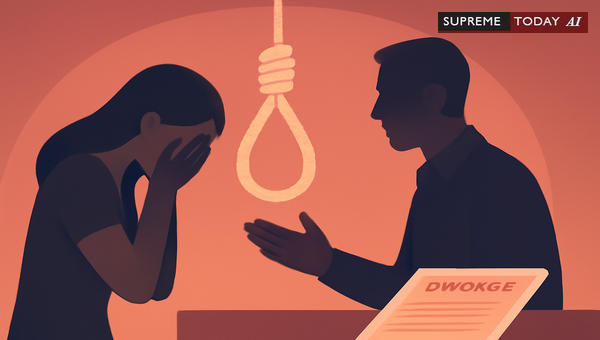
Does Husband's Divorce Papers Cause Wife's Suicide?
In the emotionally charged realm of matrimonial disputes, one tragic scenario often raises tough legal questions: What happens if a wife commits suicide shortly after her husband serves divorce papers? Does this act alone make the husband liable for under ? The query by Husband Death Wife captures this dilemma, highlighting concerns around , , and legal responsibility.
This blog post delves into Indian judicial precedents, unpacking whether divorce proceedings inherently provoke suicide or if concrete evidence of is required. Note: This is general information based on case law and not specific legal advice. Consult a qualified lawyer for personalized guidance.
Main Legal Finding
Courts in India have consistently ruled that a wife's suicide after divorce papers are served does not automatically imply or liability for the husband. The key principle is clear: there must be positive evidence linking specific acts of , threats, or provocation to the suicide. Mere timing or allegations fall short. 2014 0 Supreme(P&H) 1575 2016 7 Supreme 528
As emphasized in judgments, allegations of mental disorder and threats to commit suicide must be proved with evidence; otherwise, they remain unsubstantiated. 2014 0 Supreme(P&H) 1575 The in Narendra Vs. K. Meena (2016) reinforced this, holding that threats and attempts to commit suicide alone do not constitute unless they are proven to have caused mental or physical harm or were part of a pattern of . Mere stress from legal consequences, like divorce, does not suffice. 1997 0 Supreme(MP) 472
Key Principles on and
Under , abetment requires proof of , , or that directly drives the victim to suicide. Similarly, demands evidence of —physical or mental—beyond hearsay or unsubstantiated claims.
Evidence is Paramount
- Direct proof needed: Hearsay statements from relatives about ill-treatment do not qualify unless tied to the death's cause. In one case, witnesses deposed that the deceased complained of torture, but the court deemed it under , inadmissible without proximate connection to death. 2021 0 Supreme(Ker) 961
- No presumption after time lapse: If suicide occurs years after marriage (e.g., over 7 years), no presumption of abetment arises. The prosecution must provide cogent and unimpeachable evidence to prove or abetment. 2013 0 Supreme(Raj) 1410
Role of
Statements by the deceased are admissible under only if they explain the cause of death. In a prosecution for leading to suicide by consuming poison, the court acquitted the husband, noting: Admittedly, there is no direct evidence to prove the alleged ... none of the witnesses said that the alleged torture... led to the death. 2021 0 Supreme(Ker) 961
Timing and : Critical Factors
The interval between alleged and suicide is scrutinized. Post-separation or post-divorce paper service weakens claims without active provocation.
- In 2022 0 Supreme(Mad) 2716, the court found no direct evidence that the acts of the petitioner (including threats or ) caused her to commit suicide. The wife was under matrimonial stress but living separately—no proven.
- in Reena v. State (2020) held: there was no , , goading or provocation from the petitioner. 2022 0 Supreme(HP) 699
Even heated quarrels don't automatically abet suicide. One judgment noted a heated exchange of words over the wife's character, but acquittal followed due to inconsistencies in and lack of corroboration. 2021 0 Supreme(Mad) 2060
Post-Divorce Suicide: No Automatic Liability
Serving or executing divorce papers is a legal right and not inherently cruel. Courts stress:- Suicide after dissolution doesn't retroactively prove .- In 1991 0 Supreme(SC) 296, despite history of ill-treatment and dowry demands, insufficient evidence absolved the husband.
The Apex Court defines as to goad, urge forward, provoke, incite or encourage. A husband's statement like you are free to do whatever you wish during an argument doesn't qualify. 2013 0 Supreme(Kar) 126
Insights from Additional Case Law
Several rulings underscore the high evidentiary bar:
- Long-term marriages: After 14 years, voluntary return to the matrimonial home negated abetment claims. Letters' timing showed no direct link. 2013 0 Supreme(Raj) 1410
- No proven: For conviction under Section 306, there has to be a clear ... and an active act or direct act which lead the deceased to commit suicide. In a drowning case involving wife and daughter, acquittal followed due to absent direct evidence and no child harassment. 2013 0 Supreme(Kar) 126
- Bail considerations: Even in dowry-suicide allegations, courts grant bail viewing totality, like lengthy trials and alleged false implication. 2019 0 Supreme(Del) 531
These cases illustrate: Unproven allegations, time gaps, and lack of proximate lead to acquittals.
Exceptions Where Liability May Arise
Liability may attach if:- Concrete evidence shows ongoing or direct (e.g., repeated threats tied to suicide).- Suicide is immediate post-act, with dying declaration corroborating.- Pattern of harassment proven via witnesses, medical records, or documents.
However, courts caution against presumptions, especially in sensitive family matters.
Recommendations for Stakeholders
- For accused: Document separations, communications, and lack of recent .
- Prosecution/family: Collect , witness testimonies, and medical evidence promptly.
- Courts: Scrutinize timing, investigate thoroughly—avoid reliance on inconsistencies. 2021 0 Supreme(Mad) 2060
Key Takeaways
- Divorce papers alone ≠ abetment: No automatic liability without proof. 2022 0 Supreme(Mad) 2716
- Evidence rules: Direct, cogent links to required. Hearsay insufficient. 2021 0 Supreme(Ker) 961
- Timing matters: Post-separation suicides rarely attributed without .
- Judicial trend: Acquittals common absent and active provocation. 2013 0 Supreme(Kar) 126
In conclusion, while matrimonial discord can lead to tragedy, Indian law protects against unsubstantiated blame. The mere fact of a wife’s suicide after divorce papers does not, by itself, establish that her death was caused by... the divorce proceedings. 2014 0 Supreme(P&H) 1575 Always seek professional legal counsel to navigate these complexities.
References:- : Narendra Vs. K. Meena (2016)- Various High Court judgments: 2014 0 Supreme(P&H) 1575, 2016 7 Supreme 528, 2022 0 Supreme(Mad) 2716, 2022 0 Supreme(HP) 699, 1991 0 Supreme(SC) 296, 2021 0 Supreme(Ker) 961, 2013 0 Supreme(Raj) 1410, 2013 0 Supreme(Kar) 126, 2021 0 Supreme(Mad) 2060, 2019 0 Supreme(Del) 531
#AbetmentToSuicide, #MatrimonialLaw, #IPC306















