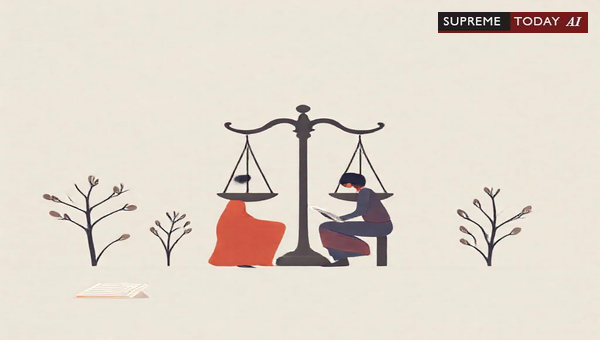
Legal Impact of a Spouse's Death on Pending Divorce Proceedings and Survival of Matrimonial Rights
The intersection of family law and the law of succession often creates complex legal dilemmas when a party to a matrimonial dispute passes away before the court reaches a final decision. One of the most frequently debated issues in this context is whether divorce proceedings abate upon the death of a spouse. When a husband dies while a divorce suit is still pending, the legal system must balance the personal nature of marital status with the potential financial and status-related interests of the surviving spouse and the deceased's heirs.
The central question often raised is: Divorce Proceedings Abates with Death of Husband? To answer this, one must understand the distinction between the personal remedy of a divorce decree and the surviving rights related to property, maintenance, and legal status.
The General Principle of Abatement in Divorce Suits
In general legal terms, divorce proceedings are considered personal actions. Under the prevailing legal principle, if either spouse dies before a final decree is issued, the proceedings typically abate. This is based on the logic that a divorce judgment is a personal remedy that cannot be granted posthumously; once a party is deceased, the legal relationship of marriage is terminated by death, not by judicial decree.
Courts have consistently held that the cause of action terminates with death. For example, in certain instances, it has been noted that a suit abated specifically when the husband died during confirmation proceedings 1991 0 Supreme(Cal) 144. The rationale is that a divorce decree is intended to change the legal status of living persons. As emphasized in other judicial findings, no divorce decree can be issued after the death of a spouse, rendering the suit infructuous 2025 Supreme(Online)(Chh) 9965.
This concept is rooted in the Latin legal maxim actio personalis cum moritur persona, which translates to a personal action dies with the person. Because the right to seek a divorce is an intensely personal right, the death of the husband typically removes the possibility of a court granting a decree of divorce 2025 Supreme(Online)(Kar) 15983 and 2025 Supreme(Online)(HP) 4706.
Exceptions: When Proceedings and Appeals Do Not Abate
While the primary suit for divorce may terminate, the law recognizes that the death of a spouse does not necessarily extinguish all legal interests. A critical distinction is made between the original suit and an appeal, or between the status of the marriage and financial claims.
The Survivability of Appeals and Status
An appeal does not always abate simply because a party has died. If the appeal involves the status of the surviving spouse or their property rights, the court may allow the proceedings to continue. This is particularly relevant when a spouse is challenging a lower court's decree.
In a significant case involving the Hindu Marriage Act, a husband sought divorce on grounds of cruelty and adultery. Although the lower court granted the divorce, the wife appealed the decision. Upon the husband's death during the pendency of the appeal, the court determined that the appeal did not abate 1996 0 Supreme(P&H) 781. The court reasoned that an appeal does not abate due to the death of a party if it involves the status or property rights of the surviving party 1996 0 Supreme(P&H) 781. In that specific instance, the court eventually set aside the divorce decree, finding that the husband had actually treated the wife with cruelty by making false allegations and denying paternity of their child 1996 0 Supreme(P&H) 781.
Rights Under the Hindu Marriage Act
Under specific statutes like the Hindu Marriage Act, the law provides nuances that prevent automatic abatement in all circumstances. For instance, proceedings under Section 13 of the Act may allow a wife to question the validity of a divorce decree even after the husband's death 1993 0 Supreme(AP) 412. This suggests that while the remedy of divorce is gone, the right to challenge a prior legal finding about the marriage may persist.
Financial Obligations and the Role of Legal Representatives
The death of a husband does not automatically wipe away all matrimonial obligations. The law distinguishes between the status of the marriage and the financial liabilities arising from it.
1. Maintenance and Alimony:Rights related to maintenance or alimony may survive the death of a spouse 1983 0 Supreme(SC) 202 and 2025 Supreme(Online)(Kar) 15983. Since these are often viewed as financial claims against the estate of the deceased rather than purely personal remedies, the surviving spouse may still seek these funds through the legal heirs of the deceased.
2. Setting Aside Ex Parte Decrees:If a divorce decree was granted ex parte (meaning the other spouse was not present or represented), the surviving spouse or their legal representatives may seek to set it aside. Courts have recognized that legal heirs can be impleaded in proceedings to set aside such decrees 1996 0 Supreme(Cal) 471. This ensures that the deceased's estate or the surviving spouse's rights are not unfairly prejudiced by a decree issued without a full hearing.
3. Decree Nisi vs. Decree Absolute:Some legal interpretations differentiate between a decree nisi (a provisional decree) and a decree absolute (the final order). The implications of death may vary depending on whether the court had already issued a provisional order or if the proceedings were in the early stages 1955 0 Supreme(AP) 192.
Summary of Legal Outcomes
The outcome of a divorce case upon the death of a husband generally depends on the stage of the litigation:
- Pending Suit: If the suit is in the initial stages and no final decree has been passed, it typically abates because the marriage is dissolved by death.
- Pending Appeal: If the appeal concerns the surviving spouse's legal status or property rights, it may survive, and legal representatives of the deceased may be brought on record 1996 0 Supreme(P&H) 781.
- Financial Claims: Claims for alimony or maintenance may persist as they are often treated as debts of the estate.
- Ex Parte Challenges: Heirs can often be impleaded to contest an ex parte decree to protect the interests of the estate or the surviving party 1996 0 Supreme(Cal) 471.
In conclusion, while the primary action for divorce is generally personal and terminates upon death, the law provides essential safeguards to ensure that status and property rights are not arbitrarily extinguished. The prevailing principle is that while the suit for divorce may become infructuous, ancillary rights and the ability to challenge existing decrees often survive through legal representatives. Because these outcomes depend heavily on the specific stage of the proceedings and the applicable statutes, these principles should be viewed as general legal trends rather than definitive outcomes for every case.
#FamilyLaw #DivorceLaw #LegalRights #MatrimonialDisputes