


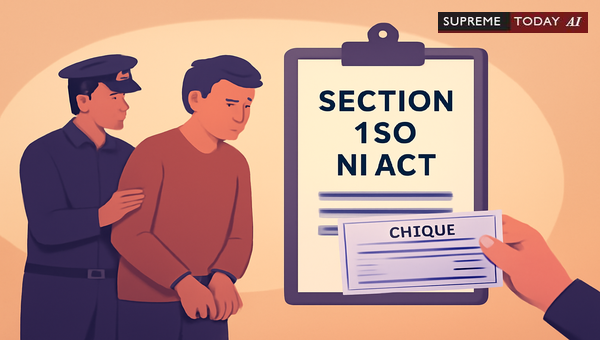
Does Arrest Invalidate Section 138 NI Act Cases?
In the fast-paced world of business transactions, cheque bounce cases under (NI Act) are commonplace. But what happens when the accused is arrested or detained? Does this procedural step derail the entire prosecution? This is a critical question for complainants, accused persons, and legal practitioners alike: Section 138 NI Case is Presented where Accused Band—often interpreted in contexts of detention or arrest—raises concerns about the validity of ongoing proceedings.
This blog post delves into the legal position, drawing from established precedents and judicial insights. Note: This is general information based on case law and not specific legal advice. Consult a qualified lawyer for your situation.
Understanding Section 138 of the NI Act
Section 138 NI Act addresses the dishonour of cheques due to insufficient funds or exceeding arrangements, treating it as a primarily aimed at compensating the payee. The offence is triggered when:- A cheque is issued for discharge of a legally enforceable debt.- It is presented within the validity period and dishonoured.- A demand notice is served, and payment is not made within 15 days. 2023 4 Supreme 711
Courts emphasize that the provision ensures not only the offender is punished, but also ensure that the complainant invariably receives the amount of the cheque by way of compensation. 2022 0 Supreme(AP) 58
From broader case law, the cheque must represent a legally enforceable debt, and dishonour must stem from insufficient funds or similar reasons. 2023 0 Supreme(Cal) 253 2025 0 Supreme(HP) 142 The legal notice's form and timeliness are crucial; a defective or premature notice can undermine the case. 2023 0 Supreme(Cal) 253
Effect of Accused's Arrest or Detention on Proceedings
A common misconception is that arresting or detaining the accused automatically invalidates Section 138 proceedings. However, courts have consistently held otherwise. Arrest or detention does not, by itself, nullify the case unless specific exist. 2022 0 Supreme(AP) 58 2014 7 Supreme 695
The proceedings remain valid and can continue if:- The offence conditions are met (cheque issuance, dishonour, notice, non-payment).- Initiation follows legal procedures.
As clarified, arrest is a procedural step and, unless it contravenes the procedural requirements or results in prejudice, the proceedings can proceed. 2022 0 Supreme(AP) 58 This aligns with the quasi-criminal nature of Section 138, focused on recovery with a criminal overtone. 2023 4 Supreme 711
Insights from other cases reinforce this: Even in scenarios of denial of liability or stop-payment, the core validity hinges on statutory compliance, not post-initiation arrests. 2023 0 Supreme(Kar) 906 2024 0 Supreme(Ker) 1068
Judicial Precedents and Key Interpretations
Several judgments provide clarity:
In 2022 0 Supreme(AP) 58, the court noted: The provision for levy of fine which is linked to the cheque amount and may extend to twice the amount of the cheque (Section 138) thereby rendering virtually infructuous insofar as cheque dishonour cases are concerned. It further held that subsequent steps like arrest do not negate the offence.
2014 7 Supreme 695 states: The offence under Section 138 is primarily a civil wrong. is on the accused in view of presumption under but the standard of such proof is ''. Arrest does not affect absent valid challenges.
Courts uphold that detention is procedural and does not vitiate proceedings unless challenged on specific grounds. 2024 0 Supreme(AP) 987
Additional precedents highlight procedural rigor:- Convictions stand when evidence proves enforceable debt and proper presentation. 2023 0 Supreme(Ker) 972 2023 0 Supreme(Bom) 1937- Acquittals occur if ingredients like valid notice fail. 2023 0 Supreme(Cal) 253 2025 0 Supreme(HP) 142
and Defences for the Accused
Under , a presumption favors the complainant that the cheque was for a debt. The accused must rebut this on . 2014 7 Supreme 695
Effective defences include:- Proving no enforceable debt existed. 2023 0 Supreme(Cal) 253- Showing cheque was not for payment but security.- Demonstrating defective notice or premature complaint. 2023 0 Supreme(Kar) 906- Evidence of payment or stop instructions with valid reasons.
Arrest alone isn't a defence; substantive proof is key. 2014 3 Supreme 8
When Can Proceedings Be Quashed?
Quashing is possible under if:- (e.g., improper process issuance).- or no offence made out.- Illegal arrest causing prejudice. 2014 3 Supreme 8
Merely alleging arrest without illegality won't suffice. Courts direct trials unless clear bars exist. 2014 7 Supreme 695
From related cases, quashing applications fail if Section 138 ingredients are met, even amid appeals or revisions. 2024 0 Supreme(All) 425 2020 0 Supreme(Mad) 1784
Exceptions, Limitations, and Practical Recommendations
Exceptions:- Unlawful arrest without due process. 2014 3 Supreme 8- Proven non-existence of offence or process abuse. 2014 7 Supreme 695- Non-adherence to principles.
Recommendations:- Complainants: Ensure airtight notice and timely filing to withstand challenges.- Accused: Focus on rebutting presumption via evidence, not just arrest claims.- Courts: Proceed to trial absent clear violations.- Practitioners: Leverage presumptions strategically.
In pendency scenarios, like appeals, additional evidence petitions may be filed, but don't halt core proceedings. 2020 0 Supreme(Mad) 1618 2020 0 Supreme(Cal) 60
Conclusion and Key Takeaways
The arrest or detention of an accused in a Section 138 NI Act case does not inherently invalidate proceedings. They remain robust unless procedural flaws or substantive defects are proven. This position, upheld across judgments, prioritizes cheque honouring and payee protection. 2022 0 Supreme(AP) 58 2023 4 Supreme 711
Key Takeaways:- Arrest is procedural; focus on offence ingredients.- Rebut presumptions with probability-based evidence.- Strict notice and timing compliance is vital.- Seek quashing only on strong grounds.
For cheque bounce disputes, understanding these nuances can make or break a case. Stay informed, act promptly, and consult professionals.
References:- 2022 0 Supreme(AP) 58, 2023 4 Supreme 711, 2014 7 Supreme 695, 2024 0 Supreme(AP) 987, 2014 3 Supreme 8- 2023 0 Supreme(Cal) 253, 2023 0 Supreme(Kar) 906, 2024 0 Supreme(Ker) 1068, 2025 0 Supreme(HP) 142, 2023 0 Supreme(Ker) 972, 2023 0 Supreme(Bom) 1937
#Section138, #NIACT, #ChequeBounce












