


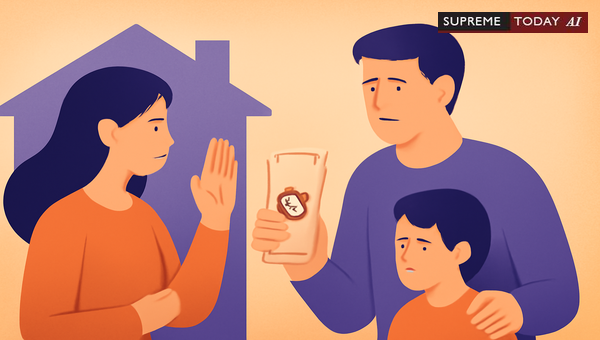
Can Court Grant Son's Maintenance Under DV Act If Not Initially Claimed?
In family law disputes under the (DV Act), can be complex, especially when involving children. Imagine a scenario: Under Sec 12 DV Act, the applicant woman does not ask for maintenance for her son in the initial application. However, during evidence, she states she needs maintenance for her son as well. Can the court grant maintenance to the son?
This question arises frequently in domestic violence cases where reliefs evolve with evidence. While the DV Act aims to protect aggrieved women and their children, courts typically require clear pleadings. Yet, judicial discretion may allow flexibility if needs are proven. This post explores the legal framework, primary liabilities, conditions for extended reliefs like against father-in-law, and insights from precedents. Note: This is general information based on case law; consult a lawyer for specific advice.
Overview of Maintenance Under DV Act Sections 12 and 20
allows an (woman) to seek various reliefs, including under . Importantly, empowers courts to order maintenance not just for the aggrieved woman but also for her children and dependents if they cannot maintain themselves. 2025 5 Supreme 321
However, reliefs must generally align with the application. Courts emphasize pleadings to ensure fairness, but evidence stages can reveal additional needs. If a claim for the son's maintenance emerges only in evidence without amendment, courts may consider it if it's incidental to main reliefs and no prejudice to the . But strict adherence to procedure is key—amendments under can formalize such claims.
Primary Liability Lies with the Husband
The cornerstone of maintenance under the DV Act is the husband's primary liability. The primary liability for maintenance under the DV Act lies with the husband, not automatically with the father-in-law. 2013 0 Supreme(P&H) 1694
directs the to order from the —typically the husband. Case law reinforces this: In proceedings under for , courts prioritize the husband's obligation, resolving employment disputes at trial. 2019 0 Supreme(Del) 1669
For children, the father (husband) bears the duty, akin to principles under CrPC Section 125 or . If unpleaded initially, courts generally assess based on evidence of the child's needs and parent's capacity, but primary focus remains the husband.
When Can Father-in-Law Be Liable for Maintenance (Including for Child)?
Liability doesn't automatically extend to relatives like the father-in-law. The father-in-law can be held liable for maintenance only if the wife proves that she and the (father-in-law) share a '' and that she has rights over . 2013 0 Supreme(P&H) 1694
Key Conditions for ''
- Proof of Shared Residence: Defined under , it requires actual cohabitation in a joint family setup. Mere past residence isn't enough; voluntary departure may negate claims. 2013 0 Supreme(P&H) 1694
- Joint or Ancestral Property Rights: The wife must show entitlement, e.g., via family property documents. Without this, no liability arises. 2013 0 Supreme(P&H) 1694
The interprets '' restrictively: The liability for maintenance under the Act is primarily on the husband, and the father-in-law can be held liable only if the wife proves rights. 2013 0 Supreme(P&H) 1694
For the son, if the application names the father-in-law as and proves , maintenance may extend to the child as a dependent. However, precedents under CrPC Section 125 clarify limits: Under , it has not been specifically provided that the father-in-law is liable to maintain his daughter-in-law and her children who are unable to maintain themselves. 2022 0 Supreme(Telangana) 299
Evidence Stage and Unpleaded Claims for Child Maintenance
If the woman mentions the son's need during evidence but omitted it in the Section 12 application, courts typically require:- Amendment of Pleadings: To avoid surprise to the .- Proof of Necessity: Child's age, needs, and parent's inability (e.g., husband's income). In one case, courts modified maintenance considering husband's Rs. 47,560 monthly income, reducing from Rs. 10,000 to Rs. 7,000, factoring family obligations. 2024 0 Supreme(Jhk) 141
DV Act's protective intent allows holistic assessment, but not at the cost of procedure. If evidence substantiates, courts may grant under , especially for minors. Contrastingly, in contexts, father-in-law liability post-husband's death is absent. 2024 0 Supreme(MP) 545
Insights from Related Case Law
- No Automatic Extension: Widowed daughter-in-law's claim against father-in-law under requires proving inability from other sources. Mere pleadings insufficient without evidence. 2020 0 Supreme(Chh) 414
- Multiple Forums Allowed: Maintenance under DV Act doesn't bar claims under or CrPC 125; it's additional. Factors include parties' status, marriage duration, child maintenance. 2021 0 Supreme(All) 215
- Capacity Assessment: Courts evaluate 's earnings, e.g., Rs. 1,00,000 monthly business income justifies Rs. 25,000 claim, though sympathy noted. 2024 0 Supreme(MP) 583
- Overlap: Family settlements don't absolve maintenance duties. 2023 0 Supreme(P&H) 3424
Under CrPC 125 analogs, second wives or non-legal spouses denied if first marriage subsists, emphasizing valid claims. But DV Act focuses on violence victims.
Practical Recommendations
- File Comprehensive Applications: Include children explicitly under Section 12 to avoid issues.
- Gather Evidence Early: Residence proofs, property deeds for ; income docs for capacity.
- Seek Amendments: If needs surface later, apply promptly.
- Target Primary : Husband first; father-in-law only with strong proof.
- Consider Alternatives: for widowed cases, but plead inability fully.
Key Takeaways
- Courts may grant son's maintenance under DV Act even if unpleaded initially, if evidence proves need and no prejudice, but amendments strengthen claims.
- Husband's liability primary; father-in-law conditional on and property rights. 2013 0 Supreme(P&H) 1694 2025 5 Supreme 321
- DV Act reliefs are additional to other laws, promoting child welfare.
Disclaimer: This analysis draws from judgments like 2025 5 Supreme 321, 2013 0 Supreme(P&H) 1694, 2022 0 Supreme(Telangana) 299, 2024 0 Supreme(Jhk) 141, 2024 0 Supreme(MP) 545, 2020 0 Supreme(Chh) 414, 2021 0 Supreme(All) 215, 2019 0 Supreme(Del) 1669, 2024 0 Supreme(MP) 583, 2023 0 Supreme(P&H) 3424. Laws vary by facts; this isn't legal advice. Seek professional counsel.
For more on family law, stay tuned!
#DVActMaintenance, #FamilyLawIndia, #ChildMaintenance












