


What Is ? A Comprehensive Legal Guide for Indian Buyers and Sellers
In the high-stakes world of real estate transactions, buyers often make an initial payment to show they're serious. But what happens if the deal falls through? This is where comes into play—a concept deeply rooted in Indian contract law. If you've ever wondered, What is ?, this guide breaks it down, drawing from legal principles and key court judgments to help you navigate it confidently.
Note: This article provides general information based on established legal precedents and is not a substitute for professional legal advice. Consult a lawyer for your specific situation.
Defining : The Basics
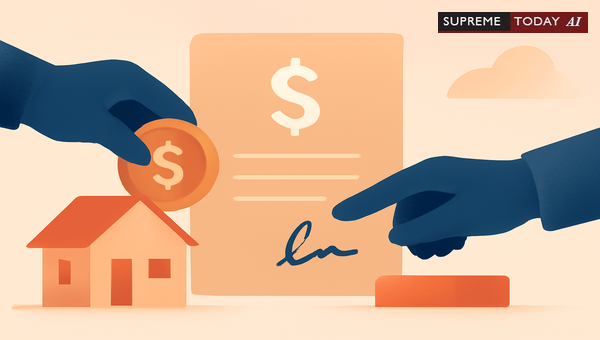
is a sum of money paid by a buyer to a seller as a token of . It binds the parties to the contract and demonstrates the buyer's seriousness about completing the transaction. Generally, it becomes part of the purchase price if the deal proceeds successfully. However, if the buyer breaches the contract due to their fault, it is typically forfeited.
1969 0 Supreme(SC) 297
As explained in legal precedents, is part of the purchase price when the transaction goes forward; it is forfeited when the transaction falls through, by reason of the fault or failure of the vendee.
V. K. Jain VS Anjali Promoters & Developers Pvt. Ltd.
This deposit serves primarily as , not just a refundable advance. Courts have clarified that it's distinct from mere part payments of the purchase price. Deposits made as security or to guarantee performance aren't automatically unless explicitly agreed upon as such. 1988 0 Supreme(Del) 100
2004 0 Supreme(Bom) 400 1969 0 Supreme(SC) 297
In real estate contexts, can be substantial—far more than a nominal amount like a dollar—often amounting to thousands, acting as a genuine commitment. 2017 0 Supreme(Del) 4099
How Differs from Other Deposits
Not all initial payments qualify as . Here's a quick distinction:
- : A security to ensure contract performance; forfeited on buyer default, adjusted into purchase price on success.
- Advance/Part Payment: Simply reduces the total price; typically refundable unless specified otherwise.
- Caution/Hand Money: Similar terms but context-specific, often nominal in goods sales but significant in property deals. 2017 0 Supreme(Del) 4099
For instance, in consumer disputes involving real estate, courts have ruled that only payments made at the time the contract is concluded count as . Subsequent installments do not. In , the held that only Rs. 63,469 paid at booking was forfeitable , not later amounts, as any payment made after the contract is concluded, cannot be said to be part of the .
V. K. Jain VS Anjali Promoters & Developers Pvt. Ltd.
Legal Consequences of
The fate of hinges on who causes the deal to fail:
- Buyer Fault: If the transaction falls through due to the buyer's breach, is typically forfeited, serving as consideration for the contract. This is especially true when . 1928 0 Supreme(Nagpur) 110 1969 0 Supreme(SC) 297 2022 0 Supreme(P&H) 1915
In one case, the agreement stated: In case the final payment & registration is not performed by ... the shall stand forfeited. The court upheld forfeiture, citing Maula Bux Vs. Union of India (1969) 2 SCC 54. 2022 0 Supreme(P&H) 1915
- Seller Fault or Other Reasons: If the buyer is ready and willing to perform but the seller defaults, the buyer may be entitled to a refund—sometimes doubled, per contract terms. 2021 0 Supreme(P&H) 363 2004 0 Supreme(Bom) 400 2006 0 Supreme(Bom) 3
suits often intersect here. In a dispute over immovable property, the court denied because plaintiffs weren't always ready and willing, but initially ordered a refund to avoid undue enrichment—later set aside on appeal, upholding forfeiture where time was essential. 2022 0 Supreme(P&H) 1915
Key Court Rulings on Forfeiture and Reasonableness
Indian courts, influenced by Maula Bux Vs. Union of India, emphasize that forfeiture without proof of actual loss isn't automatic. It must be a under .
Reasonable Limits: Forfeiture beyond a reasonable amount (often capped around 10% of total price) is invalid unless proven loss matches. In the Emaar case, only 1% (the initial booking amount) was forfeitable.
V. K. Jain VS Anjali Promoters & Developers Pvt. Ltd.
Breach Scenarios: In a memorandum to sell property, the court upheld forfeiture when the buyer breached by not paying balance consideration, deeming them in unauthorized occupation and liable for damages. 2017 0 Supreme(Del) 4099
Tenders and Bids: Even in auctions, with bids forms a preliminary enforceable contract. Withdrawal breaches it, justifying forfeiture if reasonable (e.g., 1% of bid price). cases confirmed this, rejecting Section 5 withdrawal rights post-acceptance.
VS Prem Chand Jain
2013 0 Supreme(Del) 511Tax Implications: Forfeited is often a , not taxable revenue, if unrelated to trading. In a share purchase forfeiture, it wasn't trading income. 2015 0 Supreme(J&K) 483
Limitations, Exceptions, and Best Practices
Forfeiture isn't absolute:
- Courts require proof of loss; blanket forfeitures fail on fairness grounds. Advocate - , ,,, SC, KSEB - (2019)
- Contract terms and statutes govern, including clauses for double refunds on seller delay. 1928 0 Supreme(Nagpur) 110 2020 Supreme(Online)(KER) 26271
- In consumer cases, even commercial spaces may qualify if for self-employment livelihood, not profit.
V. K. Jain VS Anjali Promoters & Developers Pvt. Ltd.
Tips for Buyers:- Negotiate clear terms on forfeiture triggers and timelines.- Ensure readiness to perform to claim refunds.
Tips for Sellers:- Document breaches meticulously.- Limit earnest to reasonable percentages to avoid challenges.
Conclusion: Key Takeaways on
in Indian law acts as a buyer's commitment and seller's security, becoming purchase price on success or forfeited on buyer default—subject to reasonableness and contract terms. Landmark cases like Maula Bux underscore that it's no penalty but compensation for proven loss.
Key Takeaways:- It's a token, not mere deposit. 1969 0 Supreme(SC) 297- Forfeiture typically on buyer fault; refund on seller's. 2021 0 Supreme(P&H) 363- Must be reasonable (e.g., ~1-10%); prove damages.
V. K. Jain VS Anjali Promoters & Developers Pvt. Ltd.
- Always review agreements with legal experts.Understanding protects your interests in property deals. Stay informed, and transact wisely!
#EarnestMoney, #ContractLawIndia, #RealEstateLaw















