


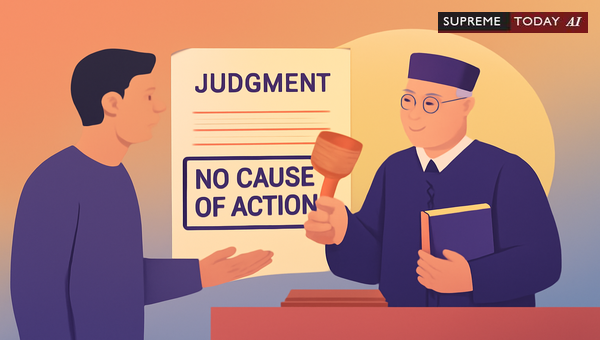
Enforcing Judgments on Defendants Without a New
In the complex world of legal proceedings, a common dilemma arises: can a court compel a named defendant to give effect to a prior judgment even if no fresh exists? This question often surfaces in enforcement scenarios, particularly when parties fail to honor court orders like maintenance payments. Understanding this is crucial for litigants, as it balances judicial authority with procedural fairness.
Typically, enforcement actions prioritize upholding existing judgments rather than litigating new claims. This post delves into a pivotal Malaysian Syariah court case, legal principles, and contrasts with other jurisdictions, offering insights into when courts wield such powers.
The Core Issue: Defendant Ordered to Comply Without New
The query at hand—whether a named defendant can be ordered to give effect to a judgment but no —highlights enforcement mechanisms. Courts generally possess to ensure compliance with their decrees, viewing non-adherence as rather than requiring a standalone .
In family law contexts, especially maintenance disputes, this becomes evident. Non-compliance isn't just a breach; it's an affront to judicial authority, prompting coercive remedies like payment orders or imprisonment.
Key Case Study: Syariah Court Enforcement Order
A landmark illustration comes from a case where the applicant sought to enforce a for maintenance payments totaling RM99,800. The respondent (defendant) had ignored repeated demands, prompting an enforcement application.
The court affirmed its jurisdiction and issued a direct order: The court ordered the respondent to pay an overdue amount of RM99,800, failing which the respondent would face a month of imprisonment.
This mandate compels the defendant to give effect to the prior judgment through payment, underscoring that adherence to court orders is not only a legal obligation but also a moral one under Islamic law.
Why No New Was Needed
Here, the focus was enforcement, not a novel claim. The original provided the foundation, transforming non-compliance into . Key points include:- Courts' authority to enforce via specific orders for payment or committal.- Non-compliance with consent judgments as , justifying imprisonment.- Upholding legal and moral duties under relevant enactments.
This approach prevents entitled parties from being victimized, emphasizing the court's role in judgment execution.
Legal Basis: Statutory Powers in Syariah Framework
The decision invokes the , specifically Sections 151(1)(a)(aa) and 229(1). These grant powers for enforcement and . The stresses: disobedience to court orders constitutes and the necessity for enforcement measures.
Such provisions empower courts to act decisively without re-proving underlying facts, distinguishing enforcement from fresh litigation.
Contrasting Perspectives: in Other Contexts
While enforcement sidesteps new causes of action, many cases hinge on their presence or absence, offering context.
In a defamation suit, the plaintiff bore the burden to prove claims on the , even without defendant evidence. The court noted: The Plaintiff must prove his case on the in defamation claims, even if the Defendant does not present evidence.
Judgment favored the plaintiff with damages and , but required an established —unlike pure enforcement.
Similarly, in money lending disputes, defenses like were raised, but the core was whether no accrued to the plaintiff at all. 2025 Supreme(SRI)(SC) 9701 Courts scrutinized pleadings to dismiss if no viable claim existed.
Commercial recovery suits faced limitation challenges: The thereafter arose on ... Pre-institution wasn't mandatory pre-2020, but a continuing saved the suit. 2023 0 Supreme(Cal) 1012
Dismissals for infructuous suits highlight when causes vanish: the court has a power under Section 151 to dismiss the Suit even in view of subsequent event whereby itself disappears. 2024 0 Supreme(Bom) 435 prevent abuse, but enforcement cases like the Syariah ruling persist as the cause (judgment) endures.
Defamation pleadings also required malice particulars only if pleaded, reinforcing cause-specific rules.
These examples—from applications
to CPC Order VII Rule 11 rejections 2022 0 Supreme(Mad) 440—illustrate that while new suits demand robust causes (every fact necessary for the Plaintiff to prove to enable him to obtain a Decree 2021 0 Supreme(Gau) 566), enforcement leverages prior ones.
Exceptions and Limitations
This power isn't universal:- Jurisdictional Scope: Applies in for family maintenance; civil courts may lack committal for non-statutory judgments.- Moral Dimension: Tied to Islamic principles, limiting non-Syariah applicability.
- No Parallels in Sources: Other documents cover dismissals (e.g., no cause against multiple defendants 2024 0 Supreme(Bom) 435), limitations 2022 0 Supreme(Mad) 440, or fraud allegations deemed illusory (Clever drafting can also be seen... to create an illusionary 2021 0 Supreme(Gau) 566), but none mirror direct enforcement sans new action.
post- orders were rejected after years, emphasizing timely action. 2020 2 Supreme 755
Practical Recommendations for Parties
- For Creditors: File enforcement under procedural rules (e.g., Syariah enactments), backed by non-payment evidence. Demonstrate jurisdictional fit.
- For Defendants: Prioritize compliance to evade , like imprisonment.
- General Advice: Consult procedural codes; evidence of demands strengthens applications.
Parties should act swiftly, as delays invite limitation bars or dismissals seen in sources like recovery suits 2023 0 Supreme(Cal) 1012.
Key Takeaways and Conclusion
Courts can indeed order defendants to effect prior judgments without a new , as affirmed in the Terengganu case—prioritizing enforcement and remedies.
This upholds justice efficiently, contrasting with claim-establishing suits requiring proven causes.
2024 0 Supreme(Bom) 435
However, scope varies by jurisdiction and context. This is general information based on reviewed cases; outcomes depend on specifics. Always seek professional legal advice tailored to your situation, as this post does not constitute advice.
Stay informed on enforcement tools to protect rights or ensure compliance—judicial orders demand respect.
#JudgmentEnforcement #SyariahLaw #CourtCompliance















