


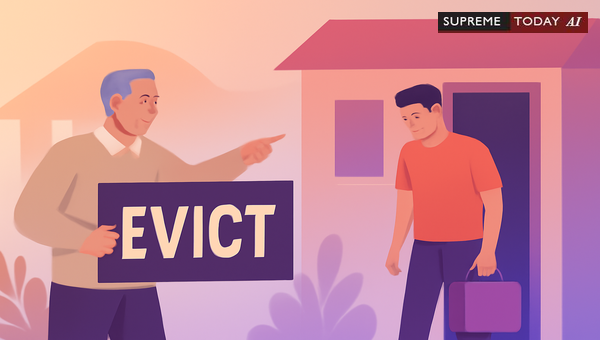
Evict Son & Wife from Father's Property: Legal Guide
In many Indian families, conflicts arise when adult children, including sons and their wives, occupy the family home without permission, leading to tension or neglect of elderly parents. A common question arises: What is the Remedy for Evicting Son and his Wife from Self Owned Property of Father? This issue often involves balancing family ties with legal rights, particularly for senior citizens seeking peace and control over their own homes.
This blog explores the primary legal remedies, focusing on the (Senior Citizens Act), judicial interpretations, and practical steps. Note: This is general information based on legal precedents and not specific legal advice. Consult a qualified lawyer for your situation. (Word count approx. 950)
Primary Remedy: Senior Citizens Act, 2007
The cornerstone remedy is the , which empowers senior citizens (aged 60+) or parents to evict children or legal heirs from self-owned, ancestral, or movable property if they are in or causing ill-treatment. 2020 0 Supreme(P&H) 2108 2018 0 Supreme(Del) 3294 2016 0 Supreme(P&H) 490
Key features include:- Section 5: Allows applications for eviction from unauthorized occupants.- Rules 22 and 23 (2012 Rules): The (DM) or Deputy Commissioner issues notices, verifies claims, and orders eviction if justified, enforceable via police. 2018 0 Supreme(Del) 3294 2023 0 Supreme(Del) 297
This process is , prioritizing elderly welfare over lengthy civil suits. Authorities can evict even family members if their stay is unlawful or harmful. 2020 0 Supreme(P&H) 2108
Detailed Legal Provisions
Under and Rule 23, the procedure is straightforward:1. File an application with the DM alleging or neglect.2. Authority issues notice to occupants.3. Verification of ownership and claims.4. Eviction order if proven, executed promptly. 2018 0 Supreme(Del) 3294 2016 0 Supreme(P&H) 490
The Act defines property broadly: property of any kind, whether movable or immovable, ancestral or self-acquired. 2023 0 Supreme(Pat) 649 This applies regardless of property type, as long as occupation is unauthorized. 2020 0 Supreme(P&H) 2108
Judicial Interpretations and Precedents
Courts have consistently upheld eviction powers under the Act:- and : Authorities can evict children and spouses from self-owned property for protection. The Act prevails over conflicting claims, like those under the (DV Act). In one case, the court ruled the Senior Citizens Act overrides DV Act in eviction matters, upholding a father's right to evict son and daughter-in-law from . 2024 0 Supreme(Kar) 321- : Summary eviction prevents harm or misuse. 2020 0 Supreme(P&H) 2108 2018 0 Supreme(Del) 3294
However, tribunals must consider competing claims. If children prove enforceable civil rights (e.g., ownership share), eviction under the Act may be limited, requiring civil suits. Tribunals have authority only after adverting to claims; otherwise, remand for fresh consideration. 2023 0 Supreme(Pat) 649
In harassment cases, courts upheld eviction of both son and daughter-in-law from due to torture, reversing softer orders. 2023 0 Supreme(Del) 681
Nature of Property: Self-Acquired vs. Ancestral
The Act applies to without restriction. Ownership nature doesn't bar eviction if occupation is unauthorized. 2020 0 Supreme(P&H) 2108 2018 0 Supreme(Del) 3294
For , eviction is possible if needed for senior's welfare, but title disputes may need civil resolution. One ruling clarified eviction isn't mandatory; it's for ensuring 'need' without disrupting family structure unnecessarily. If son lives peacefully in one room without hindrance, eviction may not be ordered. 2023 0 Supreme(All) 992
Civil suits remain for title claims, but the Act offers faster relief. 1953 0 Supreme(SC) 93
Exceptions and Limitations
- Ownership Claims: If son/daughter-in-law asserts superior rights, civil courts decide title; Act eviction doesn't preclude this. 1953 0 Supreme(SC) 93
- DV Act Overlap: Daughter-in-law's under DV Act don't always block eviction; Senior Citizens Act takes precedence for elderly protection. 2024 0 Supreme(Kar) 321
- No Automatic Eviction: Tribunals may order eviction if expedient, not mandatory. or restraints suffice if no extreme need. Pending civil suits (e.g., share cancellation) weigh against eviction. 2025 3 Supreme 678
- Proof Burden: Parents must show unauthorized stay or harm; children can counter with legal rights. Exclusive possession alone doesn't prove exclusion. 2023 0 Supreme(Pat) 649
Practical Recommendations
To proceed:1. Gather Evidence: Ownership documents, proof of unauthorized stay/ill-treatment (affidavits, photos, witnesses).2. File Application: With DM/Deputy Commissioner under Section 5 and Rules 22/23.3. Parallel Civil Suit: If title disputed, file for declaration/eviction.4. Seek Legal Help: Ensure procedural compliance; state rules vary.
In one instance, DM ordered eviction post-verification, enforced via police. 2023 0 Supreme(Del) 297
Key Takeaways
| Aspect | Remedy under Senior Citizens Act ||--------|---------------------------------|| Speed | Summary, faster than civil suits 2020 0 Supreme(P&H) 2108 || Applicability | Self-acquired/ancestral, unauthorized occupants 2018 0 Supreme(Del) 3294 || Authority | DM issues/enforces orders 2016 0 Supreme(P&H) 490 || Limits | Title disputes go to civil court 1953 0 Supreme(SC) 93 |
In conclusion, the provides a robust, protective remedy for fathers evicting sons and wives from self-owned property, reinforced by courts prioritizing elderly welfare. While exceptions exist for proven rights, this statutory path offers quick relief. Always consult a lawyer to navigate your case effectively.
Disclaimer: Laws evolve; this reflects precedents like 2020 0 Supreme(P&H) 2108, 2018 0 Supreme(Del) 3294, etc. Professional advice essential.
#SeniorCitizensAct, #EvictSonProperty, #ElderlyRightsIndia















