


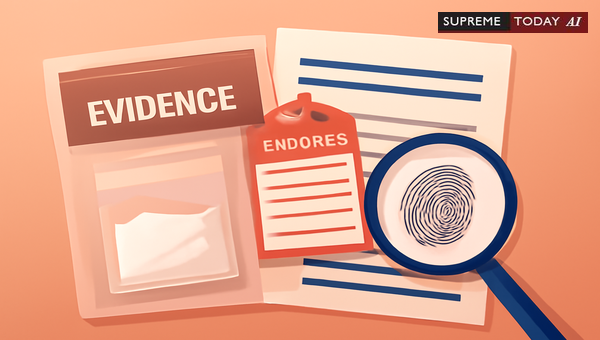
Discrepancies in Evidence Markings: A Critical Flaw in Prosecution Cases
In high-stakes criminal trials, especially those involving drug trafficking or seizures, the devil is often in the details—or more precisely, in the markings on evidence exhibits. Imagine a scenario where the prosecution presents packets of seized drugs in court, but the labels, tags, or inscriptions don't match the records from the seizure scene. What happens then? Courts have repeatedly ruled that such discrepancies in markings can create reasonable doubt, potentially collapsing the entire case.
This blog post delves into the legal implications of discrepancies in markings on evidence, drawing from key precedents like
and
. We'll examine why consistent markings are vital for proving , the prosecution's obligations, and when explanations might save the day. Whether you're a legal professional, law enforcement officer, or someone navigating a case, understanding this can make all the difference.
The Core Issue: Discrepancies in Markings on Evidence Exhibits
Discrepancies in markings refer to inconsistencies in labels, tags, seals, or inscriptions on physical evidence between seizure, documentation, and court presentation. These can include wrong dates, mismatched identifiers, additional unaccounted items, or altered seals. In
, the trial court highlighted how wrong markings on the evidence collection list, additional unaccounted items, and inconsistent exhibit tags led to a failure in proving the drugs' identity.
Courts emphasize that evidence must be authenticated . Without clear, consistent markings, the —the documented trail from seizure to trial—is compromised, raising questions like: Was this the same evidence? Could it have been tampered with?
Why Consistent Markings Matter: Establishing Identity and Integrity
The prosecution bears the burden of producing the exact seized items with matching markings. As noted in
, It is mandatory for the prosecution to produce in court the very drugs seized and discrepancies in markings or missing labels weaken the proof of identity.
In drug cases, this is non-negotiable. Unexplained differences suggest the evidence's integrity is in question, leading courts to rule in favor of the accused. For instance:- Wrong exhibit numbers on lists.- Mismatched signatures or dates on tags.- Extra items appearing without explanation.
A similar principle applies in other contexts. In
, witnesses identified markings on plastic packets containing drugs: PW-6 also marked the four plastic packets with the markings ‘H1’ to ‘H4’, affixed his signature and put the date thereon. In court, PW-6 identified the markings he had made. Proper identification upheld the evidence here, but the case notes that purported discrepancies could not have occasioned the collapse only because they were explained.
Prosecution's Strict Obligations
Prosecutors must:- Record markings meticulously at seizure.- Maintain them unchanged through storage and transport.- Present the original items in court with verifiable tags.
Failure invites scrutiny. In
, the court ruled these lapses fatal to the prosecution's case because they undermine the necessary to prove guilt .
Relatedly, in arms recovery cases like 2013 3 Supreme 195, evidence involved cartridges with three different types of markings, where samples were taken to preserve distinctions—highlighting the need for precise documentation to avoid challenges.
When Explanations Can Mitigate Discrepancies
Not all inconsistencies doom a case. Courts may accept minor discrepancies if convincingly explained. In
, the defense raised marking differences, but the court assessed if they were satisfactorily explained. Unexplained ones, however, create doubt.
Examples of acceptable explanations:- Procedural errors with intact .- Clerical mistakes documented early.- Witness testimony confirming markings, as in
where PW-6 identified the markings he made in court.
Conversely, in electricity theft cases like 2010 0 Supreme(Mad) 91, smudged seals led to acquittal: Mere smudging of letters is not an evidence of theft in the absence of proof of tampering. The forensic expert couldn't confirm replacement, underscoring that ambiguities favor the defense.
Legal Principles and Precedents
Jurisprudence is clear: Failure to explain discrepancies impacts evidence reliability. Key holdings:-
: Inconsistencies in drug exhibits led to acquittal.-
: scrutiny essential.- Broader applications in
, where discrepancies in dates... and the container number were overlooked if not raised timely, but still noted as issues.
In cases referenced indirectly through evidence handling (e.g., bomb blasts judgments), precise markings on arms and explosives were crucial for conviction, reinforcing the principle.
Limitations, Exceptions, and Best Practices
While generally harmful, exceptions exist:- Convincing explanations with strong .- Non-critical discrepancies not affecting identity.
Recommendations for stakeholders:- Law enforcement: Use indelible, unique markings (e.g., initials, dates, case numbers) at every stage.- Prosecutors: Document and explain any variances pre-trial.- Defense: Scrutinize exhibits for inconsistencies to argue reasonable doubt.- Courts: Demand explanations to uphold standards.
In 2011 0 Supreme(Pat) 246, arbitrary markings in selections were criticized for lack of transparency, paralleling evidence handling: University is not able to give any justification for these markings.
Key Takeaways and Conclusion
Discrepancies in markings can be a prosecution's nightmare, often leading to acquittals by eroding proof . Cases like
and
illustrate that consistency is king in evidence integrity.
To avoid pitfalls:- Prioritize meticulous labeling.- Explain anomalies proactively.- Challenge weaknesses vigorously.
This post provides general insights based on precedents and is not legal advice. Consult a qualified attorney for case-specific guidance.
By mastering evidence markings, legal teams can strengthen or dismantle cases effectively. Stay vigilant—the smallest tag could tip the scales of justice.
#EvidenceMarkings #ChainOfCustody #CriminalLaw















