




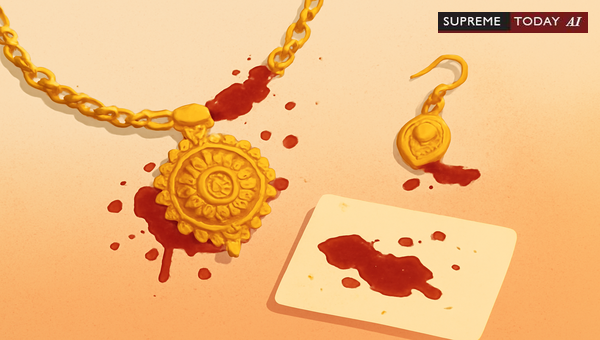
Blood-Stained Gold Recovery After 3 Months: Valid Conviction?
In high-stakes murder cases relying on , the recovery of blood-stained items like gold ornaments can seem damning at first glance. But what happens when such evidence surfaces after the crime? Could a conviction based solely on the recovery of blood-stained gold ornaments, recovered long after the murder, stand up in court?
This question strikes at the heart of evidentiary reliability in Indian criminal law. Courts approach such delayed recoveries with skepticism, emphasizing the need for robust corroboration. This post delves into key legal principles, case analyses, and practical insights to clarify when such evidence suffices—or falls short.
Main Legal Finding: Caution with Delayed Recoveries
Generally, a conviction resting solely on blood-stained gold ornaments recovered after a three-month delay is viewed with caution and often deemed insufficient to prove guilt beyond reasonable doubt. The time lag undermines the link between the article and the crime, particularly without reliable identification, , or a secure . 2011 2 Supreme 97 2001 4 Supreme 105
Key reasons include:- Weakened evidentiary value: Prolonged delays allow for contamination, tampering, or alternative explanations.- Need for corroboration: Blood stains require forensic matching (e.g., blood group) and procedural safeguards.- Holistic proof required: Incriminating circumstances must form a complete chain pointing exclusively to the accused's guilt. 1997 7 Supreme 602
The Impact of Time Lag on Recovery Evidence
Courts consistently highlight how delays erode reliability. In one ruling, the court noted that recovery of articles after of the incident alongside absent proper identification or cast serious doubt on their evidentiary value. The evidence was deemed too artificial to be believed. 1997 7 Supreme 602
This principle echoes in and decisions. For instance, a blood-stained axe recovered post-incident was dismissed as shocking and surprising, questioning how blood could persist so long. was granted, underscoring weak evidence. 2020 0 Supreme(All) 815
Similarly, recoveries from open, accessible places—like a blood-stained jacket from a rickshaw—were labeled too fragile to bear the burden of conviction. 2019 0 Supreme(Kar) 543
Blood Stains and Forensic Scrutiny
Mere blood stains on ornaments demand rigorous analysis. Courts hold that the mere matching of the blood-group... cannot lead to the conclusion that the appellant had been involved in the commission of the crime without procedural integrity. In a case, a blood-stained shirt matched the deceased's 'B' group via report, yet failed absent . 2022 0 Supreme(Chh) 479
Another judgment reinforced: the evidence of recovery of blood-stained articles is too weak to be relied upon post-delay, especially sans conclusive grouping. 2022 0 Supreme(Ori) 680
Blood-stained recoveries alone cannot found a conviction; they merely corroborate substantive evidence. Mere recoveries of blood stained articles cannot be the foundation of conviction of a person for the charge of murder. 2019 0 Supreme(Raj) 2800
Crucial Role of Identification and
Proper identification and custody maintenance are non-negotiable. The recovery of blood stained articles from the accused after a long delay, without proper identification or supporting witnesses, weakens the case. Missing , delayed parades, or unproduced articles in court dilute . 1997 4 Supreme 635
In a murder-robbery appeal, ornament recovery doubts arose as M.O.3 may not belong to the deceased at all, with conflicting evidence leading to . Convictions demand proof beyond doubt that circumstances exclusively implicate the accused.
vs - 2010 Supreme(Online)(KER) 6222
Another case saw conviction falter on mismatched ornaments (e.g., 'Joliyan' vs. 'Jantar') and , failing the '' test under Prem Thakur v. State of Punjab. 2000 0 Supreme(Raj) 1117
Insights from Broader Case Law
precedents affirm: the recovery of stolen property or blood-stained articles after a long interval, without proper identification or , does not by itself establish guilt. Incriminating links must be closely connected with the crime. 2011 2 Supreme 97 2001 4 Supreme 105
Prompt recoveries can bolster cases, as in one where stolen ornaments surfaced soon after a murder, creating a if part of the same transaction. Yet, even here, one accused's conviction was set aside for insufficient evidence. 2023 0 Supreme(Cal) 268
Conversely, sniffer dog trails and delayed blood-stained recoveries (e.g., clothes and weapons) crumbled without an unbroken chain, leading to . 2019 0 Supreme(Raj) 2800
Eyewitness inconsistencies and suppressed incident genesis further invalidated blood-stained weapon recoveries in group assault cases. 2006 0 Supreme(Chh) 550 2006 0 Supreme(Chh) 552
Exceptions: When Delayed Evidence Holds
While delays typically weaken cases, exceptions exist:- Strong forensics: Human blood matching the victim's group, with intact .- Independent corroboration: Witnesses, timely procedures, or unique identifiers.- Integrated chain: Forms part of overwhelming circumstances.
Even then, courts may hesitate without direct links.
Practical Recommendations for Stakeholders
- Prosecution: Prioritize swift recoveries, analysis, and documentation.
- Defense: Challenge delays, custody gaps, and forensics.
- Courts: Scrutinize for doubt, ensuring .
Conclusion and Key Takeaways
In summary, conviction on blood-stained gold ornaments recovered post-murder is generally unsustainable without ironclad corroboration. Time erodes links, demanding forensic precision and procedural rigor. Cases like 1997 7 Supreme 602 2022 0 Supreme(Chh) 479 illustrate acquittals where evidence faltered.
Key Takeaways:- Delays (e.g., 3+ months) invite skepticism. 2020 0 Supreme(All) 815- Blood matching alone insufficient; custody critical. 2022 0 Supreme(Chh) 479- Build complete circumstantial chains. 2000 0 Supreme(Raj) 1117
This post provides general insights based on case law and is not legal advice. Consult a qualified lawyer for specific matters.
References:1. 2011 2 Supreme 97 - Timing and custody emphasis.2. 2001 4 Supreme 105 - Delayed recovery value.3. 2022 0 Supreme(Chh) 479 - Blood group limits.4. 2022 0 Supreme(Ori) 680 - Weak blood evidence.5. 1997 7 Supreme 602 - Artificial recoveries.6. Additional: 2000 0 Supreme(Raj) 1117, 2020 0 Supreme(All) 815,
vs - 2010 Supreme(Online)(KER) 6222
, 2019 0 Supreme(Kar) 543, 2019 0 Supreme(Raj) 2800, 2023 0 Supreme(Cal) 268 #CriminalLaw #MurderConviction #EvidentiaryValue















