


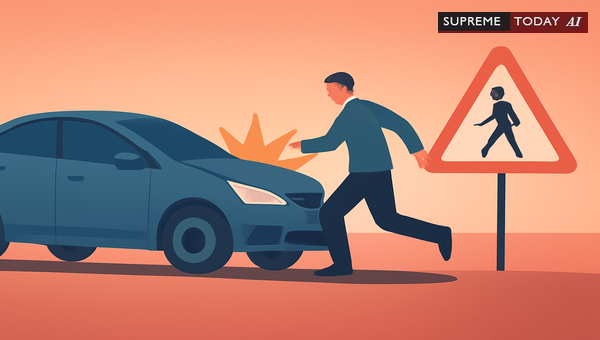
Drivers Must Expect the Unexpected on Indian Roads
Driving on Indian roads is unpredictable. From pedestrians darting across without warning to vehicles emerging suddenly, hazards abound. The legal question arises: Driver should Expect the Unexpected in Road. Courts consistently emphasize that drivers have a duty to anticipate the unforeseen, exercising reasonable care to prevent accidents. This principle protects road users and holds negligent drivers accountable. In this post, we delve into key legal concepts, landmark cases, and practical advice—remember, this is general information, not specific legal advice. Consult a lawyer for your situation.
Understanding the : Anticipate Hazards
At the heart of road accident liability is the . Drivers must operate vehicles reasonably, foreseeing potential dangers and actions of others. Courts have ruled that vigilance is key, even for unexpected events. For instance, drivers should adjust speed and maintain lookout in mixed traffic scenarios. 1971 0 Supreme(SC) 612 1993 0 Supreme(Guj) 521
This duty extends to expecting the unexpected, especially in chaotic Indian conditions. As noted in one ruling, A driver in Indian roads should expect the unexpected always. 2020 0 Supreme(Guj) 272 Pedestrians often ignore footpaths, zebra crossings, or signals; two-wheelers, autos, cyclists, and vendors clutter roads. 2012 5 Supreme 321 Foreign licenses don't excuse unfamiliarity: We have to necessarily draw an inference that the accused was not conversant in driving a vehicle on the Indian roads in the absence of an Indian licence. 2020 0 Supreme(Guj) 272
Failure to anticipate can lead to claims. In rear-end collisions, the trailing driver must keep safe distance, expecting sudden brakes ahead. It was the duty of the driver of the bus to keep a considerable distance between the two vehicles. A vigilant driver can always expect that driver of the vehicle going ahead of him can apply sudden brakes. 2001 0 Supreme(P&H) 342
: When Circumstances Speak for Themselves
Sometimes, accidents imply without direct proof—enter (the thing speaks for itself). If no external factors explain the incident, courts presume driver fault. In , absence of traffic led to presumed : the driver had to explain circumstances. 2022 0 Supreme(Bom) 1293
This doctrine applies when drivers fail to account for foreseeably unexpected events, shifting the burden of proof.
vs. : Shared Responsibility
Drivers must avoid their own and anticipate others'. Sudden pedestrian or vehicle appearances demand adjusted speed and vigilance. 2021 0 Supreme(All) 1316 1979 0 Supreme(Raj) 82
arises if multiple parties err. Yet, primary drivers bear heightened responsibility in unregulated areas like small towns. Courts stress foresight of others' mistakes. 2021 0 Supreme(All) 1316 1993 0 Supreme(Guj) 103
Consider parking : An unlit lorry at night can't be anticipated reasonably, holding the parker liable.
in mixed traffic, ignoring potential sudden movements, invites liability. 2021 0 Supreme(All) 1316 2014 0 Supreme(Tri) 319
Alcohol adds peril. Mere consumption isn't enough for charges under without recklessness evidence. 2012 0 Supreme(Ker) 1090 Drunken driving causing death may attract if knowledge of risk exists. 2012 5 Supreme 321
Landmark Cases Highlighting Vigilance
- : presumed sans explanation. 2022 0 Supreme(Bom) 1293
- Unlit Lorry Parking: Driver negligent for not ensuring visibility.
- in Mixed Traffic: Speed adjustment mandatory. 2021 0 Supreme(All) 1316 2014 0 Supreme(Tri) 319
- Foreign License Case: Expecting unexpected is baseline; no excuses. Pedestrians in India seldom use footpaths nor respect Zebra lines or traffic lights... 2012 5 Supreme 321
- Bus Rear-End Collision: Following too closely negligent. 2001 0 Supreme(P&H) 342
- Auto Turning Without Signal: Failing to yield on main roads liable. 2018 0 Supreme(Mad) 4571
In or intoxication cases, duties under (e.g., , 185) intensify. Escaping scenes without aid worsens liability. 2012 5 Supreme 321
Other scenarios: Sudden health issues while driving don't absolve if hazards persist.
Bus security lapses in stops contribute to risks.
U.P.S.R.T.C. THRU ITS ASST REGIONAL MANAGER vs SMT SUNARI DEVI
Practical Recommendations for Drivers
To minimize liability:- Maintain Safe Speed: Adjust for surroundings, especially in towns or mixed traffic.- Scan Constantly: Watch for pedestrians, animals, erratic vehicles.- Safe Following Distance: Expect sudden stops.- Vehicle Checks: Lights, signals functional—avoid parking pitfalls.- Licensing Compliance: Indian license essential for familiarity. 2020 0 Supreme(Guj) 272- Training: Emphasize hazard anticipation, particularly for heavy vehicles.
Post-accident, prove non-; burden may shift under res ipsa.
Conclusion: Drive Defensively, Stay Legally Safe
Indian courts mandate expecting the unexpected via , curbing . Cases from res ipsa to underscore vigilance. By anticipating chaos—pedestrians, sudden turns, poor lighting—drivers reduce accident risks and liability.
Key Takeaways:- Vigilance trumps surprises.- Anticipate others' errors.- Courts presume fault in unexplained mishaps.- = legal protection.
Drive responsibly. For personalized advice, seek professional counsel. Safe travels!
#RoadSafetyIndia, #DriverNegligence, #ExpectTheUnexpected












