


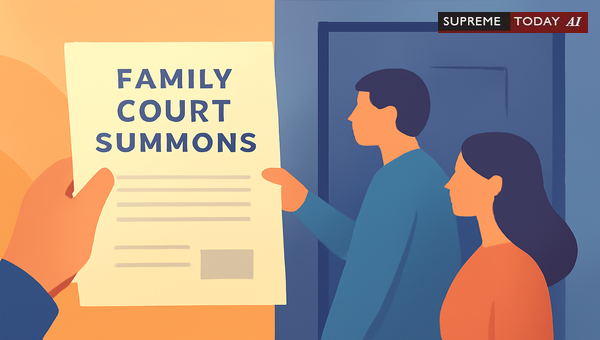
Is Mandatory if Father Refuses Notice?
In proceedings, serving notices properly is crucial to ensure and avoid delays or challenges. Imagine a scenario where a father, involved in a custody or maintenance case, deliberately refuses to accept a court notice. Is of notice mandatory in such cases? This common dilemma raises questions about procedural compliance under Indian law, particularly the (CPC).
This article breaks down the legal position, drawing from statutory provisions, judicial precedents, and practical guidelines. While is preferred, it's not always indispensable. Substituted modes can validate service if courts are satisfied with . Note: This is general information, not specific legal advice. Consult a qualified lawyer for your case.
Understanding in Family Courts
involves directly handing the notice to the intended recipient, typically the defendant (here, the father). Under , which applies to family courts via the (Section 10), this is the primary method for or notices.
However, the law recognizes practical challenges like refusal or evasion. also outlines flexible service modes, including personal delivery, service on family members, or , stating that is not mandatory if other modes are feasible or justified 2022 0 Supreme(AP) 168.
What Happens When the Father Refuses the Notice?
Refusal doesn't automatically invalidate service. If the process server attempts personal delivery and documents the refusal, the court may deem it complete. As held in relevant judgments, refusal to accept , if properly documented, does not invalidate the service, provided the procedural requirements are met 1975 0 Supreme(Del) 166.
Key principle: Courts prioritize over rigid formalities, but strict must be followed to prevent orders from being set aside later.
Valid Options
When fails due to refusal, substituted modes under come into play:
1. Service on an Adult Family Member
- Valid if the family member resides with the defendant and no agent is empowered to accept service.
- Requires court's prior satisfaction that the defendant cannot be found within a reasonable time after .
In Mohammed Shameer v. T.P. Abdul Majeed (2) KHC 642, the court clarified: service on an adult family member residing with the defendant is valid if the defendant is not available, but this requires prior satisfaction that the defendant cannot be found within a reasonable time 1967 0 Supreme(Cal) 37. Without court order, such service may be invalid, as in Arundas (4) KLT 1060 2012 0 Supreme(Raj) 948.
Another case upheld service on the defendant's father at the residential address, noting: service of on an adult family member was adequate under , provided the process server made reasonable efforts to locate the defendant personally 2014 Supreme(Online)(KER) 14081.
Conditions for validity:- Family member must reside with the defendant.- Court records satisfaction of defendant's unavailability.- in attempts documented.
Service by registered post on a family member is not valid 2018 0 Supreme(Ker) 549.
2. Service by
- Permissible when or family member service isn't practicable.
- Involves affixing a copy to a conspicuous part of the property (e.g., outer door) after refusal or absence.
The serving officer may affix if the defendant refuses to accept the notice or in his absence such other member also refuses 2013 0 Supreme(MP) 741. However, non-compliance, like failing enquiries on return time, invalidates it 2022 0 Supreme(Chh) 277.
Judicial Interpretations and Case Law Insights
emphasize procedural rigor:- In one appeal, decree was set aside for non-compliance with Rules 17 and 19: the serving officer did not fulfill the necessary requirements for affixation 2013 0 Supreme(MP) 741.- Courts must record explicit satisfaction before 2021 3 Supreme 260.
Conversely, proper documentation upholds service: If defendant refuses to accept service or could not be found authentic proof of service as the person's service knowledge of the proceedings is given has refused to accept the notice
.
specifics: Refusal by a joint family mother was deemed service only if procedures followed, but inadequate enquiries led to remand 2022 0 Supreme(Chh) 277. Service on minors is invalid: If a service of notice is made on the minor member of the family, it will be no service of notice in the eye of law 2012 0 Supreme(MP) 1255.
In divorce cases, substituted was allowed after failed personal attempts, but courts scrutinize reports 2008 0 Supreme(Bom) 733.
Exceptions and Common Pitfalls
- No prior court order: Service on family without recorded satisfaction is invalid 2012 0 Supreme(Raj) 948.
- Improper documentation: Mere refusal without process server endorsement fails 1975 0 Supreme(Del) 166.
- Service by post: Not equivalent to on family members 2018 0 Supreme(Ker) 549.
- Minor family members: Always invalid 2012 0 Supreme(MP) 1255.
proceedings risk reversal if service flaws emerge on appeal.
Practical Recommendations for Litigants and Courts
To ensure robust service:- Document everything: Process servers should note attempts, refusals, enquiries (e.g., expected return time), and witnesses.- Seek court permission early: For , file affidavits showing diligence.- Multiple attempts: Reasonable efforts before .- Use technology cautiously: Email/digi-service per court rules, but not substitute without order.
Courts should: record explicit satisfaction that the defendant cannot be found within a reasonable time before resorting to 2012 0 Supreme(Raj) 948.
Key Takeaways
- is preferred but not mandatory if the father refuses; substituted modes like family member service or are viable under CPC Order V.
- Procedural compliance is key – court satisfaction, documentation, and prevent challenges.
- Refusal, if proven, strengthens validity, but shortcuts lead to invalidation.
In summary, while evasion tactics complicate matters, the law provides flexible yet safeguarded alternatives. Proper execution upholds justice without undue delays. For tailored advice in family disputes, engage a family law expert promptly.
References:- Mohammed Shameer v. T.P. Abdul Majeed1967 0 Supreme(Cal) 37- Section 106 TPA 2022 0 Supreme(AP) 168- Various CPC rulings 2012 0 Supreme(Raj) 948 1975 0 Supreme(Del) 166 2021 3 Supreme 260 2014 Supreme(Online)(KER) 14081 2013 0 Supreme(MP) 741
#FamilyLawIndia, #ServiceOfNotice, #CPCRules












