


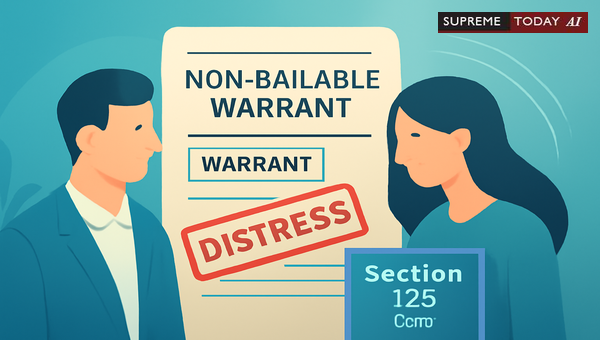
Can Issue Under Section 125 CrPC Without a ?
In family law disputes, particularly maintenance cases under , non-compliance can lead to serious consequences like arrest warrants. A common question arises: Cannot Issue Non under 125 Crpc Without Issuing a for Recovery. Is this absolute? While have powers to enforce , issuing () demands strict procedural adherence and judicial caution to protect .
This blog post delves into the legal position, drawing from key judgments and statutory provisions. We'll examine the authority of , the role of distress warrants, and guidelines. Note: This is general information based on precedents and not specific legal advice. Consult a qualified lawyer for your case.
Authority of to Issue Warrants
, functioning as magistrates in maintenance proceedings, possess powers under the CrPC to issue warrants for enforcing attendance or compliance. allow warrants of arrest directly against accused persons, especially if they are , without prior . 2021 0 Supreme(Ker) 841
However, this power is not unfettered. Courts must apply judicial discretion and consider circumstances before issuance, avoiding mechanical or ritualistic orders. 2021 0 Supreme(Ker) 841 2008 2 Supreme 413
In family law contexts, courts can issue for non-compliance or , but only after recording reasons and verifying necessity. 2021 0 Supreme(Ker) 841 2008 2 Supreme 413
Requirement of Distress Warrants Under Section 125 CrPC
empowers courts to order imprisonment for default in maintenance payments, alongside recovery mechanisms like distress warrants. A attaches the defaulter's property to recover dues.
Contrary to a strict mandate, courts are not always required to issue distress warrants first. If satisfied that the defaulter has no movable or immovable property, this step can be dispensed with as futile. 2005 0 Supreme(Ker) 698 2023 0 Supreme(Ker) 852
The has held that issuance of distress warrants is a condition precedent but dispensable when no property exists for . 2005 0 Supreme(Ker) 698
Distress warrants under Section 125(3) or 128 CrPC serve recovery, distinct from for securing attendance. Confusing them or skipping notices vitiates proceedings. 2025 Supreme(Online)(Mad) 69083 2024 0 Supreme(Ker) 1254
Judicial Discretion and Safeguards for
The repeatedly stresses extreme caution in issuing , as they interfere with —a under . The issuance of interferes with and the Courts should be extremely careful before issuing . 2023 0 Supreme(P&H) 1441
Arrest and imprisonment means deprivation of the most precious right of an individual. Therefore, the courts have to be extremely careful before issuing . 2023 0 Supreme(Chh) 583 2022 7 Supreme 641 2021 0 Supreme(P&H) 647 2017 0 Supreme(MP) 926 2016 0 Supreme(Del) 1420 2013 0 Supreme(SC) 473
Courts must follow the statutory sequence: or first under Sections 87 and 128 CrPC. are a last resort when prior steps fail to secure attendance. 2025 Supreme(Online)(Mad) 69083 2024 0 Supreme(Ker) 1254
Purushottam Chaudhary VS Central Bureau of Investigation thru. the Superintendent of Police / LKO - Crimes
Mechanical issuance without verifying whereabouts, property, or exhausting alternatives is cautioned against. 2008 2 Supreme 413 2021 0 Supreme(Ker) 841
Specific Guidelines for
must adhere to procedural safeguards, prioritizing . Issuing without notices or is unjustified, especially in sensitive family matters. 2021 0 Supreme(Chh) 155
They should consider alternatives like or conditional bail, recording reasons for any warrant. precedents mandate complete application of mind to facts, balancing individual liberty with societal interests in law enforcement. 2025 Supreme(Online)(Mad) 69083 2025 0 Supreme(Gau) 1253
Purushottam Chaudhary VS Central Bureau of Investigation thru. the Superintendent of Police / LKO - Crimes
2025 0 Supreme(Gau) 1327 2023 0 Supreme(All) 2848 2023 0 Supreme(All) 2006Just as liberty is precious for an individual so is the interest of the society in maintaining law and order. Therefore, the courts have to be extremely careful before issuing . 2022 7 Supreme 641
Step-by-Step Procedural Compliance
To ensure validity, courts typically follow this sequence in 125 CrPC cases:
- Issue Notice/: Notify the defaulter of maintenance liability.
- (if applicable): For recovery, after confirming default without cause. Dispensable if no assets. 2005 0 Supreme(Ker) 698
- Bailable Warrant: If ignored.
- Non-Bailable Warrant: Only as last resort, with recorded reasons and evidence of /non-compliance. 2021 0 Supreme(Ker) 841
Failure to follow risks quashing of warrants and protecting the defaulter from wrongful arrest.
Analysis: Can Skip Distress Warrants for ?
While the query posits cannot issue without distress warrants, judicial consensus allows flexibility. Distress warrants focus on recovery, not arrest; address evasion. However, courts cannot bypass overall procedure—, , and scrutiny are essential.
Overarching view: under 125 CrPC require prior statutory steps or justification for dispensation. Casual issuance violates liberty protections. 2025 Supreme(Online)(Mad) 69083 2025 0 Supreme(Gau) 1253
Key Takeaways and Recommendations
- can issue judiciously when defaulters abscond, but not mechanically—apply mind to facts and exhaust milder options. 2021 0 Supreme(Ker) 841 2008 2 Supreme 413
- Distress warrants are not mandatory if futile (no property), but procedure under CrPC Sections 87/128 must be followed. 2005 0 Supreme(Ker) 698
- Prioritize : Extreme caution per ; deprive the most precious right. 2023 0 Supreme(Chh) 583
- For Defaulters: Challenge improper warrants via bail or , citing non-exhaustion of steps.
- For Aggrieved Parties: Ensure courts record reasons; push for recovery via first.
In conclusion, while hold enforcement powers, the law demands balance. Unauthorized without due process are invalid, aligning with constitutional safeguards. Stay informed, but seek professional advice for case-specific strategies.
References:- .- Key judgments: 2021 0 Supreme(Ker) 841, 2008 2 Supreme 413, 2005 0 Supreme(Ker) 698, 2023 0 Supreme(Ker) 852, 2023 0 Supreme(P&H) 1441, 2023 0 Supreme(Chh) 583, etc.
#FamilyLaw #CrPC125 #LegalRights















