


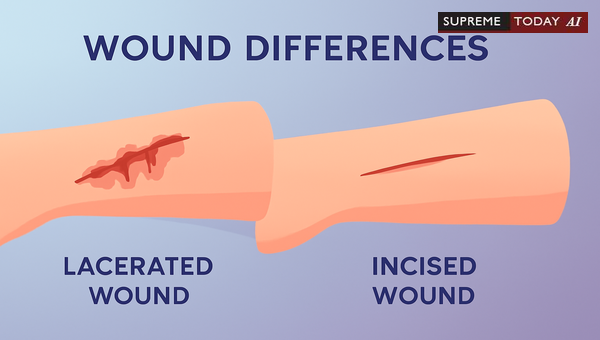
Lacerated vs. Incised Wounds: Key Differences in Legal Contexts
In , particularly cases involving , , or , the classification of wounds plays a pivotal role. What is the difference between a lacerated wound and an incised wound? This question often arises in and courtrooms, as distinguishing these injuries can determine the type of weapon used, the intent of the perpetrator, and the severity of charges. Misclassification can lead to flawed arguments about whether a blunt object or sharp blade was involved.
This blog post breaks down the definitions, characteristics, distinguishing factors, exceptions, and real-world legal examples. While this information is drawn from forensic principles and case precedents, it is for educational purposes only and not a substitute for professional legal or medical advice.
Definitions and Characteristics
Lacerated Wounds
Lacerated wounds typically result from tearing of the skin and underlying tissues, often caused by blunt objects. Their edges are irregular and jagged, with a gap between them that prevents easy opposition. These wounds are commonly linked to , such as strikes from a lathi (stick) or factory accidents. 2001 0 Supreme(All) 961 2001 0 Supreme(All) 962
For instance, in medical reports, lacerated wounds are described with specific dimensions and locations indicating blunt impact: Lacerated wound oblique running over right zygomatic & frontal area of size 7cmx 3cmx M.D. 7. Lacerated wound over left ear pinna in size of 3x1 cm, 4x 1cm. 2024 0 Supreme(Chh) 435 Similarly, Lacerated wound 10 x 0.5 x 1 cm. vertex. 2024 0 Supreme(Ker) 1569 2024 Supreme(Online)(KER) 55262
Special cases include from pointed or angular weapons, which may mimic incised wounds. 2001 0 Supreme(All) 961
Incised Wounds
In contrast, incised wounds stem from a clean cut by sharp-edged weapons like knives, axes, or razors. Their edges are clear-cut and well-defined, allowing edges to oppose neatly. These can be deep, potentially causing fractures on bony areas. 2017 0 Supreme(Raj) 1966 2023 0 Supreme(MP) 288 2005 0 Supreme(Raj) 2614
Examples from case records highlight this: Incised wound 7 x 1 x 1 x 1 cm. left shoulder. 2024 0 Supreme(Ker) 1569 2024 Supreme(Online)(KER) 55262 Incised wounds often appear as vertical running over right cheek in size of 7cmx 3cmx M.D. 6. 2024 0 Supreme(Chh) 435
Key Distinguishing Factors
To differentiate in legal proceedings, experts focus on several criteria:
- Weapon Type:
- Lacerated: Blunt or rough-edged weapons. 2017 0 Supreme(All) 575
Incised: Sharp weapons. 2017 0 Supreme(All) 575 2017 0 Supreme(Raj) 1966
Wound Edges:
- Lacerated: Irregular, torn. 2001 0 Supreme(All) 961 2001 0 Supreme(All) 962
Incised: Smooth, clean. 2001 0 Supreme(All) 961 2001 0 Supreme(All) 962 As noted, Differences between lacerated wound and incised wound is determined on the basis of the regular or irregular margin of the injuries. 2018 0 Supreme(Pat) 305
Underlying Surface:
Bony areas under blunt strikes may produce incised-like appearances due to the hard surface. 2019 0 Supreme(MP) 414 2015 0 Supreme(All) 614
Examination Techniques:
- Use magnifying lenses to inspect edges. 2001 0 Supreme(All) 961 1991 0 Supreme(P&H) 923
- The wound edges can help distinguish a laceration from an incised wound. On the other hand, incised wounds are caused by , usually by sharp-edged object. 2022 0 Supreme(Cal) 431
Exceptions and Counterarguments
Forensic analysis isn't always straightforward. Exceptions include:- Misinterpretation: Skull hardness can make lacerated wounds resemble incised ones, requiring careful scrutiny. 2022 0 Supreme(MP) 82- Weapon Condition: A blunt sharp weapon may cause lacerations. 2022 0 Supreme(MP) 82
Case law illustrates debates: However, the injuries noted in the are lacerated in nature... since injuries noted are lacerated wounds, they could not have been caused by a weapon that has a sharp edge, such as sword stick. According to the counsel, if a sword stick was used... then the injuries should have been incised wounds, not lacerated wounds. 2025 0 Supreme(Ker) 1740
Another contention: Contention has been raised that farsa (axe like weapon) being edged weapon, lacerated wound will not be caused by its use and injury caused by farsa (axe like weapon) will always be incised wound. 2016 0 Supreme(All) 3157 Yet, It is true that a sharp edged weapon tends to cause incised wound and not a lacerated one. 2017 0 Supreme(P&H) 618
In one incident, the accused... have inflicted ten and six lacerated wound by the sharp edged weapon.
GOPAL Vs State -
This mix underscores the need for context.Multiple lacerated wounds were documented: Lacerated wound measuring 5 x 3 cm over right hand... 3 x 3 cm over right forearm. 2024 Supreme(Online)(CHH) 13179 2024 Supreme(Online)(CHH) 13170
The injury report reveals only lacerated wound and bruises, that can be referred to by blunt weapon and nine injuries of incised wound are from sharp edged weapon. 2008 0 Supreme(Raj) 1666
Legal Implications in Court
In trials, wound type influences charges under sections like (simple hurt) or 324 (dangerous weapons). Lacerations suggest blunt force, potentially reducing culpability, while incised wounds imply sharp intent. Courts rely on medical evidence: In incised wound there must be regular margin of the wound. 2018 0 Supreme(Pat) 305
Prosecutors argue weapon mismatch, as in sword-stick cases, while defenses highlight exceptions like decomposition obscuring margins. 2018 0 Supreme(Pat) 305
Forensic Tips for Accurate Classification
- Examine margins closely with magnification.
- Consider injury location, depth, and associated damage (e.g., fractures).
- Correlate with weapon recovery and witness accounts.
- Document meticulously for court.
Distinguishing Lacerated and Incised Wounds Based on Cause with Weapon... Sharp weapons produce incised wounds; blunt weapons cause lacerations. From various sources including 2024 0 Supreme(Chh) 435, 2025 0 Supreme(Ker) 1740
Conclusion and Key Takeaways
Generally, lacerated wounds feature irregular edges from blunt trauma, while incised wounds show clean cuts from sharp edges. However, exceptions like bony impacts or dulled blades complicate matters, demanding expert forensic input. 2022 0 Supreme(MP) 82
Key Takeaways:- Edges are primary differentiators: Jagged vs. clean.- Weapon inference guides legal strategy.- Thorough examination prevents misclassification.- Always consult professionals for case-specific analysis.
In legal practice, precise wound classification strengthens arguments. Conduct detailed exams, consider contexts, and document findings to support claims effectively.
References: 2001 0 Supreme(All) 961 2001 0 Supreme(All) 962 2023 0 Supreme(MP) 288 2017 0 Supreme(Raj) 1966 2019 0 Supreme(MP) 414 2022 0 Supreme(MP) 82 2024 0 Supreme(Chh) 435 2024 0 Supreme(Ker) 1569 2024 Supreme(Online)(KER) 55262 2025 0 Supreme(Ker) 1740
IND_HC_UPPHC010338582020
2024 Supreme(Online)(CHH) 13179 2024 Supreme(Online)(CHH) 13170 2022 0 Supreme(Cal) 431 2018 0 Supreme(Pat) 305 2017 0 Supreme(P&H) 618 2016 0 Supreme(All) 3157 2008 0 Supreme(Raj) 1666 #LaceratedVsIncised, #ForensicWounds, #LegalInjuries












